




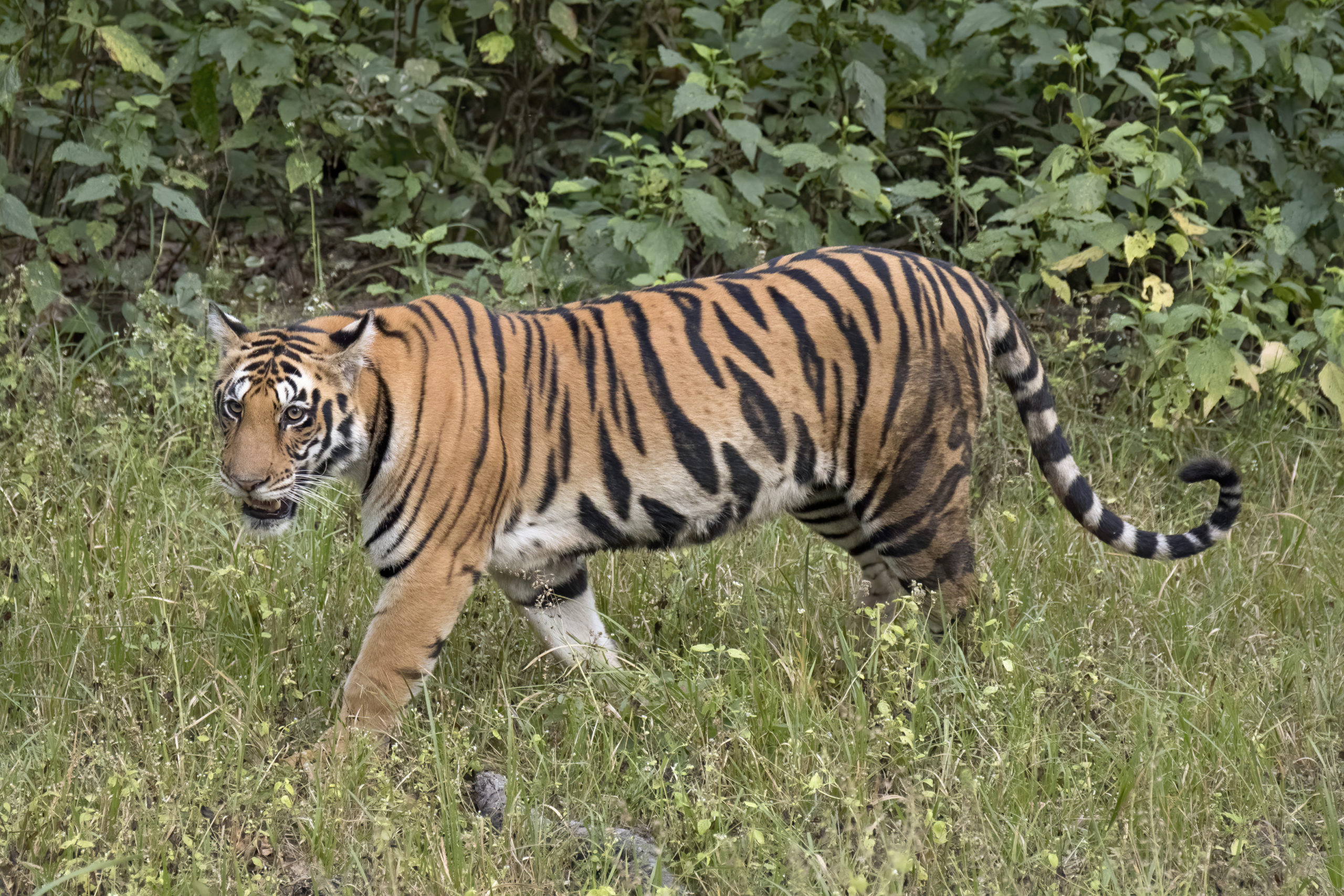
KATHMANDU: The Department of National Parks and Wildlife Conservation has announced plans to conduct a tiger count in Parsa, Chitwan, Banke, Bardiya, and Shuklaphanta National Parks this December. Following the tiger census, a one-horned rhino count is also scheduled.
The rhino count was postponed last fiscal year due to donor funding issues, but this year the department has allocated a budget for both wildlife surveys.
Tigers are counted every four years, with the upcoming exercise scheduled over three months—from December to March 2026, while the rhino census will take approximately three weeks in Chitwan, Parsa, Shuklaphanta, and Koshi Tappu.
The department has allocated Rs 1.8 million for the tiger survey, with total costs expected to exceed Rs 15 million. Similarly, Rs 1.8 million is allocated for the rhino census, though expenses could exceed Rs 20 million, with additional funding sought from donors.
During the 2022 tiger census, Nepal recorded 335 tigers: 128 in Chitwan, 125 in Bardiya, 25 in Banke, 41 in Parsa, and 36 in Shuklaphanta. Tigers are counted using camera traps placed in areas with high activity. Individual tigers are identified by the unique patterns of their stripes.
Rhinos are typically counted through direct observation while riding elephants, although the department is discussing potential alternative methods for this year. Past tiger counts in Nepal recorded 121 tigers in 2009, 198 in 2013, and 235 in 2018.
Rhino numbers have steadily recovered from around 100 in the 1960s to 752 in the 2021 census. Chitwan alone had 694 rhinos, Bardiya 38, and Shuklaphanta 18. The conservation efforts have contributed to the steady recovery of these endangered species.






Comment