




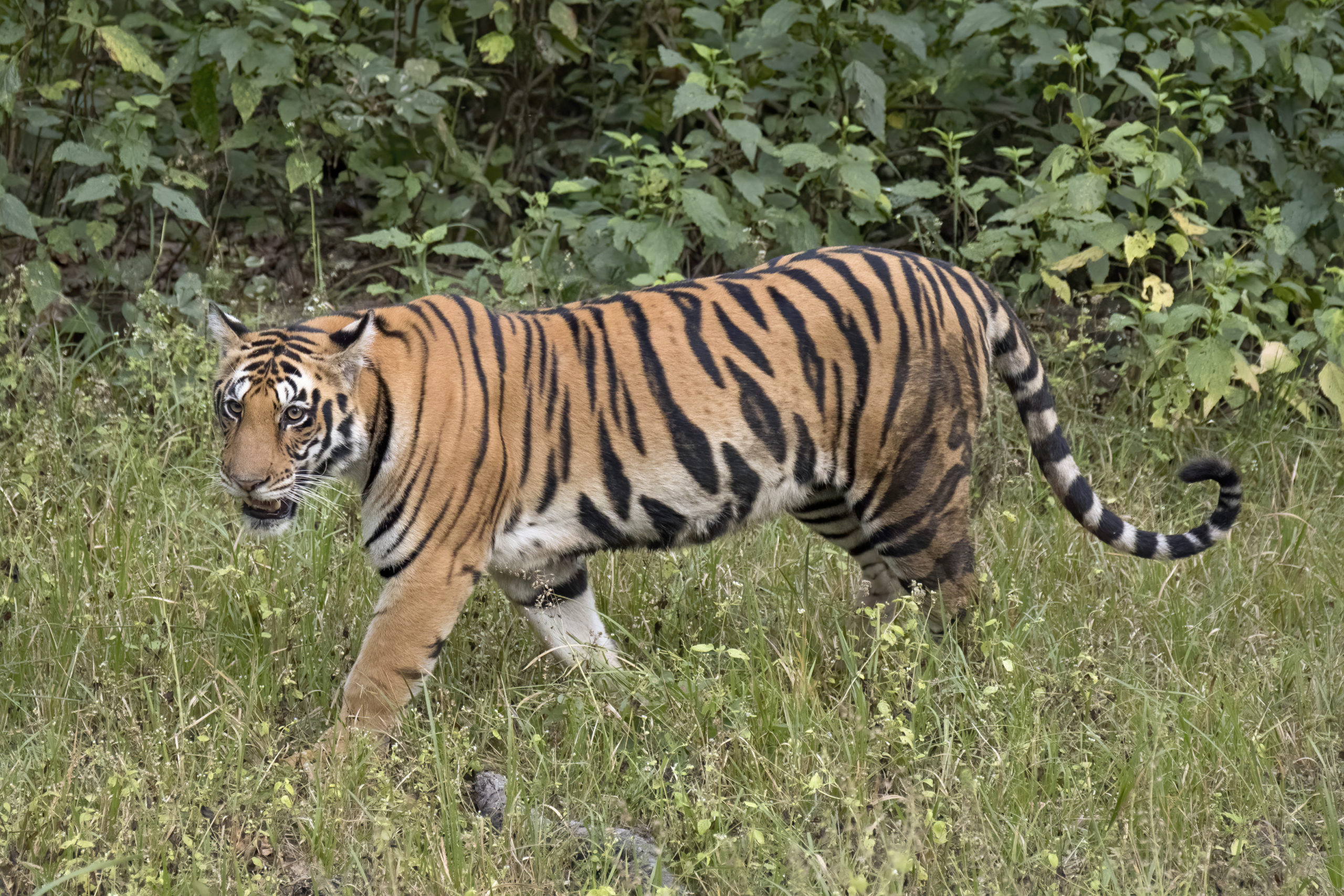
KATHMANDU: The government is set to begin Nepal’s next national tiger census from Poush 1 (December 16), covering five major protected areas, Parsa, Chitwan, Banke, Bardiya and Shuklaphanta National Parks.
According to the Department of National Parks and Wildlife Conservation, the census will run for three months, Poush, Magh and Falgun, following the standard four-year interval. Senior ecologist Hari Bhadra Acharya said the enumeration will start from the Chitwan–Parsa complex, which has been divided into three blocks.
In each block, a pair of camera traps will be installed for every two square kilometers. These camera grids will remain in place for 15 nights before being shifted to the next location. The second complex will include Banke and Bardiya, also divided into three blocks, while Shuklaphanta and Laljhadi will form the third complex, counted as a single block.
Acharya informed that around 1,100 camera traps, available through government agencies and development partners, will be used in the census. Since previously used cameras are being redeployed, the cost is estimated at around Rs 25 million. The count is being carried out with support from government bodies and donor agencies.
In the last census conducted in 2022, Nepal recorded 335 adult tigers: 128 in Chitwan, 125 in Bardiya, 25 in Banke, 41 in Parsa and 36 in Shuklaphanta.
Dr. Ganesh Pant, Chief Conservation Officer at Chitwan National Park, said the cameras will be installed in areas with high tiger movement. Tigers are individually identified based on their unique stripe patterns captured in the photographs.
Following the completion of the tiger census, authorities plan to conduct a rhino census. Last year’s rhino count was postponed due to budget constraints. Although rhino census is also conducted every four years, the department now plans to carry it out using a modified methodology.






Comment