




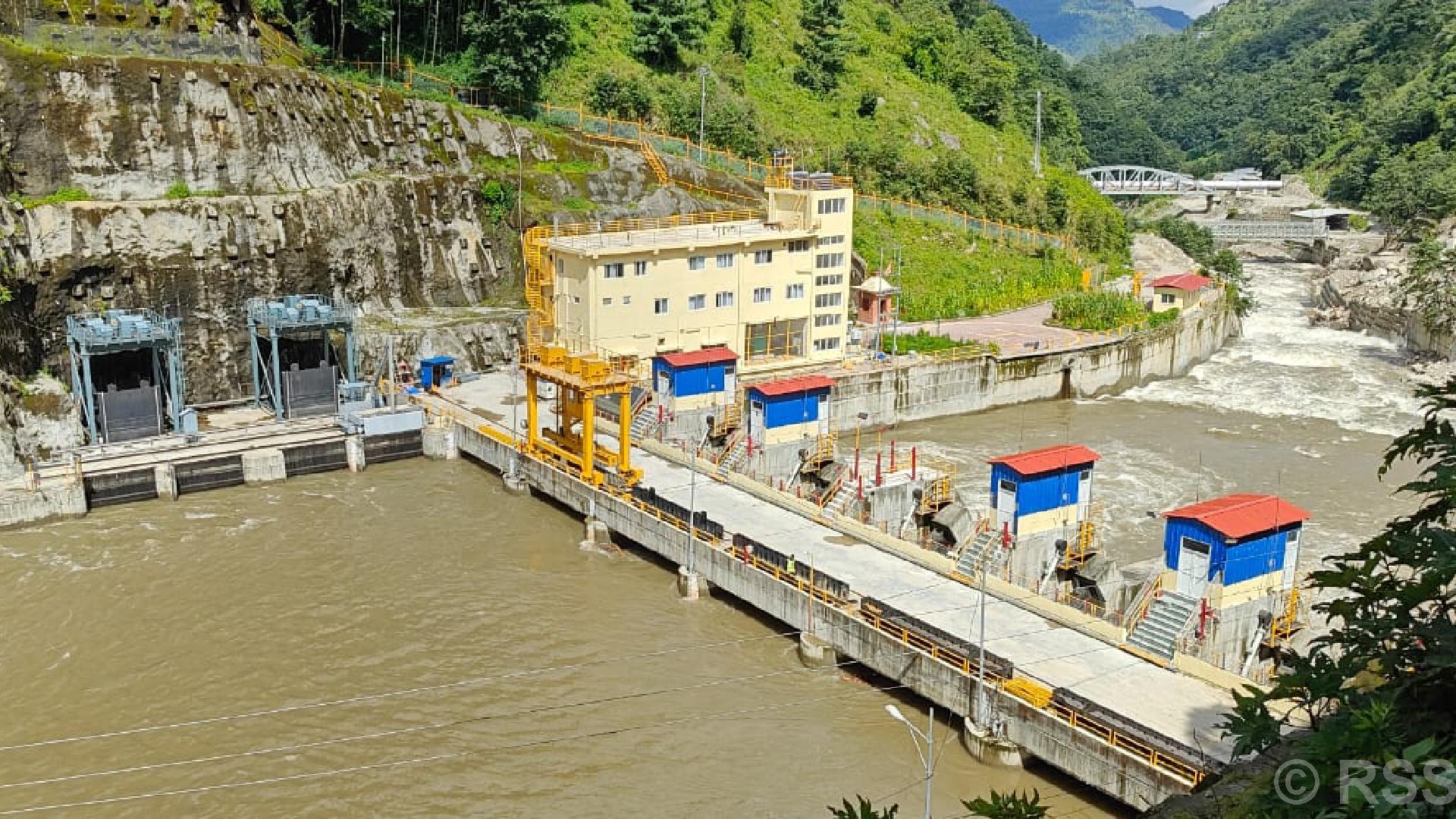
SOLUKHUMBU: The 82 MW Lower Solu Hydropower Project, located in the mountainous district of Solukhumbu, has been connected to the national transmission system.
The project, built in Solukhola, is now linked to the national grid through the 132 kV double-circuit transmission line of the Solu Corridor via the Tingla Substation.
Constructed with private investment, the project marks a significant milestone in energy generation and distribution. Promoted by Solu Hydropower Limited, the plant began generating electricity from its first unit on July 20 and was connected to the grid for a test run, according to Assistant Project Manager Krishna Bahadur Chaudhary.
Electricity is being generated by channeling water from a dam in Salme—on the border of Solududhkunda Municipality-7 and 11—to an underground powerhouse in Bhadaure, Tingla, about six kilometers downstream.
A five-kilometer-long tunnel has been built to control the river’s flow and facilitate energy generation. Assistant Manager Chaudhary noted,
“Two Pelton turbines, each with a capacity of 41 MW, have been installed. Both units have been successfully tested on the grid. The Nepal Electricity Authority will now conduct production tests over the next 15 days.” Full commercial operation is expected to begin once NEA grants approval following the testing phase.
The project, launched in 2016, encountered several challenges including difficult terrain, technical complications, and climate-related obstacles. A landslide during the final stages of construction caused severe damage to structures, including the penstock, requiring complete reconstruction. Although this increased overall costs, it is expected to enhance the project’s long-term sustainability.
With a total investment of Rs. 16 billion, financed by various European banks including FMO, the project is seen as a model of successful private sector and international collaboration.
Project experts view the large-scale investment, effective risk management, and early completion as noteworthy achievements. While initial plans aimed for completion by September 2025, construction was finalized two months ahead of schedule, and electricity generation has already begun.
The Lower Solu project is expected to produce a minimum of 23 MW in winter and up to 82 MW during the rainy season.
The electricity generated is fed into the national grid through the Tingla Substation using a 132 kV double-circuit transmission line. The project is part of the government’s ‘Super Six’ initiative, which includes six major hydropower projects developed with private investment.
Among them, the largest privately built project is the 86 MW Solu Dudhkoshi, which is already operational. The Lower Solu Hydropower Project is the second largest in this category.
Beyond power generation, the project has significantly contributed to local employment, infrastructure development, and economic activity in Solukhumbu.
Dozens of local youths were involved in both technical and non-technical roles, from tunneling and penstock installation to turbine fitting and powerhouse operation.
Local representatives have expressed optimism that the project will serve as a cornerstone for the district’s prosperity, with anticipated growth in tourism, industry, services, and infrastructure.






Comment