




KATHMANDU: On September 8 and 9, Nepal witnessed an unprecedented youth-led uprising by the Gen-Z generation — a rebellion that may go down in global history. The movement toppled a powerful two-thirds government formed by the two major parties, the Nepali Congress and the CPN-UML.
Following the sacrifices of 74 lives and the destruction of billions of rupees in public and private property, an interim electoral government has been established under the leadership of former Chief Justice Sushila Karki.
This government, born out of the Gen-Z mandate, has made several popular decisions in its early days. However, one recent move has raised serious questions about whether it still aligns with the core values of the movement.
The Gen-Z rebellion — largely organized and amplified through social media — was driven by outrage over corruption, nepotism, and the lack of a directly elected executive. The movement gained momentum by exposing the abuse of state power by leaders of major political parties.
As the country looks toward the upcoming House of Representatives election scheduled for March 5, 2026, public expectations remain high. The youth, particularly those aligned with the Gen-Z ethos, are looking for governance reforms, transparency, and people-centered decisions.
Finance Minister Rameshwor Khanal, for example, recently introduced measures aimed at reducing public spending and promoting fiscal austerity — steps widely welcomed by the public.
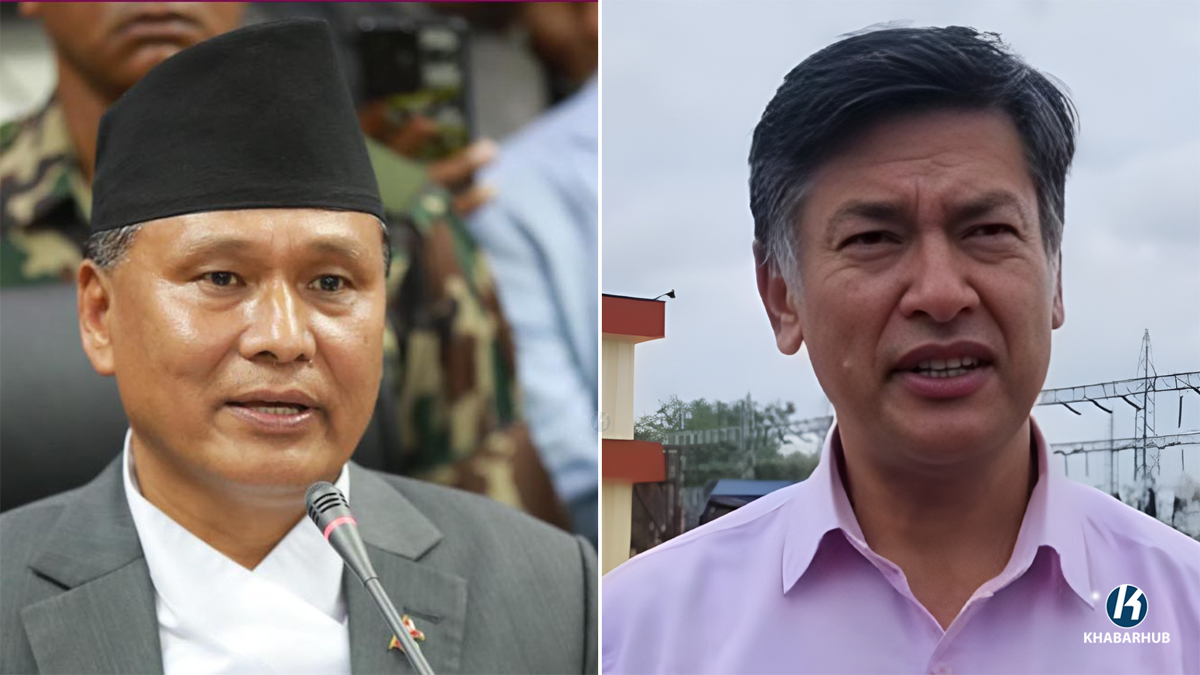
Following Shakya’s removal, the government appointed Manoj Silwal as the new Managing Director of the NEA. However, Minister Kulman Ghising — who heads the Ministry of Energy — has yet to publicly explain or justify the reasons behind Shakya’s removal.
However, controversy erupted after the cabinet’s decision last Sunday to remove Hitendra Dev Shakya from his position as Managing Director of the Nepal Electricity Authority (NEA). Critics say the move mirrors the political maneuvering of the previous establishment, particularly that of former Energy Minister Deepak Khadka.
Many on social media, including Gen-G supporters, have criticized the decision as politically motivated and retaliatory.
Although the cabinet appointed Shakya as an energy expert in the Energy Commission Secretariat for a four-year term, the same day he told reporters that he would implement the orders of Energy Minister Kulman Ghising — who had just taken charge and immediately ordered the recovery of dues from dedicated and trunk lines.
Shakya had planned to call a board meeting within one or two days to execute Ghising’s directive. Yet, later that evening, the cabinet abruptly transferred him from his position without citing any specific reason.
This sudden decision has raised concerns and shaken public confidence in both the government and Minister Ghising.
“This is a vindictive action”
Former Secretary Sharada Prasad Trital commented that while the Gen-Z movement had rightfully overthrown a corrupt regime, the government should have taken a systematic approach to reform.
“This government was formed following a people’s rebellion. It could have legitimately asked all politically appointed individuals to resign en masse. However, selectively removing individuals like this is not in line with good governance,” he said.
Trital stressed that anyone appointed politically — from government organizations to ambassadors — should have voluntarily stepped down following the regime change. But in cases where appointments are made under constitutional provisions, the government must follow legal procedures.
He argued that removing Shakya, who was legally appointed to a four-year term, under the guise of a transfer, undermines both the spirit of the Gen-G movement and the rule of law.
“In my view, whether it’s out of personal vendetta or political retaliation, such actions are unlawful,” Trital stated. “If someone has done wrong, there should be a legal process. You cannot single out individuals in a democracy.”
As the government navigates this transitional phase, the question remains: Is it staying true to the Gen-Z mandate of justice, transparency, and rule of law — or is it repeating the very practices it was meant to overthrow?
Former Secretary Trital also remarked that the current government’s working style echoes the same patterns exhibited by the previous political parties. “If the trend doesn’t change, neither will the people — and the country won’t move forward,” he said.
“This is a fight between two rivals”
Mukesh Kafle, former Managing Director of the Nepal Electricity Authority (NEA), also expressed concern that the recent leadership change at the NEA is unlikely to benefit the institution. He described the episode as a personal power struggle rather than a decision made in the interest of the public or the organization.
“This is a fight between two rivals,” Kafle said. “In the eyes of the law, they are plaintiff and defendant — the public is watching it all unfold.”
Referring to the government’s action — particularly its failure to provide Shakya a chance to explain his side before removing him — Kafle criticized the government’s approach as inconsistent with democratic values.
“Democracy is not yet fully established in the country. Freedom of speech is still restricted. Everyone can see that,” he said. “What has just happened is unnatural. Let’s see — but I doubt it will bring any good to the organization.”
Hitendra removed twice — both times because of Kulman
Both Kulman Ghising, the current Energy Minister, and Hitendra Dev Shakya, the recently removed NEA chief, are respected engineers in Nepal’s power sector. Yet, Shakya has been forced to leave the NEA’s top post twice — both times in connection with Ghising’s rise.
The first time occurred during the tenure of the KP Sharma Oli-led government, which appointed Shakya as NEA Managing Director on February 9, 2021. However, when Sher Bahadur Deuba came to power, his government removed August 9, 2021, and reinstated Kulman Ghising.
With just a few months remaining in Kulman’s term, the Oli-led administration once again removed Ghising and reappointed Shakya last Chaitra. But now, within just six months of that appointment, the new government — formed in the aftermath of the Gen-G uprising — has once again removed Shakya, transferring him to the Energy Commission Secretariat under the same ministry.
“I’m tired now,” says Shakya
In the wake of his transfer, Shakya has expressed disappointment and fatigue. His home was burned down during the Gen-G uprising, and now he feels that the very movement has turned against him.
“I’m tired now,” he said. “If the government wants to use my expertise, I’m willing to contribute. But if this is about revenge, I’ll reconsider how to move forward.”
Following Shakya’s removal, the government appointed Manoj Silwal as the new Managing Director of the NEA. However, Minister Kulman Ghising — who heads the Ministry of Energy — has yet to publicly explain or justify the reasons behind Shakya’s removal.




Comment