




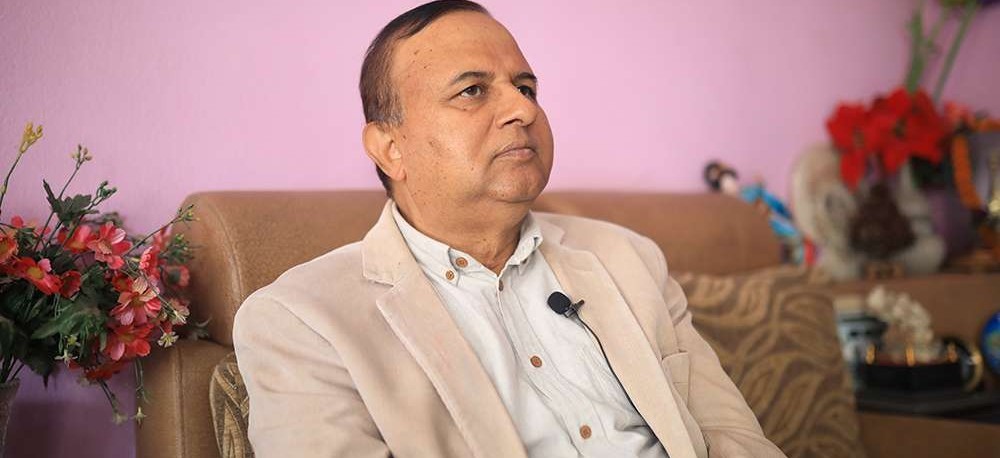
KATHMANDU: CPN-UML General Secretary Shankar Pokharel has come under criticism on social media after making remarks linking the return of ambassadors from major powers to Nepal’s sensitive geopolitical situation.
Pokharel, the general secretary of the country’s largest communist party, posted on Facebook late Tuesday night claiming that Nepal’s geopolitics were in a delicate phase, citing what he described as a plan by ambassadors of major power nations to return home simultaneously.
“Indications of Nepal’s geopolitics being in a very sensitive situation can be understood from the plan of ambassadors of major power countries returning at the same time,” Pokharel wrote on Facebook.
However, his statement triggered widespread criticism, with journalists and commentators questioning his understanding of geopolitics and diplomatic norms.
Critics pointed out that the Chinese ambassador to Nepal is returning home after completing his tenure and receiving a promotion, while the US ambassador is returning as part of a broader decision by the United States to recall ambassadors and diplomatic officials from around 30 countries under its internal policy decisions.
Journalist Anil Giri, in a social media post, questioned Pokharel’s grasp of basic diplomatic facts. “How does one become a leader of a political party like the UML with such weak information and understanding?” Giri wrote.
He clarified that the Chinese ambassador’s return was due to the completion of tenure and promotion, while the US decision was part of former President Donald Trump’s foreign policy implementation that involved recalling ambassadors from multiple countries, including Nepal. “China and the US have not recalled their ambassadors due to dissatisfaction with the current Sushila Karki-led government,” Giri added.
Diplomatic affairs journalist Parshuram Kafle also responded, stating that Nepal’s sensitive geopolitics had nothing to do with the ambassadors’ return. “One ambassador is returning after completing his term, and another is returning according to his country’s internal planning. That country has recalled ambassadors not only from Nepal but from more than 29 other countries as well. This decision is not driven by Nepal’s geopolitics,” Kafle wrote.
Journalist Rajesh Baral took an even sharper tone in the comments section, questioning Pokharel’s statement and reiterating that the developments were routine diplomatic decisions rather than geopolitically motivated moves related to Nepal.
Despite the criticism, some UML supporters were seen endorsing Pokharel’s statement in the comments, expressing agreement with his interpretation even as others labeled it misleading.
The episode has sparked a broader debate on social media over the responsibility and sensitivity expected from senior political leaders when commenting on geopolitics and international relations.




Comment