




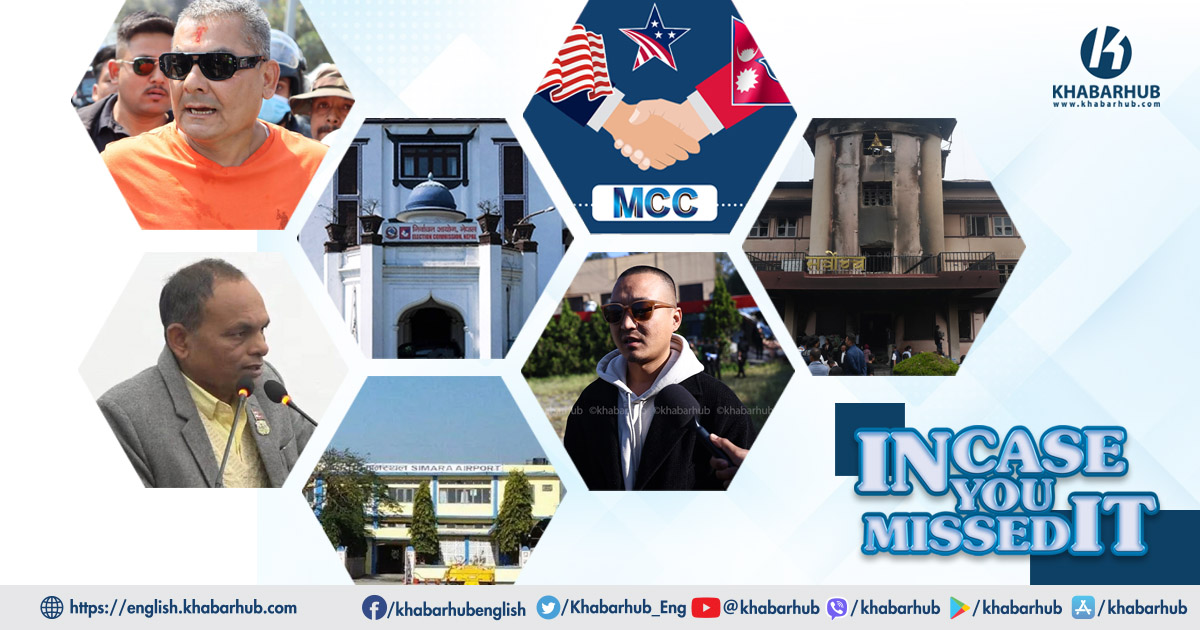
KATHMANDU: The past week in Nepal unfolded as a vivid display of the uneasy coexistence between procedural democracy and intensifying social unrest. While the Election Commission moved decisively to formalize timelines for the March 5, 2026 House of Representatives election, the political atmosphere surrounding these announcements was marked by insecurity, competing narratives of legitimacy, and growing mistrust in state institutions.
The contrast between administrative confidence and political turbulence underscores a central tension shaping Nepal’s current moment: the state is eager to move ahead with elections, yet the ground beneath it is increasingly unstable.
At the administrative level, the Election Commission projected clarity, purpose, and urgency. The publication of the detailed calendar for both the First-Past-The-Post and the Proportional Representation systems signaled an effort to impose order on a political environment that is anything but orderly.
The announcement of voter eligibility deadlines, the dates for party registration, the timeline for contesting closed lists, and the schedule for verification and symbol distribution all reflect the Commission’s determination to maintain procedural continuity.
In many democracies, such technical announcements pass without fanfare. In Nepal today, they function as an attempt to anchor the political system at a moment when the political class, the security apparatus, and large segments of society are pulling in contradictory directions.
Taken together, the week’s events paint a picture of a country at a political crossroads. The procedural aspects of democracy—election schedules, voter lists, institutional operations—are moving forward with determination, but the substantive aspects—public trust, rule of law, security, political consensus—are increasingly fragile.
Meanwhile, President Ram Chandra Paudel’s intervention reinforced this narrative of inevitability. By calling the March 5 election “crucial for safeguarding the constitution, democracy, and the nation,” he attempted to elevate the election beyond the realm of partisan politics. His remarks echoed a common sentiment among senior political figures that the election is the only path to restore stability after months of street protests, worsening political polarization, and widespread frustration with governance.
Yet the very fact that the President felt compelled to remind citizens of democracy’s fundamentals reveals the extent to which public confidence in the system has eroded. His emphasis on development, good governance, and prosperity sounded aspirational in a context where the basic ability of the state to control the streets, maintain law and order, and manage political dissent remains in question.
Additionally, the National Security Council meeting sharpened the seriousness of this situation. Its decision to recommend deploying the Nepal Army for the upcoming election marked one of the week’s most consequential developments. Elections have occasionally required military support, but the justification this time—ensuring a “free, fair, and fear-free environment”—takes on a heavier meaning against the backdrop of recent social unrest.
Violent youth-led protests, political confrontations, ideological movements challenging the republican order, and the proliferation of radicalized rhetoric have all created a climate of unpredictability. The Council’s review of potential security challenges, both domestic and international, suggests that the election is not just a political exercise but a profound test of the state’s ability to assert authority while respecting democratic norms.
The shadow of militarization looms larger as political tensions deepen, and while officials insist that army deployment is a precaution, its necessity is itself a commentary on the fragility of the moment.
Meanwhile, traditional political parties attempted to project unity and responsibility. The Nepali Congress’ Central Working Committee announced its decision to participate in the election while expressing deep concerns over the state of the country’s law and order. Their complaints—ranging from thousands of absconding convicts to missing weapons and the shrinking political space for free activity—highlight widespread concerns shared by many actors across the political spectrum.
They agreed to contest the election not because conditions are ideal, but because they see no viable alternative to the electoral process. This conditional acceptance reflects a broader theme of the week: nearly every actor insists that elections must proceed, but few express confidence that the current environment is conducive to a free and credible vote.
On the other hand, Prime Minister Sushila Karki’s remarks reinforced the high stakes. In her meeting with party representatives, she explicitly framed any refusal to register for the election as a rejection of democracy itself. Her assertion that those who boycott would be “choosing chaos over the protection of democracy” was both a challenge and a warning.
It framed participation as a moral obligation and intensified the pressure on parties contemplating alternative strategies. Her insistence on youth-driven legitimacy and anti-corruption mandates suggests she sees the election as a referendum on the currents that brought her government to power.
Yet the confrontational tone also revealed the government’s fear: that the political field is fragmenting, and that the most disruptive actors may not be political parties at all, but rather unstructured social forces gaining momentum across the country.
The arrest of monarchist activist Durga Prasai, who had threatened to shut down the country on November 23, illustrated this new dynamic vividly. Prasai has emerged as a polarizing figure, capable of mobilizing large numbers through his anti-republican, anti-federalist, and anti-secularist rhetoric.
His promises to “bring Mechi to Mahakali to a halt” were not just slogans; they were signals of a movement attempting to paralyze the state itself. The government’s pre-emptive arrest of Prasai was framed as necessary to maintain peace, but it also raises questions about the limits of dissent during an election period.
Prasai’s growing influence, particularly among disillusioned youth and conservative groups, represents a direct challenge to the political order established since 2006. His detention indicates that the government sees such challenges as existential threats requiring firm intervention.
Equally significant was the continuing rise of the Gen-Z movement, which has become a central force in shaping public discourse. The violent clashes in Simara, the curfew imposed during the height of the unrest, and the public confrontation by youth leader Sudan Gurung toward the Home Minister underscored the widening gap between young activists and the state.
Gurung’s critique—that powerful individuals who incite violence remain unpunished, while weaker actors face immediate state action—struck at the core of public grievances about inequality and impunity.
His insistence that elections cannot be credible without justice for those injured or killed during protests points to a growing belief that the procedural aspects of democracy cannot be separated from substantive justice.
Additionally, the attack on Gen-Z leader Miraj Dhungana’s campaign office further illustrated the growing normalization of political violence. Dhungana’s account of supporters, including women, being manhandled suggested a political environment where intimidation is becoming more common and where new political actors face risks that established parties no longer publicly acknowledge.
These incidents signal the emergence of a contested political space where new movements, traditional parties, and radical actors confront each other not just ideologically but physically.
On the othr hand, the CPN-UML’s announcement of the National Volunteer Force added another layer of complexity. While the party presented the NVF as a response to rising insecurity and social unrest, critics worry that it could function as a quasi-militant wing, echoing a trend seen in many polarized democracies where parties seek to “protect” their leadership through parallel structures.
The formation of such a force at a time of heightened political tension could deepen societal divisions and spark competitive mobilization among rival groups. This development suggests that political parties themselves are preparing for a rougher, more confrontational electoral season.
Whether the March 5, 2026 election becomes a stabilizing milestone or another turn toward crisis will depend not only on the actions of political parties and the government but also on how the state engages with the rising new forces reshaping Nepal’s political landscape from the ground up.
Amid these political storms, the resumption of the Supreme Court’s full operations served as a reminder of the institutional strain the country has endured. The restoration of systems damaged during the September 9 Gen-Z incidents symbolized a broader struggle to reestablish normalcy across state institutions.
Yet the fact that the judiciary—an institution meant to be insulated from political upheavals—was directly affected by street protests highlights how deeply the crisis has penetrated.
The week also included developments outside the political-security nexus, such as the launch of direct flights between Pokhara and Paro, the deportation of 35 Nepalis from the United States, and the beginning of the Nepal Premier League. These events, though seemingly routine, reveal broader socioeconomic tensions, including rising unemployment, outbound migration pressures, and the government’s desire to project normality and development despite rising instability.
Taken together, the week’s events paint a picture of a country at a political crossroads. The procedural aspects of democracy—election schedules, voter lists, institutional operations—are moving forward with determination, but the substantive aspects—public trust, rule of law, security, political consensus—are increasingly fragile.
Nepal is heading toward an election that everyone claims is necessary but few believe will be straightforward. It is a moment defined not by confidence, but by urgency; not by unity, but by competing claims to legitimacy.
Whether the March 5, 2026 election becomes a stabilizing milestone or another turn toward crisis will depend not only on the actions of political parties and the government but also on how the state engages with the rising new forces reshaping Nepal’s political landscape from the ground up.



Comment