




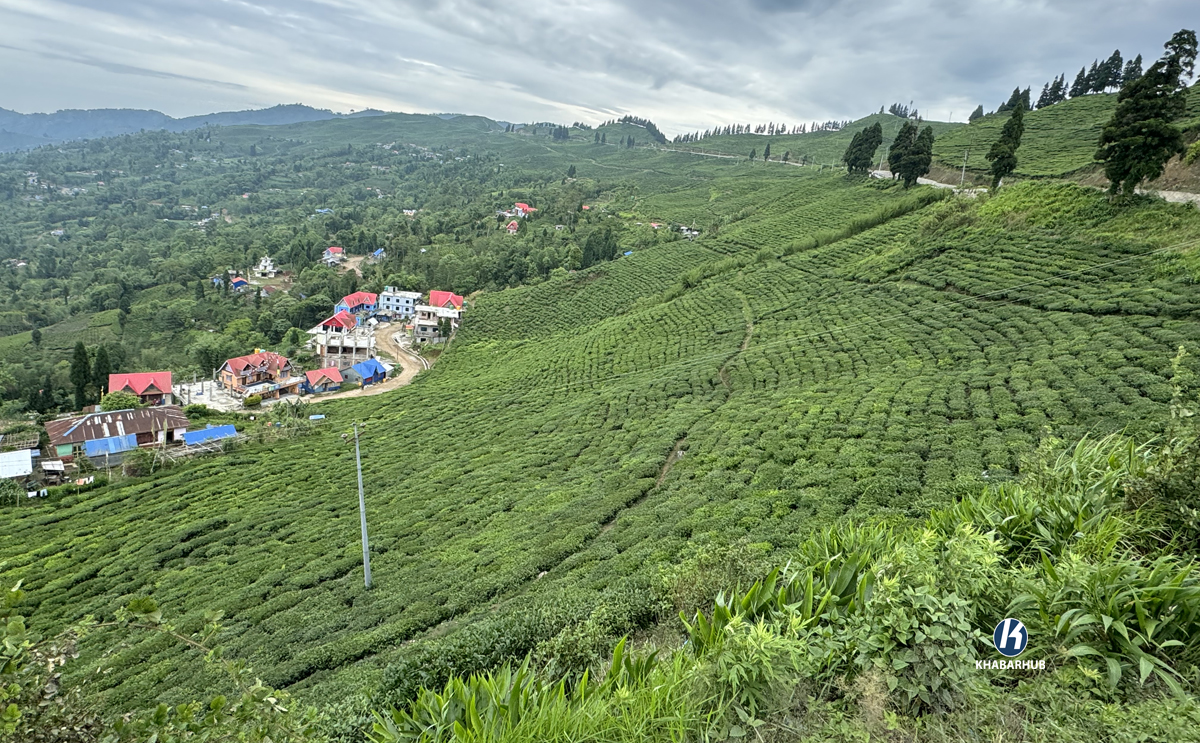
BIRATNAGAR: From the tea gardens of Ilam to the sunrise views of Antudanda, Koshi Province is fast becoming a favorite escape for Indian tourists.
As the province marks Tourism Year 2082, local authorities hope to turn the region’s natural beauty and cultural diversity into a major driver of economic revival after the pandemic slowdown.
Launched with the target of attracting 1.5 million visitors from neighboring India and other countries, the campaign has completed its first six months.
Kamalesh Sharma, a tourist from Bihar, India, is visiting Nepal with his family of four. Speaking from Kanyam, Ilam, he said, “I had come to Nepal before with friends, but this is my first visit with my family. This year’s experience has been more comfortable and enjoyable.” Sharma added that many Indian tourists like him are drawn to Nepal for its hospitality and affordable, quality accommodations.
Although the tourism year saw several activities during the first three months (April to July), promotional efforts slowed in the following quarter. According to Bhavish Shrestha, co-coordinator of Koshi Tourism Year 2082, the campaign—held under the slogan “The pride of Koshi, the pride of the Himalayas, respect for all in the tourism year”—is being carried out jointly by the government and private sector.
He said that the province aims to attract visitors interested in religious, natural, cultural, educational, health, and adventure tourism.
The Koshi Provincial Government launched Tourism Year 2082 to revive the tourism sector, which was severely affected by the COVID-19 pandemic. Chief Minister Hikmat Kumar Karki stated that the province seeks to reduce Nepal’s foreign debt and trade deficit through growth in tourism, hydropower, energy, and herbal industries.
According to Shrestha, there are around 500 tourist-standard hotels in Koshi Province, including 150 one- to five-star establishments, with the capacity to host up to 3,000 visitors per day.
He noted that recent floods and landslides in the eastern hilly districts have impacted tourism, but further promotional campaigns will resume after the Chhath festival.
Koshi Province is renowned for its natural beauty, cultural diversity, and religious significance. From Mount Everest, the world’s highest peak at 8,848 meters, to Kachankawal in Jhapa, Nepal’s lowest point at 70 meters above sea level, the province offers a wide range of attractions.
Thousands of domestic and foreign visitors travel to Shree Antudanda in Ilam each day to witness the sunrise, while sites such as Koshi Tappu Wildlife Reserve and the Wetna wetlands draw nature enthusiasts and bird watchers.
The provincial government has identified 13 ecological destinations and 10 trekking routes across Koshi. Approximately 43 percent of foreign and 57 percent of domestic tourists visiting the province travel to the Everest region each year, according to official data.
Prominent religious sites such as Chhintang in Dhankuta, Pathibhara Temple in Taplejung, Halesi in Khotang, and the Barah area in Sunsari are key pilgrimage destinations.
Tea estates in Ilam, Bhedetar in Dhankuta, Tamkemyungdanda in Bhojpur, and Sadhutar in Panchthar are also among the province’s popular scenic spots. Mountain ranges including Everest, Makalu, Kanchenjunga, Lhotse, and Cho Oyu continue to attract foreign trekkers, with base camp trails offering both adventure and breathtaking natural beauty.
Likewise, the Falgunanda Trek, Mundum Trail, and Sabhapokhari Trek have emerged as major eco-tourism routes, reflecting Koshi’s growing appeal as a sustainable travel destination.





Comment