




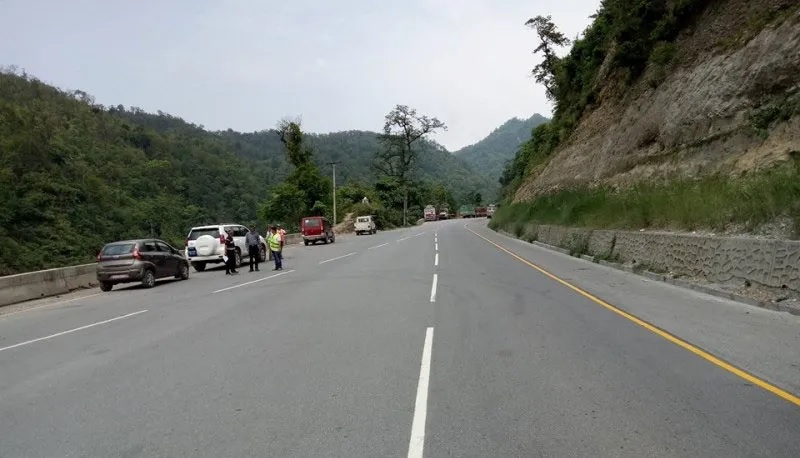
KATHMANDU: One of the national pride projects, Kathmandu-Tarai expressway, has recorded 38 percent physical progress while 39 percent in financial front. It is one of the most significant projects in the country, which is managed by the Nepali Army (NA).
Among seven tunnel ways planned under the project, two have been completed while two others are under construction. The total stretch of the expressway is 70.97-km. Information about it was shared during a press conference organized on 262nd anniversary of the NA on Sunday.
Project chief Kamal Bikram Shah informed that design and preparatory works for three other tunnels was initiated. He admitted that the expected physical progress of the project could not be achieved due to various reasons. However, efforts are on to complete the works as per goal, he added.
Importantly, the initial point of the project in the Kathmandu side, Khokana, is still facing the problem of land acquisition.
Once the project completes, it will be the fastest route to travel to Tarai belt from the federal capital, Kathmandu, thereby massively reducing the cost in transportation.
Shah informed that the NA had aimed at completing the project by the end of 2083BS.
Meanwhile, the construction of Defense University has posted 30.42 percent physical progress while 25.75 percent in the financial front.





Comment