




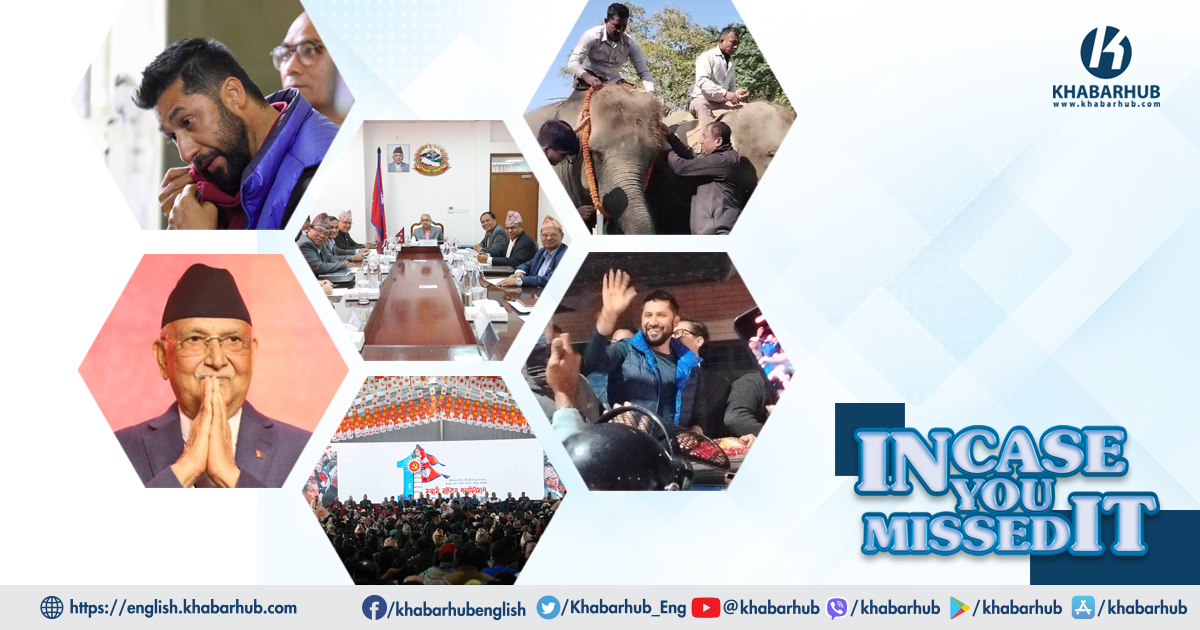
KATHMANDU: Last week’s events in Nepal revealed a country moving in multiple, sometimes contradictory, directions. On one hand, established political forces consolidated their internal power structures and reiterated familiar commitments to democracy, elections, and governance.
On the other, new political actors, youth movements, and institutional reforms signaled pressure for change, often clashing with entrenched practices. Meanwhile, strong macroeconomic indicators contrasted sharply with unresolved political instability, highlighting Nepal’s enduring paradox: economic resilience amid political uncertainty.
CPN-UML’s consolidation: Stability or stagnation?
KP Sharma Oli’s re-election as chairperson of the CPN-UML for a third term marked a decisive moment for Nepal’s largest leftist party. His overwhelming victory over Ishwar Pokharel underscored Oli’s continued dominance within the party and the absence of a credible internal challenger. While this result may provide short-term organizational stability, it also raises questions about internal democracy and leadership renewal within UML.
The party’s 11th General Convention further reinforced this duality. The endorsement of a 24-point political proposal projecting commitments to youth engagement, governance reform, and corruption control appeared progressive on paper. The explicit call for dialogue with youth and acknowledgment of their frustrations suggest UML recognizes the growing political weight of younger generations. However, the party’s framing of recent youth-led protests—condemning violence while distancing Gen-Z protesters from responsibility—reflects a cautious, defensive posture rather than a transformative one.
UML’s demand for the restoration of parliament and its criticism of the government for avoiding elections place the party firmly in opposition mode. Yet, as a former ruling force, UML faces skepticism over whether its current democratic rhetoric represents genuine reform or strategic repositioning. The party’s insistence on constitutional processes contrasts with its own history of political maneuvering, leaving observers to question whether UML’s renewed democratic zeal will translate into meaningful institutional strengthening.
Rabi Lamichhane and the politics of victimhood?
If UML’s week was about consolidation, Rabi Lamichhane’s was about resurgence. His release on bail and immediate return to political activity transformed a legal setback into a political rallying point. Lamichhane’s narrative, framing his arrest as political vendetta and his struggle as one for justice and future generations, resonates strongly with supporters disillusioned by traditional parties.
Lamichhane’s emphasis on elections as the only legitimate path forward is particularly notable. At a time when political actors are tempted by street pressure or backroom deals, his insistence on electoral legitimacy aligns with democratic norms. However, his rhetoric also carefully balances institutional respect with populist appeal. By declaring that his fight is not personal, while simultaneously invoking historical judgment of his opponents, Lamichhane positions himself as both victim and moral challenger.
His emotional engagement with families of those killed during the Gen-Z movement further cements his alignment with youth grievances. This gesture, while symbolically powerful, also raises expectations. The challenge for Lamichhane and the Rastriya Swatantra Party (RSP) will be to convert symbolic solidarity into concrete policy proposals and institutional reforms, avoiding the trap of perpetual opposition politics.
Youth, violence, and the struggle for narrative control
A striking feature of last week’s developments was how central the youth question has become. Both UML and RSP sought to claim moral authority over Gen-Z aspirations, albeit in different ways. UML appealed to youth to reject violence and engage through dialogue, while simultaneously rejecting the government’s agreement with Gen-Z representatives as illegitimate. This contradiction reveals a deeper struggle: established parties want youth participation, but largely on their own terms.
The government’s formation of a high-level political dialogue committee reflects recognition of this pressure. Yet skepticism remains about whether such committees are genuine platforms for engagement or temporary mechanisms to defuse unrest. The exclusion of clear youth representation and the dominance of senior political figures risk undermining the committee’s credibility from the outset.
Electoral reform and institutional discipline
The Election Commission’s proposed strict campaign rules stand out as a rare example of proactive institutional reform. By limiting flags, banners, vehicles, and digital प्रचार, the EC is signaling a desire to reduce electoral excess, environmental degradation, and unequal competition. If implemented effectively, these measures could help level the playing field and shift campaigns toward ideas rather than spectacle.
However, enforcement will be the real test. Nepal’s electoral history is replete with well-intentioned codes of conduct that falter in practice. Political buy-in, particularly from larger parties accustomed to resource-heavy campaigning, will determine whether these reforms mark a genuine turning point or remain aspirational.
Economic bright spots amid political clouds
While politics dominated headlines, economic indicators quietly told a more optimistic story. A 31.4 percent surge in remittance inflows, a robust current account surplus, and historically high foreign exchange reserves paint a picture of macroeconomic stability. These figures provide the government with fiscal breathing space and insulate Nepal from immediate external shocks.
Yet this economic resilience carries its own warning. The continued dependence on remittances underscores structural weaknesses in domestic job creation and industrial growth. Declining foreign direct investment further highlights investor hesitation, likely tied to political instability and policy unpredictability. Without political consensus and institutional credibility, economic gains risk becoming unsustainable.
Symbolism, governance, and public trust
Smaller events last week also carried symbolic weight. The decision to gift elephants to Qatar reflects Nepal’s use of soft diplomacy, but it also sparked public debate about conservation priorities and national assets. Similarly, the suspension of a vice-chair within the Shram Sanskriti Party, though lacking transparency, points to growing sensitivity around accountability and internal discipline—albeit inconsistently applied across the political spectrum.
Conclusion: Nation at crossroads
Last week encapsulated Nepal’s current condition: established leaders entrenching power, emerging leaders challenging narratives, youth demanding dignity and accountability, institutions attempting reform, and an economy holding steady despite political turbulence. The central question remains whether these parallel developments will converge toward democratic renewal or continue pulling the country in opposing directions.
Elections loom as the critical junction. For UML, RSP, and the ruling coalition alike, credibility will depend not on rhetoric but on actions—whether they strengthen institutions, respect constitutional processes, and genuinely engage the generation that increasingly defines Nepal’s political future. The week’s events suggest that while the actors are in motion, the destination is still uncertain.


Comment