




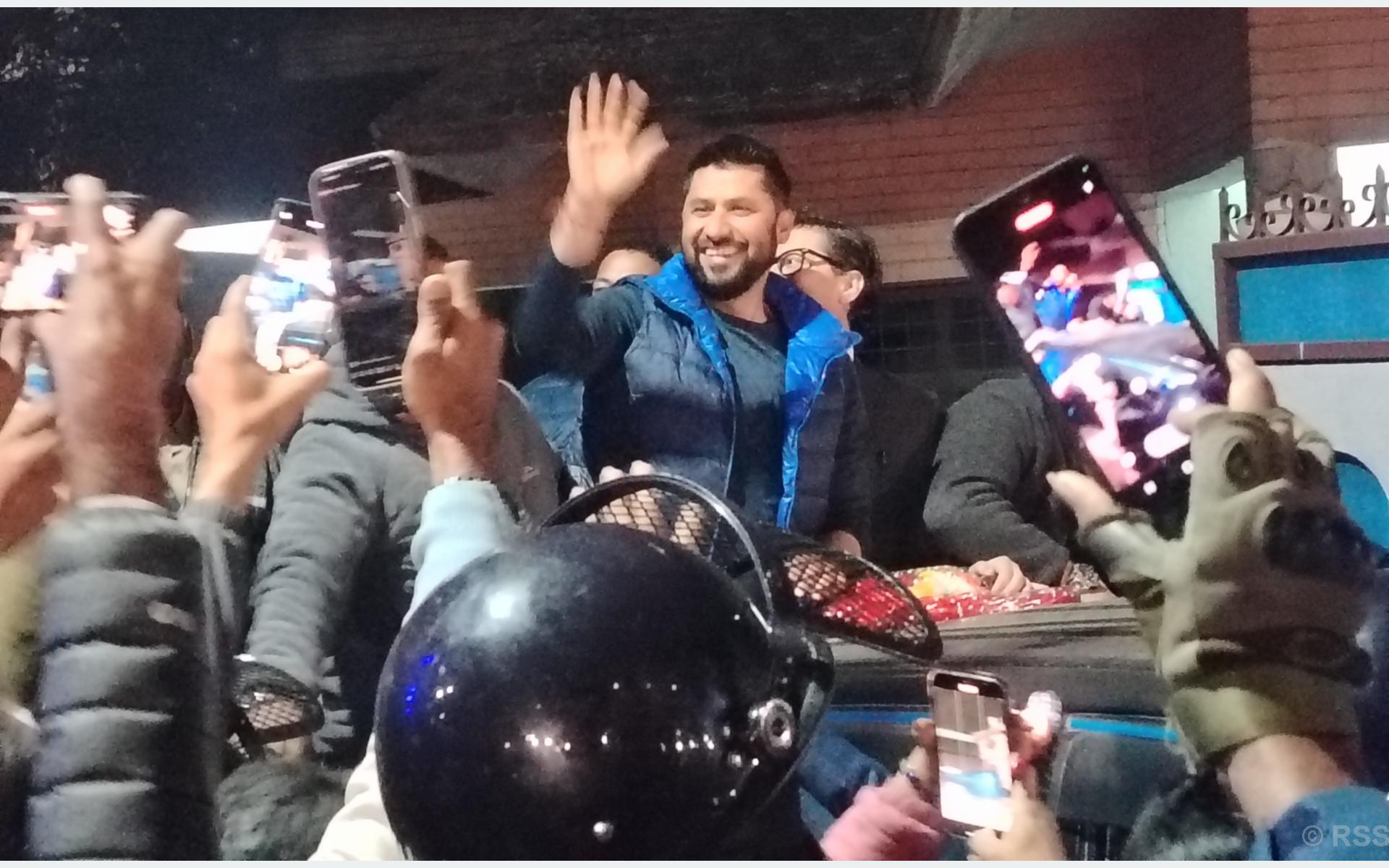
KATHMANDU: Rastriya Swatantra Party (RSP) chair Rabi Lamichhane has accused the entire state machinery of conspiring to frame him.
Addressing a program at the party’s central office in Banasthali on Monday after being released on bail following nearly nine months in custody in a cooperative fraud case, Lamichhane said this was not a moment for celebration as “the blood of young children was shed during the Gen-Z uprising.”
He claimed that state institutions and criminal networks had united against him. “One individual was targeted by the entire state machinery and criminals together, but I am confident because I have not abandoned the truth,” he said.
Lamichhane stated that support from four million people proved he was not alone and that the public was closely watching the attacks against him.
He expressed gratitude to Vice Chairperson DP Aryal for leading the party during his absence and extended goodwill to colleagues who could not be accommodated along the way.
Claiming the country stands at a turning point, Lamichhane said the Gen-Z generation has already revolted and that it now remains to transform that revolt into a revolution.
“Until two days ago, I was in prison,” he said, adding that efforts were underway to restore parliament. However, he firmly opposed such a move, saying a parliament that silences voices, cuts microphones, and suppresses corruption investigations should not be reinstated.
“Those who have drunk the blood of innocent children should refrain from making grand speeches,” he said angrily.
Lamichhane emphasized that his fight was not only for personal justice but for the country and an entire generation. He said RSP was prepared to take any step necessary to ensure justice for the new generation.
Hinting at possible political realignments, he said discussions were underway and that new political forces could come together. He reiterated that there was no alternative to elections and confirmed that RSP would support the government on governance and election-related issues, provided the aspirations of the Gen-Z generation are addressed.




Comment