




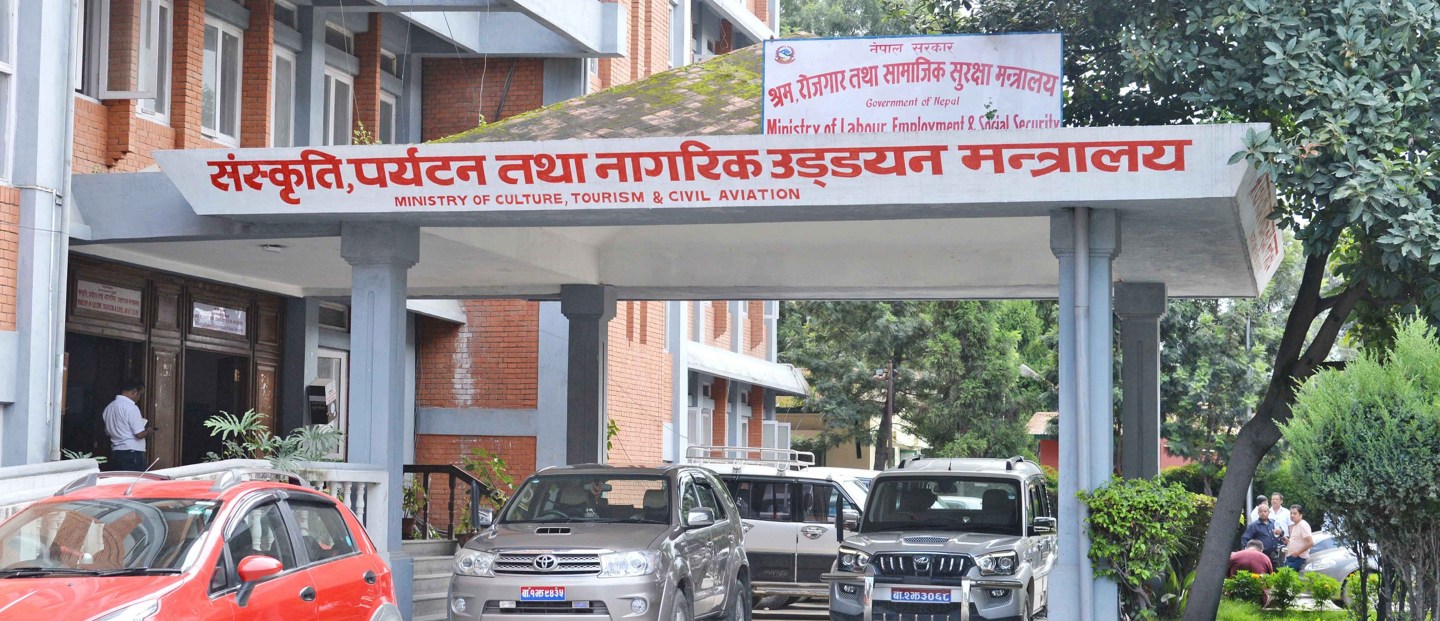
KATHMANDU: The government has introduced the Tourism Policy 2025, replacing the Tourism Policy 2008, with the aim of enhancing tourism’s contribution to the national economy and creating sustainable employment opportunities through better governance and development in the sector.
According to the new policy, the government seeks to identify, develop, promote, and diversify tourism products by utilizing the country’s geographical, natural, cultural, and social diversity.
The policy envisions the creation of quality and safe tourism infrastructure, sustainable and inclusive tourism growth, and improved administrative efficiency in the sector.
The policy also emphasizes promoting both emerging and existing tourist destinations by leveraging appropriate technology and communication tools. It highlights the role of public, private, and foreign investment in developing multi-dimensional and quality tourism infrastructure. Additionally, the government aims to make air services safer, more systematic, and regular in order to expand tourism services in source markets.
Other key features of the policy include the promotion of environment-friendly and equitable tourism practices, revision of tourism-related laws and policies to suit changing contexts, and a renewed focus on coordination and capacity development across the sector. The policy also aims to create new employment and self-employment opportunities through tourism entrepreneurship.
Despite the ambitious goals of the previous Tourism Policy 2008, a government review found that only two out of the 16 policy provisions were fully implemented.
Three policies saw 60–65% implementation, six achieved only 30–45%, four had less than 27% implementation, and one policy remained completely unimplemented.
The new policy seeks to address these shortcomings with a more actionable and inclusive roadmap for Nepal’s tourism-driven development.



Comment