




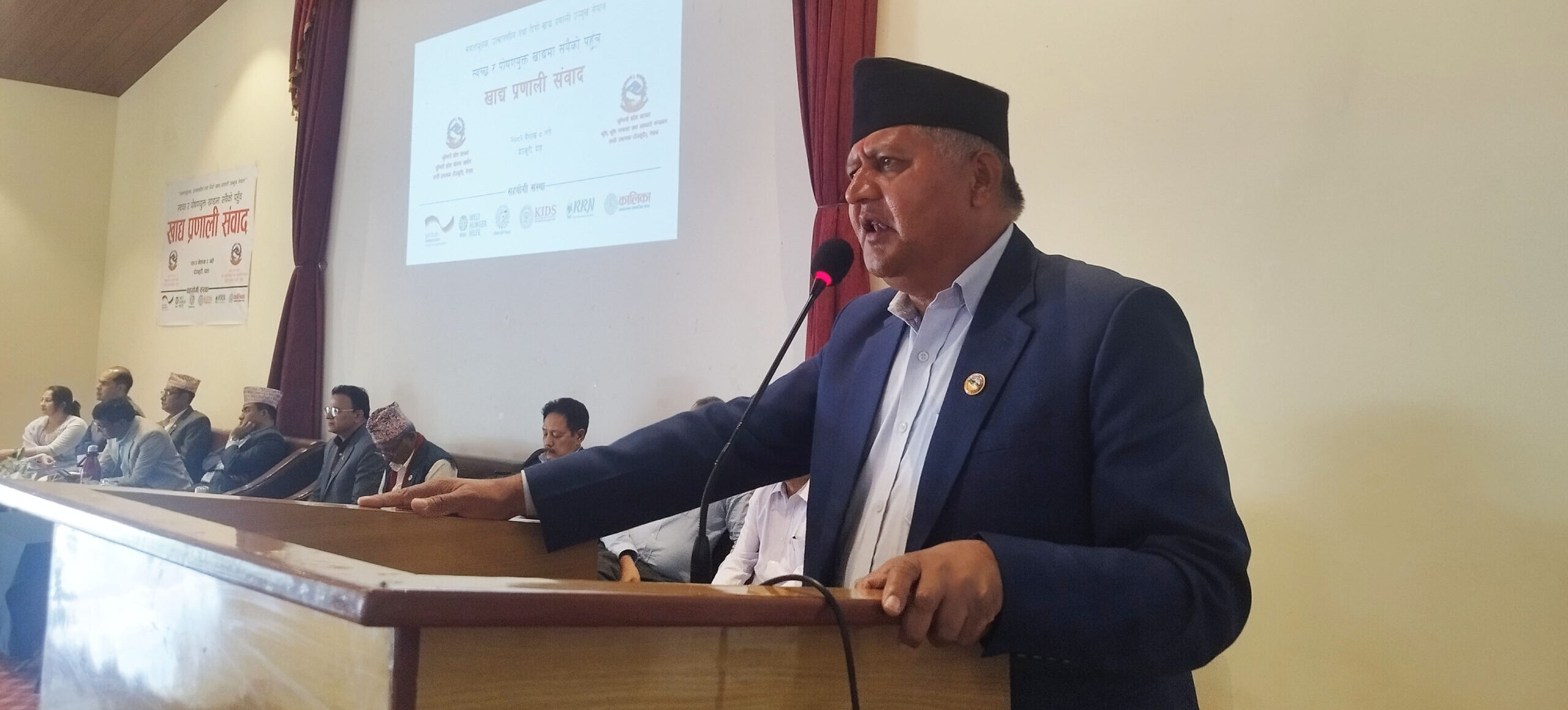
LUMBINI: Chief Minister (CM) of Lumbini Province, Chet Narayan Acharya, has underlined the importance of multi-sectoral collaboration to address the persistent issue of malnutrition in the province.
Highlighting rising concerns over maternal and child mortality rates and increasing incidences of child marriage, Acharya reaffirmed the provincial government’s commitment to reforms in health and nutrition.
Speaking at a provincial-level food system dialogue held in Deukhuri under the theme “Equitable, Resilient, and Sustainable Food System: Access for All to Clean and Nutritious Food”, CM Acharya warned of a growing threat from non-communicable diseases, further straining the health system.
He emphasized the high nutritional value of indigenous crops and called for policies that prioritize their conservation, promotion, and use.
“The government will draft policies to protect, cultivate, and utilize indigenous crops,” he said, adding that promoting nutrition is not possible through isolated efforts alone. “It requires the active participation of all three tiers of government, social organizations, and communities.”
Acharya called for an organic and scientific approach to farming and urged for a targeted campaign starting from schools to raise awareness.
He noted that traditionally grown crops such as maize, wheat, barley, and millet have long been neglected and stressed the need to revive them through concrete policy initiatives.
Former Health Minister and Provincial Assembly Member Bishnu Prasad Panthi echoed these concerns, stating that the prevalence of toxic and unhealthy food has contributed significantly to the growing health problems.
Meanwhile, Under-Secretary at the Ministry of Agriculture, Land Management and Cooperatives, Ghanashyam Chaudhary, said that while Lumbini Province is self-sufficient in food, fish, meat, and milk, other sectors still require significant improvements.
He also highlighted that 44 percent of women of reproductive age (15–49 years) in the province are anaemic, indicating widespread nutritional challenges.
On the occasion, Chandra Prakash Basnet, Section Officer at the National Planning Commission, shared that Nepal currently ranks 12th on the World Food Risk Index and that only 57 percent of the population enjoys food security.
World Health Organization Country Director Shakib Nabi and Federation of District Coordination Committees Lumbini Chair Drona Khatri also emphasized the critical role of both government and non-government sectors in improving nutritional standards and ensuring access to healthy food.





Comment