




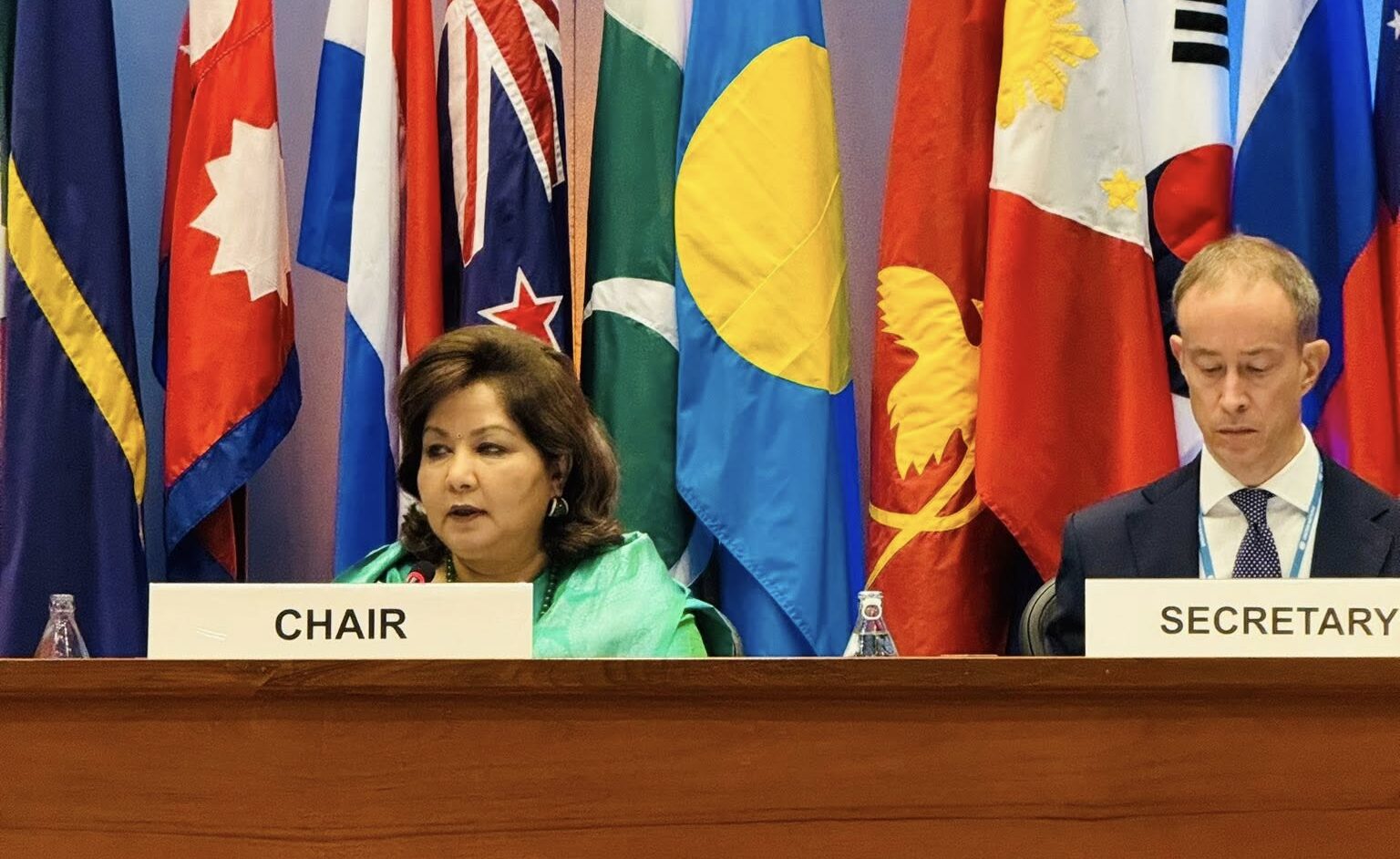
KATHMANDU: Minister for Foreign Affairs Dr. Arzu Rana Deuba emphasized that the Asia-Pacific region is facing a multitude of critical policy challenges during her address as Chair of the 81st session of the Economic and Social Commission for Asia and the Pacific (ESCAP), held in Bangkok, Thailand, on Sunday.
In her acceptance speech, Minister Rana outlined a range of pressing issues confronting the region, including rising fiscal vulnerabilities and financial limitations, increasing trade fragmentation and protectionist trends, a deepening digital divide—especially between urban and rural communities—inadequate social protection systems, and the growing impact of climate-induced disasters.
“Fiscal vulnerabilities and financial constraints are limiting the ability of governments to provide essential services and make long-term investments in human capital and sustainable infrastructure,” Minister Rana stated.
She also stressed the urgency of addressing the digital divide, warning that without decisive action, it will continue to deepen inequality and hinder inclusive growth.
“We must significantly increase investment in social protection systems, learning from global best practices and adapting them to our regional needs,” she added.
Highlighting the climate crisis, Minister Rana noted, “Our cities and communities are increasingly vulnerable to devastating floods, droughts, and extreme weather events.”
She specifically drew attention to the fragile Himalayan ecosystem, saying, “Our Himalayas, the source of water, livelihoods, and civilization, are disproportionately affected by climate change. Building climate resilience and investing in early warning systems is not optional—it is essential.”
Minister Rana remarked that the 81st session of ESCAP comes at a time of profound global and regional transformation.
The theme of the session, “Regional Cooperation for Resilient and Sustainable Urban Development in Asia and the Pacific,” reflects the urgent need for coordinated responses to rapid urbanization.
“Urban areas are engines of growth, innovation, and opportunity. But without proper planning, unregulated urbanization can lead to significant challenges,” she said.
To ensure sustainable and resilient urban development, she emphasized the need to invest in inclusive, green, and resilient cities, promote city-to-city cooperation, plan for demographic transitions, and mobilize diversified financing.
Underscoring the necessity of working together, she stated, “No country can tackle these challenges alone. Regional cooperation is essential—it amplifies the impact of national efforts and binds us together in shared purpose.”
She lauded ESCAP’s role as the regional development arm of the United Nations, calling it a vital platform for dialogue, knowledge exchange, and policy innovation.
“In a time of uncertainty, ESCAP’s work is instrumental in harnessing cooperation to achieve internationally agreed development goals,” she said.
Concluding her address, Minister Rana acknowledged the challenging road ahead but expressed optimism rooted in the region’s tradition of cooperation.
“Let us reaffirm our shared commitment to inclusive development, regional cooperation, and the values of the United Nations. Together, we can build a better future for our people and our planet,” she said.





Comment