




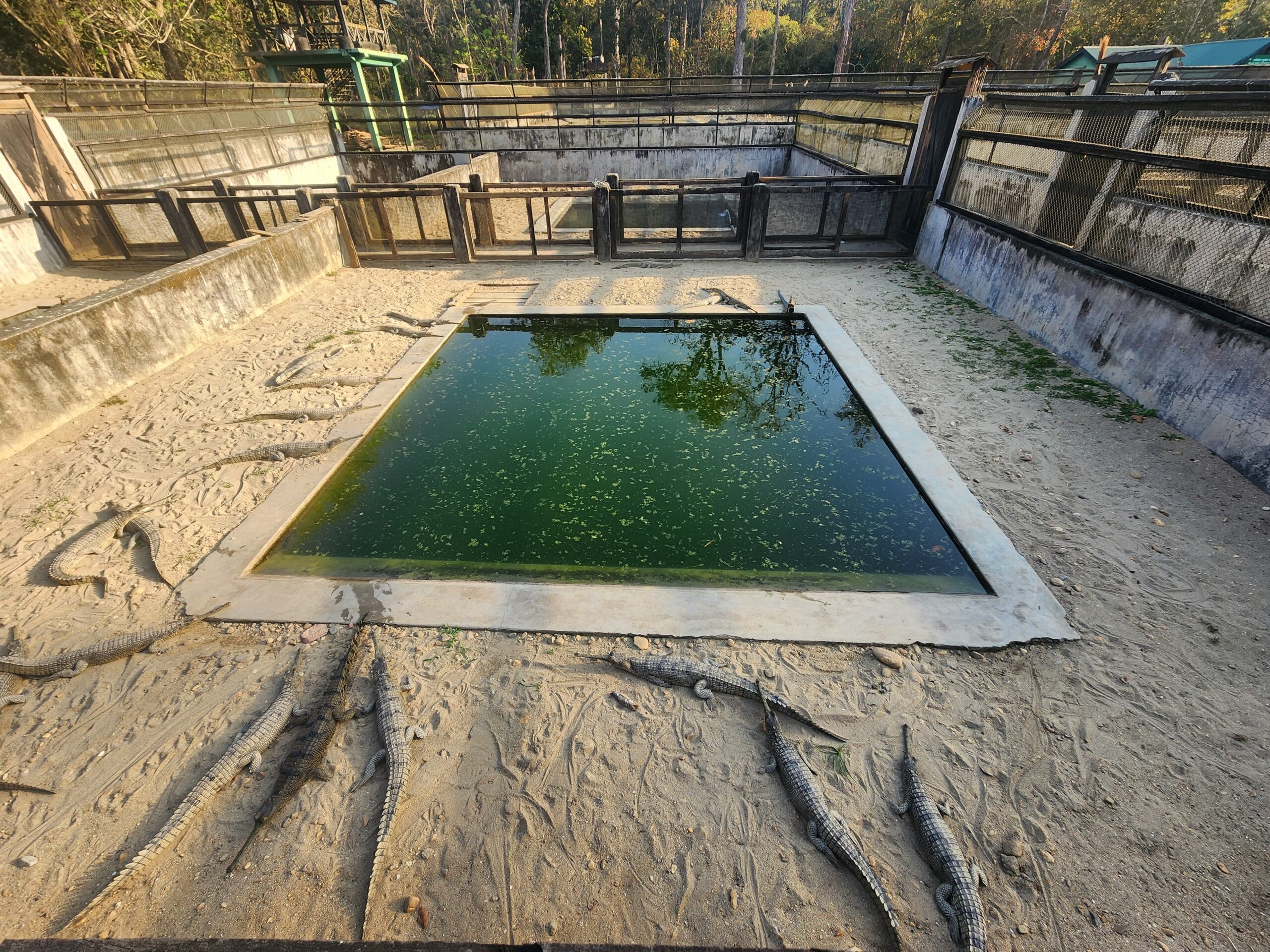
KATHMANDU: A total of nine male gharial crocodiles have been recorded in the Rapti and Narayani rivers flowing through Chitwan National Park during the latest direct census of the critically endangered species.
According to the park, seven male gharials were found in the Rapti River and two in the Narayani River. Overall, 366 gharial crocodiles were recorded across the two rivers.
Park Information Officer and Conservation Officer Avinash Thapa Magar said 231 gharials were found in the Rapti River and 135 in the Narayani River during monitoring. “Last year, a total of 352 gharials were recorded in the two rivers,” he said.
According to him, this year’s count recorded 206 gharials in the Rapti River and 146 in the Narayani River. While the number of gharials has declined in the Narayani River compared to last year, their population has increased in the Rapti River.
Thapa Magar attributed the overall growth to conservation efforts and increased awareness among local communities. “The number of gharials may have increased due to conservation initiatives and growing community awareness,” he said. “The annual release of hatchlings raised at the gharial breeding center into the Narayani and Rapti rivers has also contributed to the rise in population.”
He said the Gharial Breeding Centre was established at the park headquarters in Kasara in 1978 to conserve the critically endangered species. Eggs collected from the banks of the Narayani and Rapti rivers are hatched at the center, and the young crocodiles are released into their natural habitat every year.
Thapa Magar added that the park will continue working with concerned stakeholders to ensure sustainable conservation of gharials through regular monitoring and protection of river systems.
The results of the regular gharial monitoring conducted by the Chitwan National Park Office from December 7 to 15 were made public on Friday.
Chief Conservation Officer Dr Ganesh Pant said the main objective of the gharial census is to update information on the current status of gharials and their habitat within the river system. The count was conducted through direct observation at various sections of the Rapti and Narayani rivers.
During the monitoring, a dolphin (susu) was also spotted in the Narayani River. According to Dr Pant, a dolphin was sighted in the Golaghat area of the Narayani River flowing through Nawalpur and Chitwan.
He said the presence of dolphins in the Narayani River is considered a positive sign from a biodiversity perspective, noting that dolphins have also been spotted in previous years in the same stretch of the river and in areas such as Baghuwan and Amaltari in Nawalpur.






Comment