




KATHMANDU: The fallout from the September 8 and 9 Gen-Z protests has triggered an intense debate over leadership change in Nepal’s two largest political parties, Nepali Congress and the CPN-UML.
Once seen as untouchable, both parties were forced into retreat in the aftermath of the youth-led uprising that toppled the government overnight and left senior leaders scrambling for political space.
While UML chair KP Sharma Oli has re-emerged publicly after spending ten days in a military barracks, Nepali Congress president Sher Bahadur Deuba remains hospitalized following a violent assault at his Budhanilkantha residence during the unrest. The turbulence has fueled mounting calls for fresh leadership, with voices from within and outside both parties urging that Congress and UML cannot remain under the same old guard.
Despite growing pressure, neither Deuba nor Oli has indicated any willingness to resign. Instead, insiders say both leaders are maneuvering to retain control until their respective parties are compelled to call special conventions, where they hope to ensure succession through loyalists rather than through direct resignation.
Within UML, frustrations have run deep, particularly since Oli blocked former president Bidya Devi Bhandari’s return to active politics. The sudden collapse of Oli’s powerful two-thirds majority government during the protests has further intensified internal grievances. Some leaders have begun to speak out, but many remain silent, fearing reprisals from Oli. His return to political meetings after days in seclusion has signaled to his loyal faction that he intends to cling to the party’s top post, even as critics push for change.
The mood inside Nepali Congress is no less tense. Deuba’s physical absence due to injury has weakened his grip, and senior figures have quietly begun lobbying for leadership transition. While few expect Deuba to step aside immediately, demands for a special general convention to chart the party’s future are growing louder.
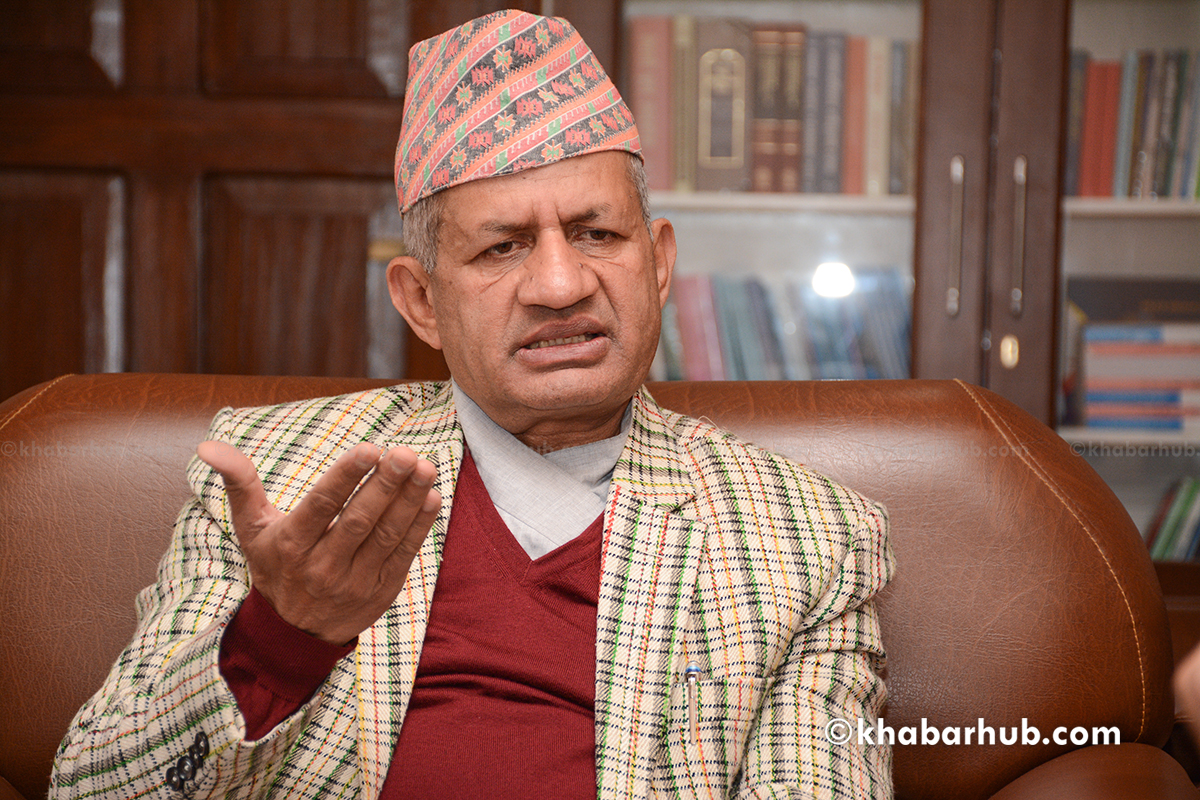
Still, not all within UML see leadership change as the answer. Deputy General Secretary Pradeep Gyawali, a close ally of Oli, has spoken out against what he called “opportunistic” calls for transition at a moment of crisis. “It is not right to talk of changing leadership simply because questions are being raised,” Gyawali said, though he added that the party must cool-headedly assess the causes and consequences of the Gen-Z uprising.
Gyawali also confirmed that UML plans to participate in the parliamentary elections announced for March 5 under the interim government led by former Chief Justice Sushila Karki. Speaking to Khabarhub, he outlined two conditions for UML’s participation.
EXCERPTS:
The Gen-Z movement has caused political upheaval. Now every party is debating leadership change. What about UML?
Everything has its own time, context, and process. While Chair KP Sharma Oli was inside a military security cordon, it was inappropriate to fuel such debates. Now that he has come out after 10 days, the situation is gradually normalizing, and the party will soon meet. Whether leadership changes or not, we will move ahead according to the party’s decisions. At this moment, discussing “leadership change” is neither timely nor appropriate.
So, does this mean there is no chance of a special general convention in UML?
Our party’s statute-based convention concluded only recently, on Septembe 7. Our preparation is for the next regular general convention at the earliest possible time. We will advance through the convention process, and leadership questions will also be settled there.
The Gen-Z youth movement showed deep dissatisfaction with the leadership of big parties, including UML. But you do not see an alternative to Oli. Doesn’t his continuation go against the sentiments of the youth?
The party will review the events of September 8 and 9 with a cool head. But right now, we are all in an emotional state; there is pain and fear everywhere. What happens next is uncertain. In such a time of tension and confusion, it is impossible to conduct an objective review. We need to allow the situation to ease first. After that, we will come forward fully with a thorough review to our members and the public.
The general public and UML supporters seem angry with the leadership. What do you say to them? Even leaders like you are being questioned.
The questions are raised against all of us. In difficult periods of history, each of us must provide our answers. It is precisely in times of crisis that the loyalty and resilience of leaders, cadres, and well-wishers are tested. Anyone can step forward when times are easy. But today, when adversities surround us, we will rise again—dusting off the setbacks, correcting our mistakes, and moving forward in a new way.
Questions about leadership will also be discussed. But right now, the task is to steady ourselves and help steady others. We will focus on daily necessities, rebuilding institutions, and contributing to nation-building. Of course, the matter of priorities, what comes first and what comes later, also matters.
If the Prime Minister had resigned on September 8 or initiated dialogue, wouldn’t all this unrest have been avoided?
I absolutely do not think so. The CPN-UML alone is not fully responsible for what happened on September 8 and 9. Yes, mistakes may have been made on our side. But the events of the 9th were not triggered merely by the shootings on the 8th. Evidence shows preparations had been going on for months. Using Google Maps, surveys were done, and the residences of leaders were pinpointed for attacks.
Teams were placed in every corner of the city with detailed plans of who would strike where and how. This was not the product of a single night’s impulse or emotion. It was organized and deliberate. The breach of the prohibited zone on the 8th should not have resulted in gunfire; that was wrong and must be investigated. But the events of the 9th were not spontaneous acts of anger; they were selective, targeted attacks. That is why we insist on a high-level investigation.
You say it was planned. Who made these plans?
That must be investigated. We are not naming anyone. A thorough investigation must identify the planners and bring accountability.
Many argue that the UML–Nepali Congress coalition government failed to address youth grievances, forcing Gen-Z into the streets. Why did your party leadership fail to listen to them?
We do not disagree with the expectations of the youth. Their issues are genuine. Until September 8, their demonstrations were peaceful. Up to that point, the situation needs to be seen in one light. But after the organizers themselves declared their objectives fulfilled and urged people to leave the streets, infiltration occurred. What unfolded afterward was tragic; 19 young people died on that very day.
The events of the 9th, however, were purely criminal. We see them as part of an organized attempt to portray the state as failed. It would be wrong to normalize everything under one explanation. We are deeply saddened by what happened. We want the facts revealed through investigation. We are not trying to evade accountability—if we have made mistakes, they too must come out through inquiry.
The election date has been announced. Will UML contest elections, or will it push for the reinstatement of the House of Representatives?
We are prepared to face elections. But two things must happen first.
First, eight parliamentary parties have already declared that the House dissolution was unconstitutional. This contradicts even the Supreme Court’s own past rulings. Therefore, the issue of constitutionality must be tested. The questions raised by eight parties cannot simply be dismissed. We may even need to approach the court to safeguard the constitution.
Second, there is the matter of how the election date was announced and whether elections will truly be peaceful. Even Singha Durbar, only 500 meters from the Nepal Army headquarters, was not safe. Even the President’s Office was vulnerable. The society has not yet emerged from fear. In such conditions, can citizens really walk fearlessly to polling centers? That environment must be ensured first, and the responsibility lies with the government. At present, we do not see such conditions in place.
Won’t the upheaval caused by the Gen-Z protests make it difficult for UML to face elections?
At this moment, UML is less concerned with ease or difficulty for itself and more with whether the constitution and the republic can be defended. We are in a dilemma: will democratic republicanism itself survive? Our focus is on bringing national politics, which has strayed off track, back within a stable framework. UML has faced many challenges before. We had no easy path on Magh 19 (2007), nor in the first Constituent Assembly election of 2008. We have reached here by confronting adversities. We will overcome this crisis just as we have done in the past.
Finally, Chair Oli came out after 10 days, and immediately UML marked Constitution Day. Was that really necessary?
This was not a celebration. Even in such times, we have consistently raised our voice for the protection of the constitution. We will continue to do so. That should not be seen as a challenge to anyone.


Comment