




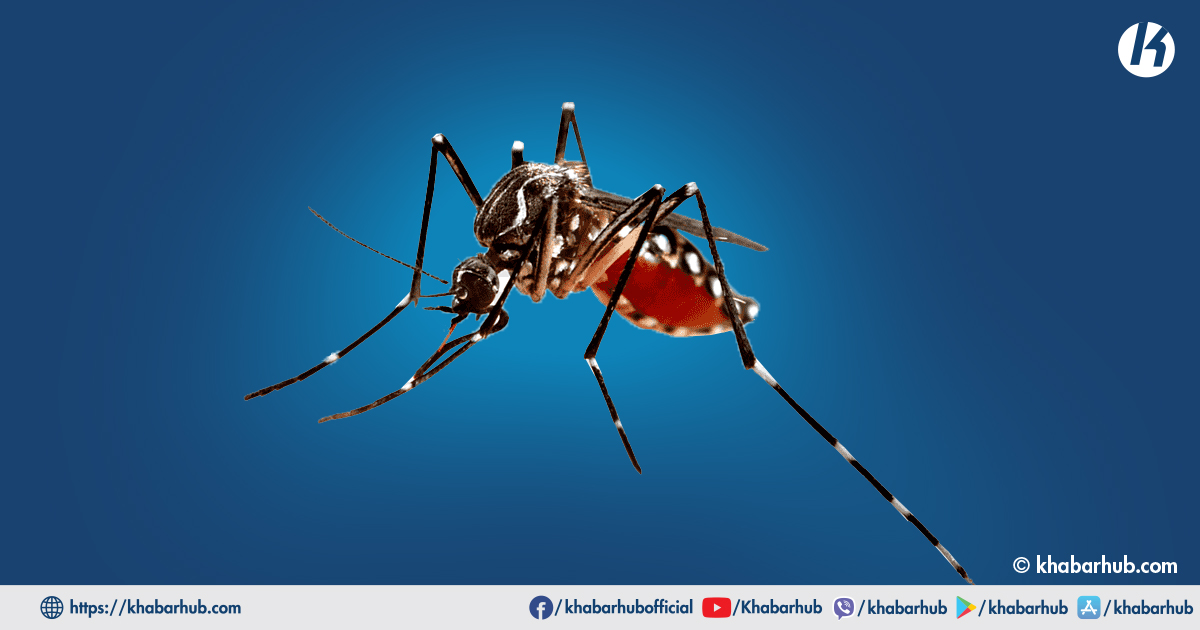
CHITWAN: Chitwan district reported 3,889 dengue infections in the last fiscal year, with only one fatality, according to the Public Health Office.
Of the total cases, 3,020 infections—1,548 men and 1,472 women—were recorded within the district, while 869 cases involved people who had arrived from other districts.
Bharatpur Metropolitan City reported the highest number of infections, with 1,171 cases, followed by Ratnanagar Municipality with 907 cases.
Other affected areas included Ichchakamana Rural Municipality with 467 cases, Khairhani Municipality with 223, Rapti Municipality with 124, Kalika Municipality with 91, and Madi Municipality with 37 cases.
Despite the rise in infections, the death toll remained low. Vector Control Inspector Ram KC of the Public Health Office said that while the number of cases was significant, only one person died from the disease during the period.
He noted that 17,353 blood tests were conducted in the district last fiscal year. By comparison, the previous year saw 1,831 infections confirmed from 23,840 tests.
Data from earlier years show varying infection rates. In the fiscal year 2074/75, there were 59 cases from 1,291 tests. The following year, 31 cases were found from 1,951 tests. In 2076/77, 31 cases were reported from 19,230 tests.
In 2077/78, the number jumped to 4,803 infections from 1,717 tests. In 2078/79, there were 243 cases from 14,978 tests, and in 2079/80, the number rose again to 3,336 cases.
The Public Health Office has warned that dengue risk is high in the district’s major market areas and has initiated measures to control the spread. Efforts include coordination with health workers and local representatives from all seven municipalities to raise awareness and prevent outbreaks. Inspector KC stressed the need for vigilance, particularly during the rainy season, when mosquito populations tend to increase.
Dengue was first reported in Nepal in 2004 in Chitwan, when a Japanese tourist tested positive. Since then, the virus has gradually spread to several districts in the Terai and inner Madhes. In 2009, Chitwan recorded nine dengue cases, which spiked to 739 in 2010 out of 3,298 tests.
KC explained that dengue fever typically lasts for five to seven days and presents symptoms such as high fever, severe headache, pain behind the eyes, joint and muscle pain, rashes, nausea, vomiting, and in some cases, bleeding from the nose or gums. Since it is a viral disease, there is no specific treatment available.
The main preventive measure is to avoid mosquito bites and eliminate breeding grounds. KC urged the public not to allow water to collect in containers such as empty bottles, tires, drums, or any object that can hold stagnant water around living areas.






Comment