




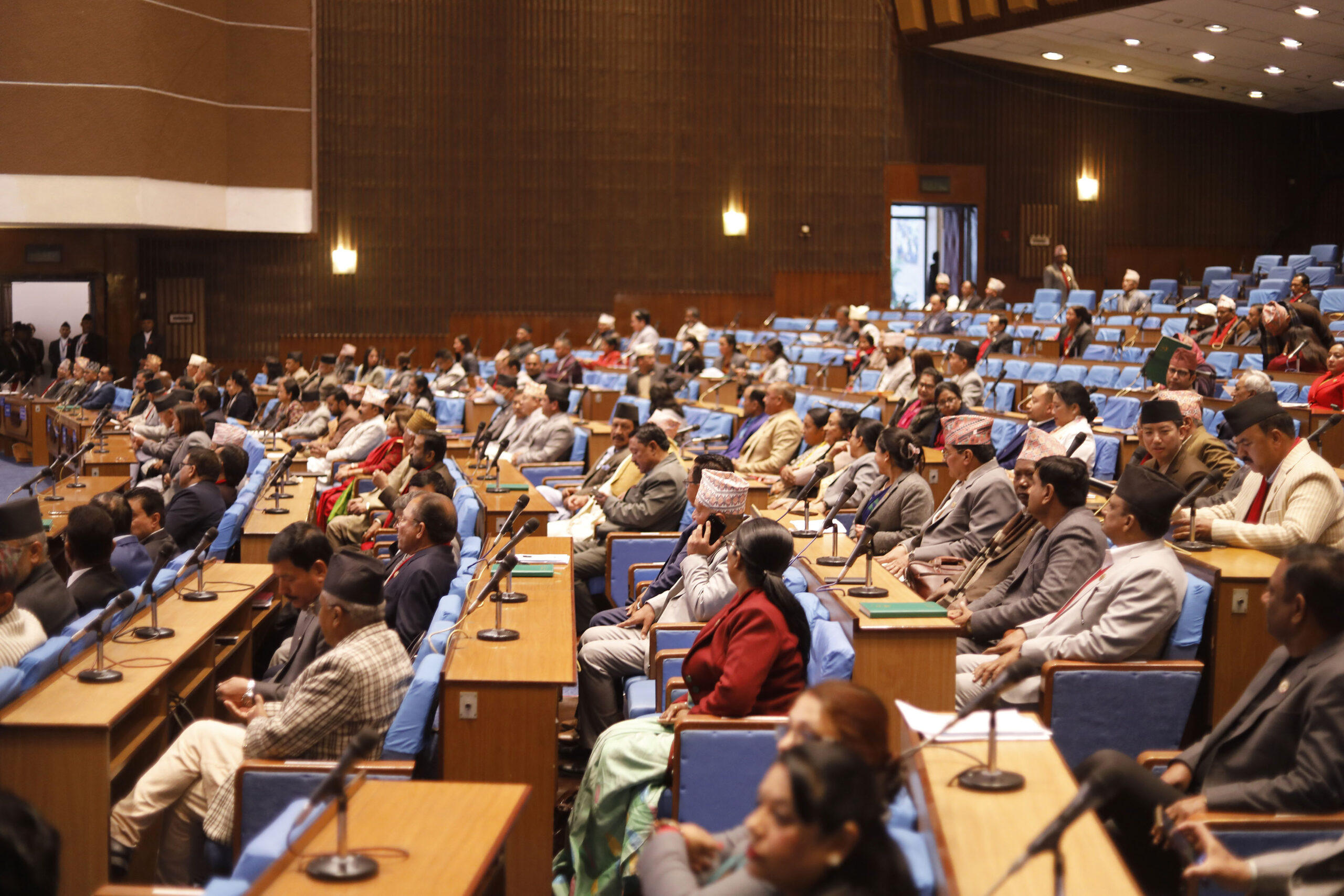
KATHMANDU: Lawmakers have raised serious concerns that certain provisions in the newly proposed “Bill to Amend Some Nepal Acts Related to Land, 2025” could result in public and government land being captured by land mafias and middlemen under the pretext of distributing land to the landless and squatters.
Minister for Land Management, Cooperatives, and Poverty Alleviation, Balram Adhikari, tabled the bill for discussion today. During the bill’s theoretical deliberation, MPs expressed fears that it could legitimize unregulated land distribution and encourage land fragmentation.
MP Ashok Chaudhary questioned the bill’s effectiveness in addressing Nepal’s socio-economic issues despite claiming to support landless and squatter communities. He and others stressed the need for legal guarantees to prevent illegal encroachment on community forests and protected areas in the name of the landless.
MP Roshan Karki doubted the government’s intentions, criticizing past practices of allocating land to party loyalists and allowing residential and commercial use of land exceeding legal holding limits.
MP Bimala Subedi accused the government of trying to reintroduce the bill in favor of vested interests after public backlash forced the withdrawal of an earlier ordinance. She warned that the provisions would legitimize land fragmentation and grab public land in the name of real estate development.
MP Chitra Bahadur KC voiced concern that the proposed concept of a land bank could undermine farmers’ rights and lead to the conversion of fertile land into plots.
Other MPs like Sher Bahadur Kunwar, Abdul Khan, and Basudev Ghimire highlighted the constitutional obligation to provide land to every Nepali citizen and called for the bill to be inclusive, transparent, and protective of public property.
Proponents of the bill, however, argue that it aims to provide legal recognition to the landless, including Dalits and squatters, and facilitate orderly resettlement without encouraging land misuse. The bill also intends to streamline real estate activities by requiring companies to obtain government permission and stay within designated limits.
The government claims the legislation is essential to address land rights as a constitutional matter, regulate the real estate sector, prevent unplanned settlement, and modernize land use for Nepal’s development.
In the same session, Infrastructure Development Committee Chairperson Deepak Bahadur Singh tabled the committee’s annual report for FY 2024/25, detailing its activities from April 2024 to March 2025.






Comment