




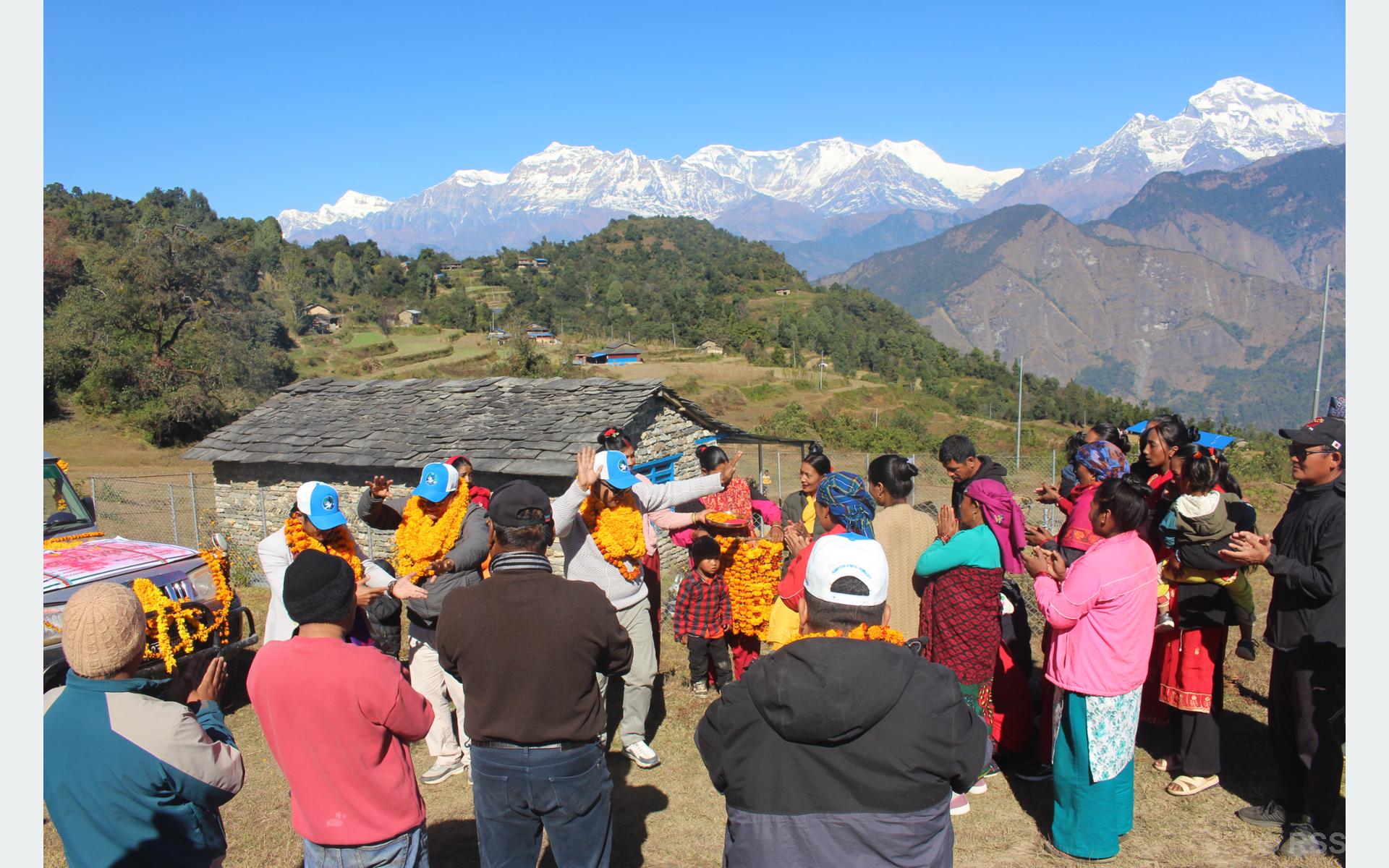
BENI: Changadhuri of Mangala Rural Municipality–5, Arman, rich in natural beauty in Nepal’s Myagdi district, is gradually emerging as a new tourist destination.
Located at an altitude of 2,200 meters above sea level, Changa has witnessed a rise in domestic tourist arrivals following improvements in road access, drinking water supply, central electrification, and increased publicity. Changakharka offers mesmerizing views of around a dozen peaks in the Dhaulagiri and Annapurna ranges.
Binod Dhaulagiri of Beni, who recently visited Changa for the first time, said he was drawn by the area’s scenic beauty and rural lifestyle. He noted that linking traditional agriculture and livestock products with tourism could significantly improve the livelihoods of local residents. Changa is considered a unique confluence of nature, culture, and rural life.
From Changa, visitors can enjoy breathtaking views of Churen, Sita, Gurja, Manapathi, Dhaulagiri, Nilgiri, Annapurna, Machhapuchhre, and Dhampus Peak. Cultural programs featuring traditional hymns and dances are also organized for group visitors to showcase local art and culture.
Despite its vast tourism potential, infrastructure development and promotional activities are still underway, said Bhupendra Khatri, ward chair of Mangala Rural Municipality–5. According to him, preparations are in progress to construct a park near the forest banquet site at Changa Kharka. Plans are also in place to clear bushes in the Guranse forest and conserve the Laligurans (rhododendron).
“Facilities such as clean drinking water and central electrification have been expanded for the convenience of both locals and tourists. We are also preparing to establish a tea garden at Pakhobari, Changa Kharka, and operate homestays to ensure a comfortable stay for visitors,” said Khatri.
Currently, domestic tourists visit the area mainly during the winter season for hiking and forest feasts. Various organizations have also begun holding meetings and general assemblies in Changa.
Changa is about a one-and-a-half-hour drive from the rural municipality headquarters at Babiyachaur via Peepalbot, Pakhu, Dhara, Sirkum, and Tikabang. An alternative route connects Babiyachaur to Changa via Chhisbang, Tikabang, and Sirkum. A hiking trail also links Changa with Mangala and the religious tourist site of Tinchule, located on the border of Baglung’s Tarakhola Rural Municipality.
Rural Municipality Chair Shat Prasad Roka said efforts are underway to identify, promote, and develop tourist destinations across Mangala Rural Municipality. He emphasized that Changa’s natural beauty has the potential to attract both domestic and foreign tourists, prompting focused tourism development initiatives.
There are 17 households in Changa, where traditional farming practices include the cultivation of millet, maize, fenugreek, mustard, potatoes, radishes, beans, soybeans, and leafy vegetables. Livestock such as cattle, buffaloes, and sheep are also raised. Visitors have the opportunity to observe rural life firsthand and enjoy locally produced food in a peaceful and secluded environment.
Chairperson of the Dhaulagiri Tourism Council, Amar Baniya, said the area’s natural beauty and environment could significantly boost tourist inflow. He stressed the need to develop trekking trails centered on Changa, linking it with other tourist sites within the rural municipality such as Chinakotdhuri, Jhankripani, and Tinchule, and extending further to Rum Durlek via Niskot Barahatal in Malika Rural Municipality.
In addition to scenic mountain and rural landscapes, the area is rich in herbs, forest products, wildlife, and bird species. Tourism promotion through infrastructure development, homestay operation, improved road access, expanded hiking trails, and the establishment of camping sites is expected to further increase tourist arrivals.




Comment