




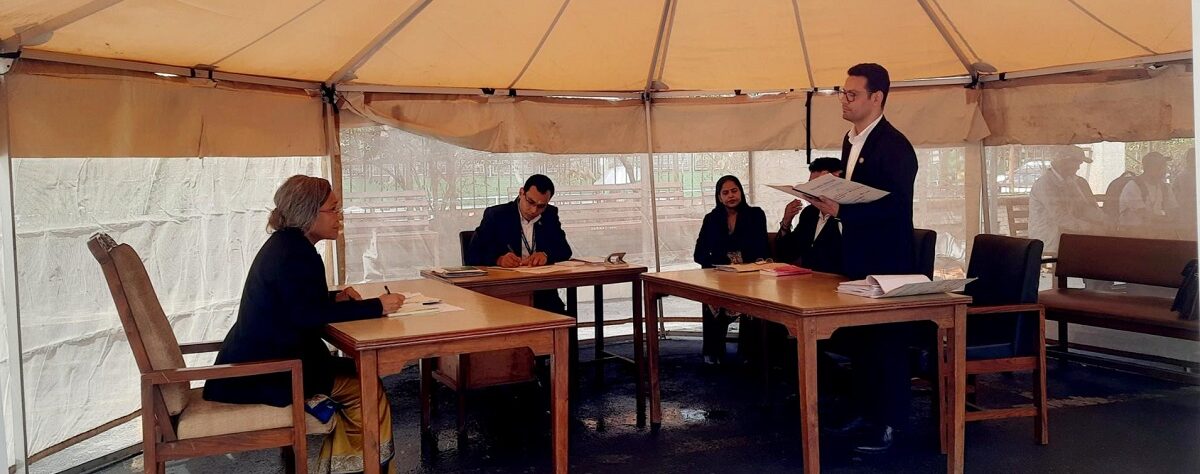
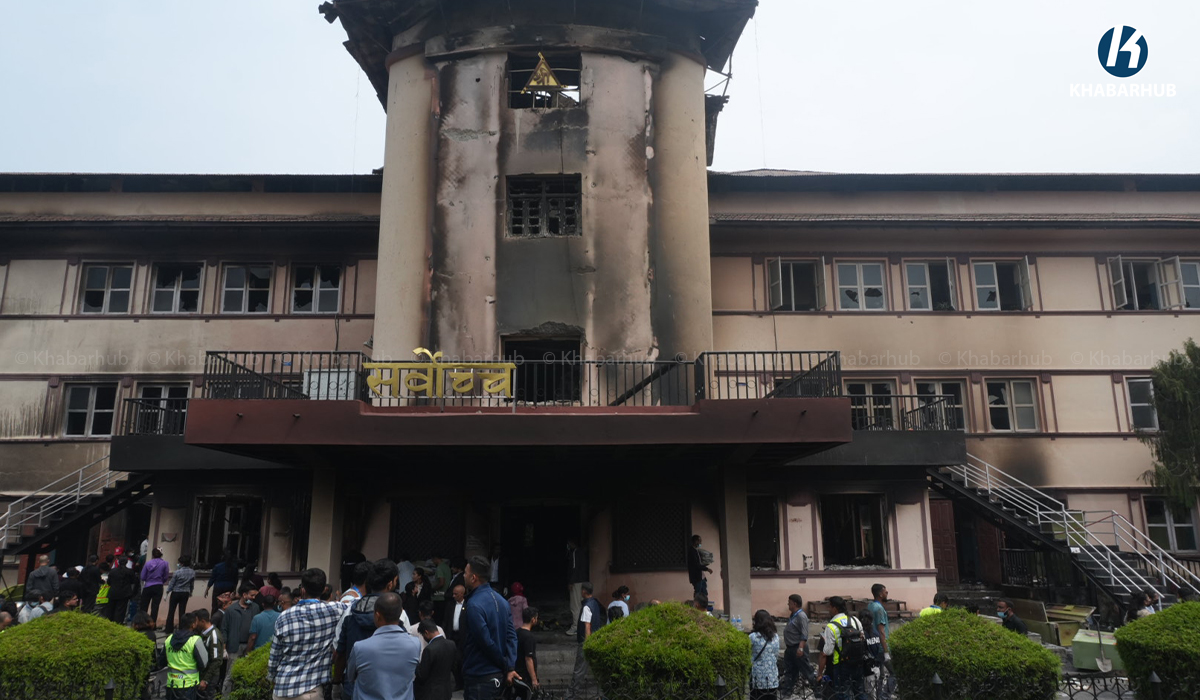
KATHMANDU: The Supreme Court has resumed hearings under temporary arrangements after extensive damage caused during the Gen-Z protests on September 9.
The court’s entrance now offers a stark view of the destruction: burnt-out vehicles stacked in front, half-burned and broken tables and chairs scattered, and staff quarters rendered unusable.
To continue judicial proceedings, a temporary setup has been arranged under a large tent. Wooden tables and chairs have been positioned with judges on one side, legal practitioners on the other, and court clerks in between. Today, hearings were conducted under Justice Sapana Pradhan Malla and Justice Kumar Regmi, including petitions for the direct appearance of detainees.
“The arson left the court without a proper space to hold hearings,” said Supreme Court spokesperson Arjun Koirala. “Following the decision of the full bench to continue judicial processes, hearings on detainee appearance petitions have commenced under the temporary arrangement.”
Two petitions for direct appearance of detainees had been registered on September 16, and proceedings for these cases have now begun.
Koirala added that the damage extends beyond physical infrastructure. “Significant losses include IT equipment, vehicles, and case files. Across 23 courts, including the Supreme, Special, and district courts, some buildings suffered complete destruction while others suffered partial damage. Full inventories are still being compiled.”
Case files for completely destroyed courts have been lost entirely, while partially damaged courts retain some records. The Supreme Court full bench has decided to prepare guidelines on reconstructing lost case files, including determining which parties will provide copies.
Currently, the Supreme Court has approximately 26,000 ongoing cases. Despite the destruction, the judiciary’s decision to continue hearings signals its determination to uphold legal processes under extraordinary circumstances.






Comment