




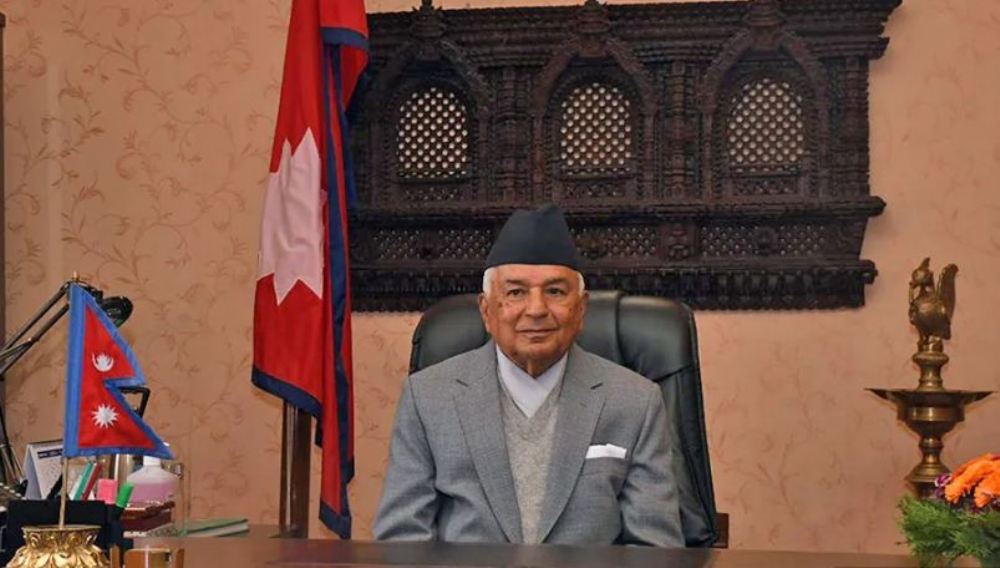
KATHMANDU: In the aftermath of the Gen-Z protests that toppled KP Sharma Oli’s powerful government last month, President Ram Chandra Paudel has disclosed that he came under heavy pressure from multiple fronts, including the youth-led movement and the Nepal Army, to dissolve the House of Representatives.
The Gen-Z demonstrations, which erupted on September 8 and 9, culminated in widespread violence, the burning of the presidential residence at Maharajgunj, and the deaths of dozens of protestors. At the height of the crisis, President Paudel was evacuated by the Army to Shivapuri for his safety before later being relocated to a smaller, undamaged building at Sheetal Niwas. It was there that he held tense talks with protest leaders, among them Sushila Karki, now interim Prime Minister, and with senior military officials.
According to Paudel, both the Army and the protest movement pressed him to dissolve parliament immediately as a precondition for forming a new interim government. But he resisted the demand, insisting that such a move was beyond his constitutional authority.
“The greatest challenge to the constitution came from outside it,” Paudel told civil society representatives on Thursday, recounting the dramatic hours of the uprising. “I was repeatedly pressured to dissolve parliament first. But I stood firm. Dissolving parliament is not within my powers. I told them I would rather become a martyr than violate the Constitution.”
Ultimately, Paudel maneuvered toward a compromise: first appointing an interim prime minister and then dissolving the House upon recommendation, in line with constitutional procedure. On September 12, acting on Karki’s advice, Paudel formally dissolved the House of Representatives.
Civil society leader Dr. Kundan Aryal of INSEC, who met Paudel this week, said the President explained his reasoning in detail. “He told us parliament could only be dissolved on the government’s recommendation. That is why he insisted on appointing an interim government first, after which he dissolved parliament based on its advice.”
Paudel also drew parallels with past constitutional crises, recalling how the presidency had endorsed Oli’s earlier moves to dissolve parliament during his premiership, again only on the recommendation of the government. “Even now,” Aryal quoted Paudel as saying, “I resolved the situation with tact and prudence. It is because of this that the constitution and current political order survived.”
Throughout the crisis, Paudel maintained active communication with political leaders. He remained in contact with Oli, who eventually resigned on September 9 before fleeing Baluwatar, and with Nepali Congress President Sher Bahadur Deuba, who was beaten by a mob in Budhanilkantha. He also met Maoist Centre chair Pushpa Kamal Dahal and Unified Socialist chair Madhav Kumar Nepal at Sheetal Niwas to seek a constitutional exit from the deadlock.
Paudel praised the role of the security agencies, describing their coordination during the turmoil as “skilled and continuous.” He acknowledged that without their efforts, the crisis could have escalated even further.
Now, with elections scheduled for March 5, 2026, Paudel is urging all sides to focus on ensuring the vote is conducted smoothly and on time. “Whatever has happened, we must not allow further damage to the constitution or the system,” he told the civil society delegation, stressing the need for vigilance against political revenge-seeking and attempts to sideline parties.
He also acknowledged concerns about accountability for corruption and the destruction of life and property during the protests, saying these issues require thorough investigation. At the same time, he said the elections can only succeed if political parties are engaged as key stakeholders.
Civil society members advised Paudel to act inclusively, cautioning that marginalizing parties or bypassing them could deepen instability. They urged him to ensure the upcoming elections are participatory and credible, while also safeguarding the transitional government against misuse of power.



Comment