




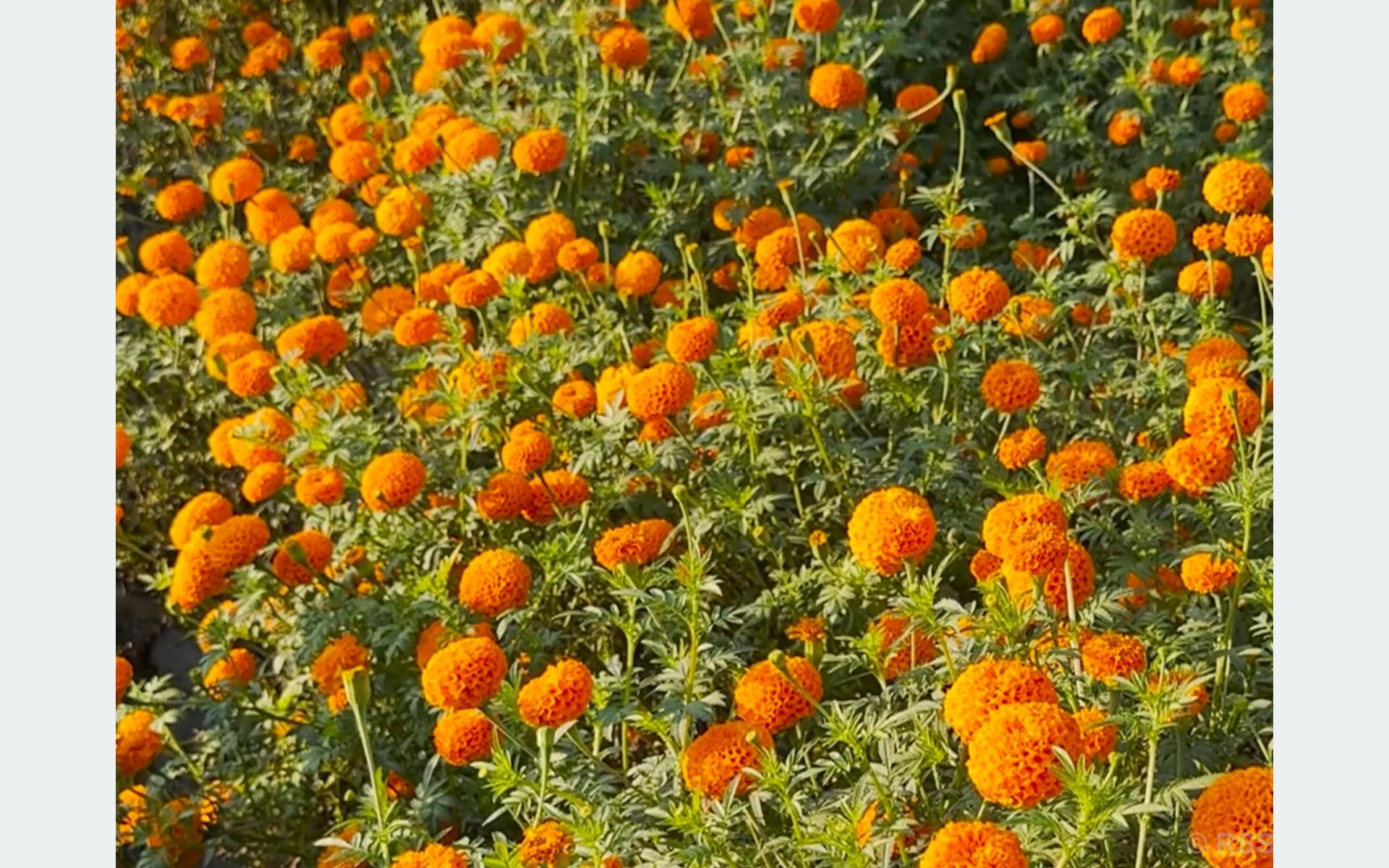
DAMAULI: Manju Shrestha of Dahare, Shuklagandaki Municipality–8, Tanahun, has cultivated marigold flowers on two ropanis of land.
Although marigolds typically bloom around the Tihar festival, this year they have blossomed earlier than expected—raising concerns about market timing and sales.
Shrestha, who has been engaged in marigold farming for the past five years, planted 5,000 marigold plants this season. He said the flowers normally bloom just in time for Tihar, allowing for steady sales during the festive period. However, the early bloom this year has left him uncertain about how to store and protect the flowers until then.
“Last year, there was no issue with the market. And I don’t expect problems during Tihar this year either,” he said. “But after Tihar, it’s difficult to find a market.”
Despite the timing challenge, Shrestha has begun selling marigolds for local events and programs taking place in nearby villages. He mentioned that demand remains strong, particularly for garlands used in the general assemblies of cooperatives.
He sells marigold stalks for up to Rs 5 each and noted that inquiries have increased recently—thanks in part to videos he posted on Facebook and TikTok. During last year’s Tihar, he sold marigolds worth Rs 100,000. “This year, it’s hard to say how things will go because the flowers bloomed a little early,” he added.
Shrestha turned to commercial flower farming after struggling to meet the high demand in his first season. “I couldn’t even fulfill the orders from close friends and relatives,” he said.
Previously involved in selling vegetables, Shrestha was inspired to grow marigolds after realizing that many flowers used during festivals were being imported.
“I felt disappointed seeing even flowers coming from abroad. That’s when I decided we should grow them ourselves,” he explained. “I started flower farming to help make Nepal more self-reliant in flower production.”






Comment