




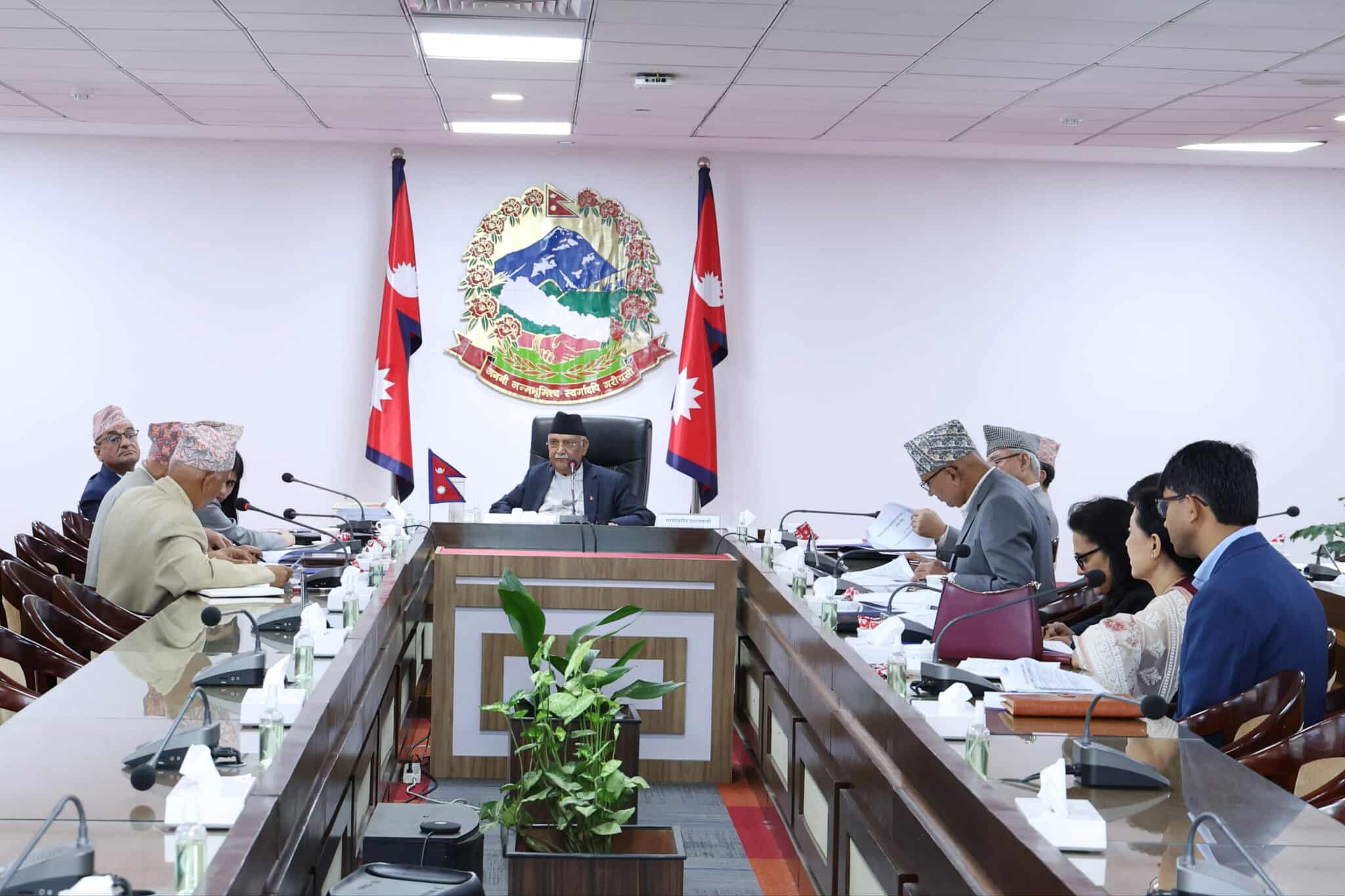
KATHMANDU: The second meeting of the High-level Governance Reform Commission, chaired by Prime Minister KP Sharma Oli, discussed dissolving, merging, or transferring government institutions deemed unnecessary to provincial and local levels.
Held at the Office of the Prime Minister and Council of Ministers in Singha Durbar, the meeting reviewed recommendations made by various past commissions and taskforces. Based on those reports, the Commission directed its implementation committee—led by Chief Secretary Ek Narayan Aryal—to conduct a detailed study and submit a concrete proposal within 15 days.
Prime Minister Oli instructed the committee to present options that would ensure results aligned with the Commission’s objectives.
Formed under Oli’s leadership following a Cabinet decision on April 20, the Commission aims to make public services simpler, more accessible, cost-effective, and hassle-free. Its first meeting was held on June 18.
Deputy Prime Minister and Finance Minister Bishnu Prasad Paudel, Home Minister Ramesh Lekhak, Law, Justice and Parliamentary Affairs Minister Ajay Kumar Chaurasiya, and Federal Affairs and General Administration Minister Bhagwati Neupane are ex-officio members. From political parties, Nepali Congress Vice President Purna Bahadur Khadka and UML Vice Chair Ram Bahadur Thapa have been included, along with three experts. This was the first meeting after their inclusion.
The meeting also reviewed recommendations from the Committee on Task Clarification and Revision, with a plan to present the revised division of responsibilities among federal, provincial, and local governments through the National Coordination Council for Cabinet approval.
The Commission’s mandate includes making service-delivery agencies more efficient and citizen-friendly by improving physical and human resources, procedures, and technology. It also seeks to ensure faster and result-oriented decision-making, eliminate delays and duplication, strengthen coordination among different tiers of government, and recommend reforms to laws related to governance. Additionally, it aims to make the civil service more competent, motivated, and accountable.





Comment