




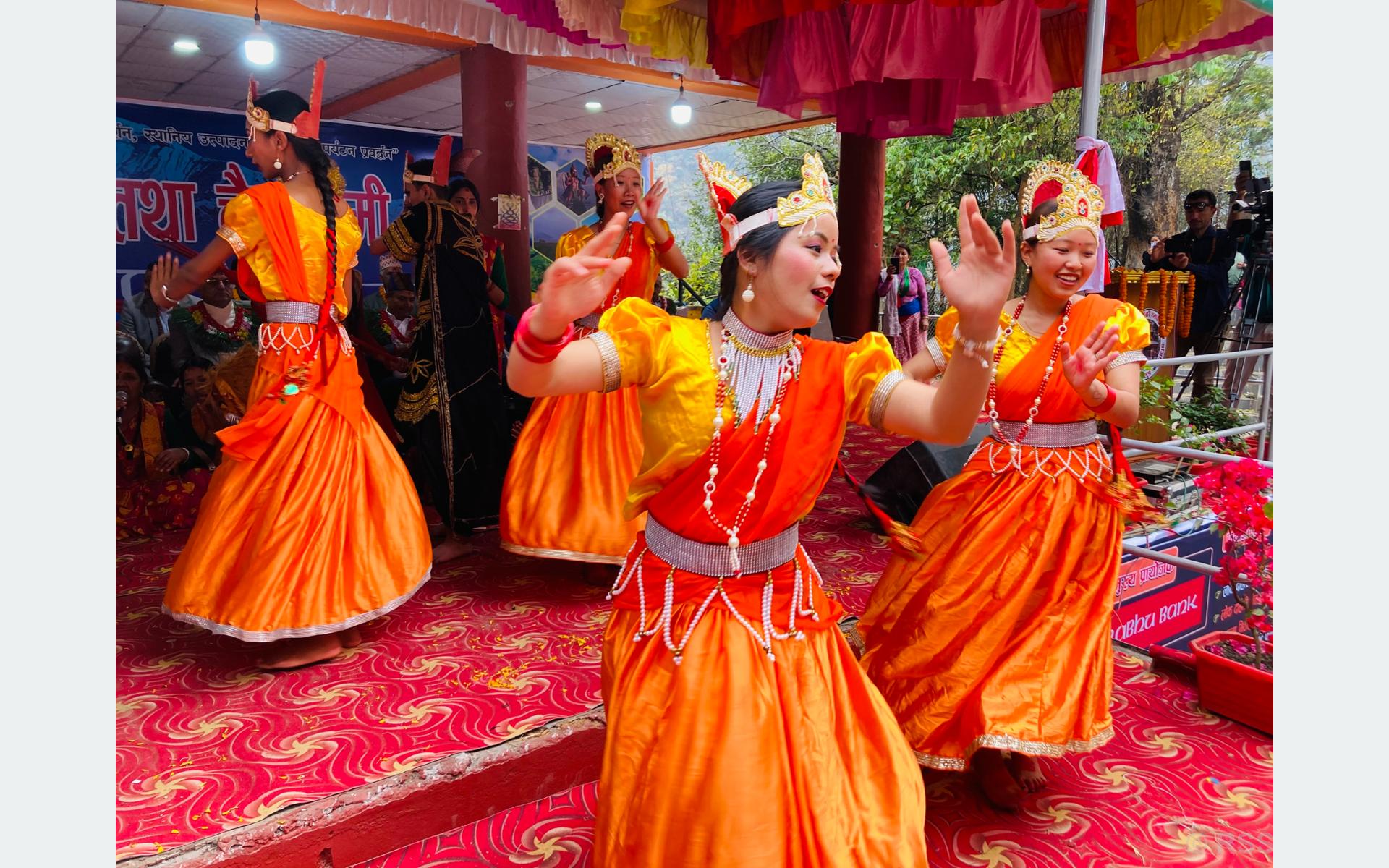
BAGLUNG: Before 2074 BS, there were no formal bhajan (hymns) groups in Baglung, and the transmission of bhajans was limited to traditional village worship.
As folk hymns began to fade, the new generation has successfully promoted the district’s art and culture at the national level by showing a keen interest in preserving bhajans.
The preservation of bhajans has been strengthened through organizing bhajan competitions, offering training programs, and forming bhajan committees in religious institutions.
According to the District-level Folk Bhajan Chutka Committee, established in 2074 BS, 47 bhajan committees have now been formed across the district.
The Jaimini Bhajan Sankirtan Group was the first established to preserve bhajans, and activities increased significantly after the formation of the District Bhajan Committee in 2078 BS.
Tek Bahadur KC, chairman of the District Bhajan Committee, shared that 47 active bhajan groups currently operate in the district.
He explained that following the district committee’s formation, groups were created within religious institutions and monasteries, fostering cooperation, acquiring musical instruments, exchanging experiences, and professionalizing bhajan singing.
Recently, facing the threat of extinction, local bhajan enthusiasts have united to preserve folk Bhajan Chutka. They have expanded their organizations and initiated training programs to pass this tradition from one generation to the next.
“There are many genres and rhythms of bhajan. Today, bhajan kirtan is performed at formal fairs and festivals, and dramas are presented to the rhythm of bhajans,” said KC.
“Hundreds of youth and bhajan lovers are committed to preserving folk bhajan, which is rooted in ancient Hinduism and Eastern philosophy. Musical instruments have been procured through donations, and institutionalizing bhajans will ensure their transmission across generations.”
Kumar Khadka, chairman of the Kalika Guthi Management Committee, said that in 2076 BS, Kalika Bhagwati Guthi organized a 15-day bhajan training program focused on preserving and transmitting folk bhajans. Since then, local training in playing the madal has continued.
He added that the Kalika Mandir Bhajan Group regularly sings bhajans in the morning and aarti bhajans in the evening and has been deputed to perform at various worship services.
The group actively participates in bhajan singing at monasteries, during Chaurasi Pujas, and fasts. Support for bhajan preservation, training, and promotion has also been increasing.
Religious tourists have shown growing interest in folk bhajan chutka in recent times. Leading bhajan player Durga Bahadur Acharya informed that under the foundation’s leadership, sound equipment and musical instruments worth Rs. 500,000 have been acquired.






Comment