




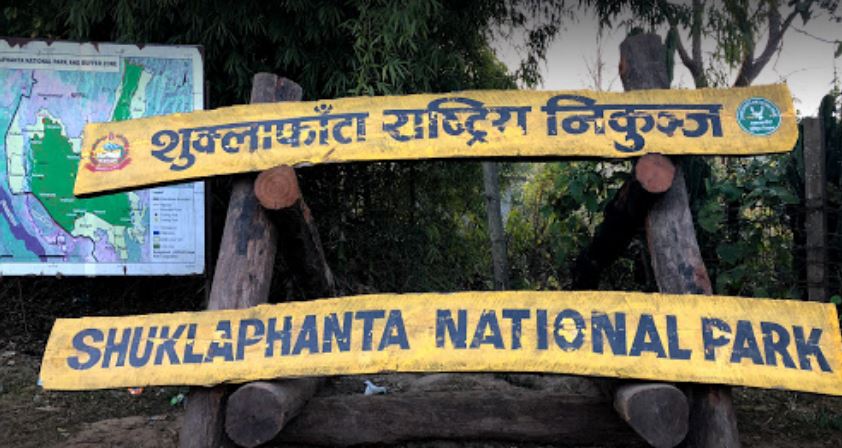
KANCHANPUR: A total of 514.31 hectares of Shuklaphanta National Park has been encroached upon.
Of this, approximately 374.42 hectares have been encroached in Dhaka, Tarapur, and Lallare Danda, while around 139.89 hectares have been encroached in the Nepal-India border area near Pillar No. 28, according to the park office.
Displaced people, relocated during the expansion of the former Shuklaphanta Reserve, are living in these encroached areas. Purushottam Wagle, Information Officer of the park, stated that 604 families reside in Dhaka, 155 in Tarapur, and 13 in Lallare Danda. Additionally, Indian citizens are reported to be encroaching on about 139.89 hectares near Pillar No. 28 along the border.
Wagle emphasized that human settlements in the park’s core area threaten wildlife habitats. “Displaced people living in the core area are causing disturbances to wildlife, while also lacking access to basic services. Both humans and animals are negatively affected by these settlements,” he said.
The encroachment problem persists because the issue of displaced people from the park has not been resolved. Despite the formation of 33 commissions so far, no permanent solution has been reached.
Encroachment has also occurred between Pillars No. 27 and 28 along the Nepal-India border. Wagle noted that disputes arise due to the absence of sub-pillars between the main border pillars.
“Last May, the Nepali Army and the National Park Office jointly established a post near Pillar No. 28 to monitor the area.” The army has since been patrolling the encroached area where Indian farmers are operating.
Currently, there are 15 joint security posts of the Nepali Army and the National Park Office across various locations within the national park, while the army operates from three separate posts.
Human-wildlife conflict has also risen in the park due to encroachment by people displaced during the expansion of the eastern area of the former Shuklaphanta Reserve (now Shuklaphanta National Park) in 2058 BS.
Over the past decade, the park office reports that 17 people—including 14 men and three women—have died in wild elephant attacks in the area.





Comment