




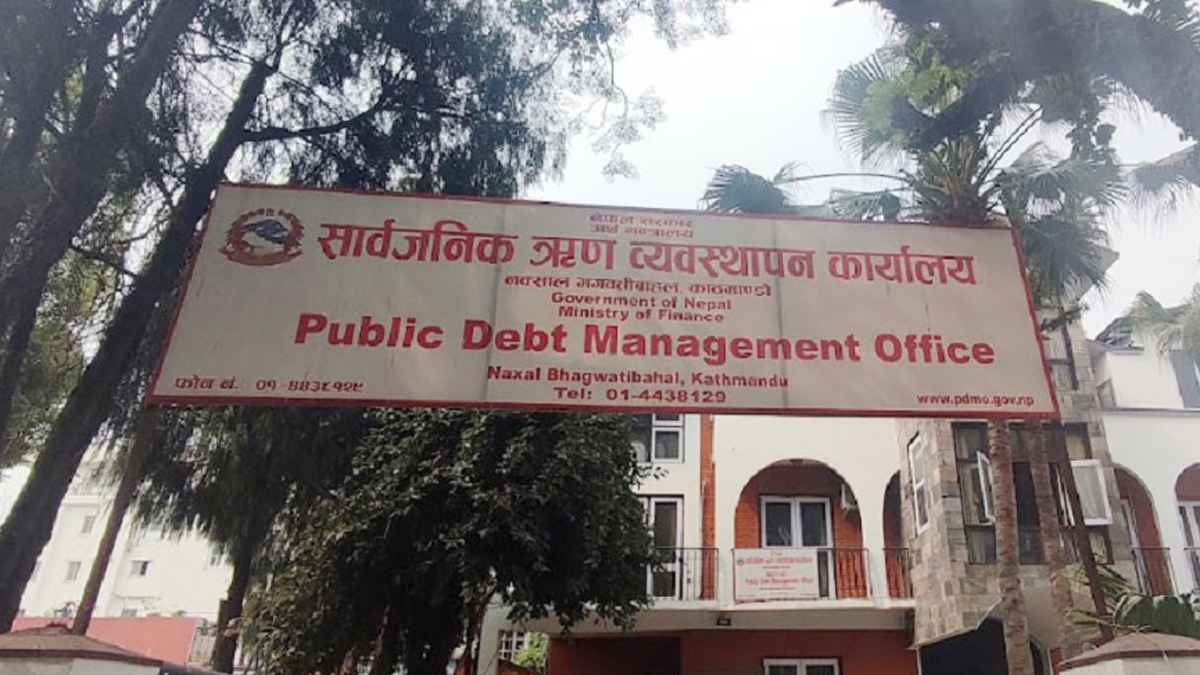
KATHMANDU: The Public Debt Management Office (PDMO) has opened the sale of two savings bonds worth a total of Rs 3 billion to raise government funds. The office is issuing ‘Citizen Savings Bond–2087’ worth Rs 2.50 billion and ‘Foreign Employment Savings Bond–2087’ worth Rs 500 million.
Applications for both five-year bonds will remain open until Mangsir 25, while the bonds will be officially issued on Mangsir 28. The annual interest rate has been set at 6.5 percent for the Citizen Savings Bond and 7.5 percent for the Foreign Employment Savings Bond.
The interest amount will be deposited into investors’ bank accounts every six months. Investors can purchase a minimum of Rs 10,000, and amounts must be in multiples of Rs 10,000 up to the limit of the total issued amount.
The Citizen Savings Bond is open to Nepali citizens and Non-Resident Nepalis (NRNs). The Foreign Employment Savings Bond can be purchased by Nepalis currently working abroad, those who returned from foreign employment within the last six months, and NRNs. Applications can be submitted through the Debt Operation and Management System (DOMS) and the Investor Portal operated by the PDMO.
While the Citizen Savings Bond generally sees full subscription every year, officials say investor participation in the Foreign Employment Savings Bond has historically remained low due to lack of awareness. “Many people still do not know what savings bonds are, why to invest, or how to invest,” said Prakash Pudasaini, Under-Secretary at the Public Debt Management Office. “Although the number of buyers is increasing recently, awareness remains limited.”
According to Pudasaini, applications worth Rs 8 billion were filed for the Citizen Savings Bond in the last four days alone, and this year’s quota is expected to be fully subscribed before the deadline.
He said the interest rates offered on these saving bonds are more attractive than fixed deposit rates in banks. “For many investors, real estate, gold, the stock market, and fixed deposits are the first choices. But government bonds are safer, simpler, and offer competitive returns,” he added.
Pudasaini said savings bonds are fully secured by the government, ensuring the safety of the principal amount. Interest is deposited directly into the investor’s bank account every six months, and the bond can be used as collateral to obtain loans from banks and financial institutions.
He also noted that savings bonds come with strong liquidity. “There is an obligation for banks and financial institutions to buy the bond whenever the holder wants to sell. That means the investment can be converted into cash at any time,” he said.






Comment