




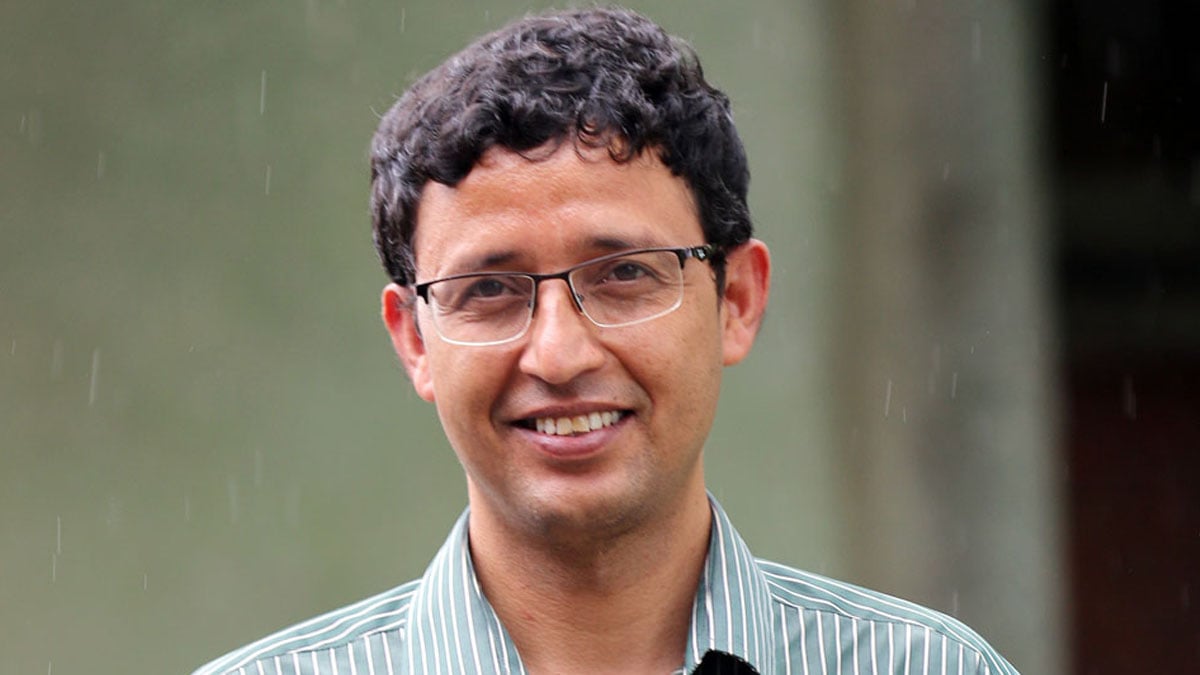
KATHMANDU: Social media is abuzz following reports that Dr. Raamesh Koirala, head of the cardiovascular department at Shaheed Gangalal National Heart Center in Kathmandu, has left the country.
The news has sparked intense debate, with many interpreting his departure as symbolic of a broader national failure — a country where only a privileged few thrive while others are compelled to leave.
Dr. Koirala shared a status on social media Wednesday, stating, “I’m enjoying your criticism. Suddenly leaving behind my skills, my country, and my profession makes my heart ache. But the hope of returning in a different capacity is still alive — though I may not be a surgeon then. Salute to my family, who believe I could one day support them even by driving a rickshaw.”
He addressed his departure publicly in a letter posted on social media to Gangalal Hospital’s Executive Director, Dr. Ravi Malla.
His announcement has drawn widespread public reaction. Leaders, intellectuals, professionals, and ordinary citizens have responded with concern and reflection. Many expressed disbelief that someone who served at Gangalal Hospital for over 25 years would feel compelled to migrate.
Rastriya Prajatantra Party (RPP) Chair Rajendra Lingden wrote, “Dr. Koirala, an excellent doctor from my own constituency, is someone I deeply respected despite our lack of personal rapport. I’m saddened by his departure. How long will this trend of capable people leaving the country continue?”
The irony is striking: a surgeon who kept the country’s most vulnerable hearts beating now finds himself heartbroken by the state of the nation. His exit is not just about one man’s disillusionment — it reflects a system that often sidelines merit, discourages excellence, and quietly pushes its brightest minds to seek dignity elsewhere.
RPP Vice Chair Rabindra Mishra, despite being a known political critic of Dr. Koirala, also expressed sorrow. “Dr. Koirala and I were on opposite sides politically and personally. I even had to block him on Twitter due to intense disagreements. But today, I’m genuinely saddened by his exit. After dedicating decades to a government hospital and forgoing the opportunity to earn abroad, his departure speaks volumes. Despite our differences, I bow to him for his service.”
Mishra also highlighted a worrying statistic: between 2021 and 2025, over 8,600 doctors registered with the Nepal Medical Council, and more than 6,300 of them obtained clearance certificates to leave the country.
Former Chief Secretary Bimal Koirala wrote, “Dr. Ramesh was not just a skilled surgeon but a respected figure in Nepal’s health sector. He deserved recognition based on merit. The state has failed to value such individuals, and it must act to prevent further disillusionment among capable citizens.”
Even comedian Manoj Gajurel joined the conversation, saying, “Whether Dr. Koirala’s resignation is personal or political, it’s a sad reflection of the country. In our institutions, politics and favoritism often outweigh professional merit. Still, I hope he returns to serve Nepal again.”
Dr. Koirala’s departure has become more than just personal news — it has ignited a national conversation about brain drain, political interference in public institutions, and the growing frustration among Nepal’s most talented professionals.
Dr. Koirala’s departure from Nepal has ignited more than just social media chatter — it has exposed deep dissatisfaction with political interference in institutional appointments and the continued sidelining of merit in the public sector.
While his departure was initially framed as a personal decision, it has now emerged that Dr. Koirala had recently applied for the position of Vice Chancellor at BP Koirala Institute of Health Sciences. Despite his decades of service and qualifications, the government chose not to appoint him, a move widely seen as politically motivated.
According to reports, Dr. Koirala was overlooked not once but twice for the role — reportedly blocked by Foreign Minister and Nepali Congress central committee member Dr. Arzu Rana.
This, despite strong lobbying from senior Nepali Congress leaders including Health Minister Pradeep Poudel and General Secretary Gagan Kumar Thapa. In the end, Prof. Dr. Bikram Prasad Shrestha was appointed to lead the institute.
The appointment came as part of a broader distribution of top health education posts between the ruling Nepali Congress and coalition partner CPN-UML — a power-sharing model that critics argue undermines institutional integrity.
Critics have questioned whether Dr. Koirala’s resignation was purely driven by personal grievance. Journalist Khagendra Bhandari, in a pointed social media post, asked, “Did you leave the country because you didn’t get an appointment? Are all those appointed ineligible? And what about those serving the country without chasing posts — are they doomed?”
His remarks reflect a growing concern about public figures undermining their own stature by venting frustration in ways that appear partisan or personal.
Reports suggest that Dr. Koirala felt “humiliated” by the government’s repeated rejection and was ultimately compelled to leave. This perception has reignited debate about brain drain in Nepal.
A recent report by a national daily, citing official government data, stated that 74% of doctors registered with the Nepal Medical Council eventually migrate abroad — a figure likely to rise if politicized appointments continue.
Dr. Koirala is more than just a physician — he is a prominent public intellectual, writer, social worker, and legal scholar. A senior heart surgeon, he has performed over 6,000 surgeries, including a high-profile case involving notorious criminal Charles Sobhraj.
His memoir, Charles Sobhraj: Inside the Heart of the Bikini Killer, followed that operation. He has also authored novels such as “Amako Mutu” and “Kopila Ashram”, contributing significantly to Nepali literature.
The irony is striking: a surgeon who kept the country’s most vulnerable hearts beating now finds himself heartbroken by the state of the nation. His exit is not just about one man’s disillusionment — it reflects a system that often sidelines merit, discourages excellence, and quietly pushes its brightest minds to seek dignity elsewhere.





Comment