




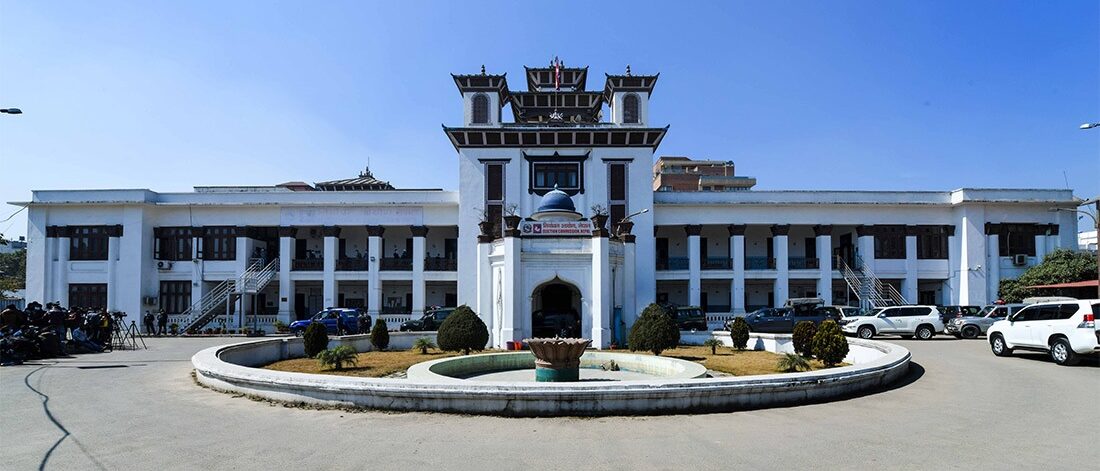
KATHMANDU: With just 81 days remaining until the House of Representatives (HoR) election, preparations and political activities are gaining momentum across the country. The Election Commission (EC) has stepped up its work and completed the registration of political parties for both direct and proportional representation systems.
The government has also put in place necessary arrangements and facilitation for the polls, while political parties (from major national forces to newly formed parties) have begun election-focused campaigns nationwide.
As a result, the country is gradually entering a full-fledged election atmosphere, with political engagement and mobilization increasing across regions.
The Nepali Congress has moved ahead with the process of selecting candidates nationwide and forwarding recommendations to the central leadership. The party is choosing candidates for both direct and proportional representation, as well as for the National Assembly. At this stage, the Nepali Congress appears to be ahead of other parties in finalizing candidate selection.
Meanwhile, the 11th general convention of the CPN-UML began on Saturday. Addressing the inaugural session, party chair KP Sharma Oli questioned whether the UML, confident of securing a majority in a free and fair election, would shy away from the polls.
He stressed the need for the government to ensure a fair and pressure-free electoral environment and called for an atmosphere that encourages political activity. UML has already completed key procedural requirements, including party registration, within the timeframe set by the Election Commission.
Similarly, the Nepali Communist Party (NCP), formed through the merger of various communist groups, has intensified election-oriented activities nationwide through a series of “message assemblies.”
After holding assemblies in Dhangadhi, Dang, Pokhara, Biratnagar and Janakpur, the party organized a public meeting in Birendranagar, Surkhet, on Saturday and is scheduled to hold another assembly in Kathmandu on December 20. Party coordinator Pushpa Kamal Dahal ‘Prachanda’ reiterated in Surkhet that the election must be held on the scheduled date, stating that his party has been actively advocating for timely polls.
Meanwhile, the Rastriya Swatantra Party (RSP) has also advanced its election preparations, beginning with the drafting of its election manifesto and the selection of candidates. The party has applied to contest under the proportional representation system and is conducting election-focused activities through public assemblies.
For the election scheduled on March 5, 2026, the Election Commission has initiated the process of determining proportional representation quotas based on population. As per constitutional provisions, representation percentages will be allocated among Dalit, Indigenous Nationalities, Khas Arya, Madhesi, Tharu and Muslim groups.
In total, 100 political parties will contest under the proportional representation system. The Election Commission registered these parties on Friday and assigned election symbols.
Although 100 parties applied, only 93 election symbols were finalized, as multiple parties applied to use the same symbol. Additionally, 114 political parties will participate in the direct election system.
The Election Commission is currently drafting the election code of conduct and collecting feedback from stakeholders. President Ram Chandra Paudel has approved the mobilization of the Nepal Army for election security on the government’s recommendation.
Likewise, Home Minister Om Prakash Aryal has stated that the Ministry of Home Affairs has completed necessary preparations to ensure the election is conducted in a free, fair and fear-free environment, with peace and security fully maintained.



Comment