




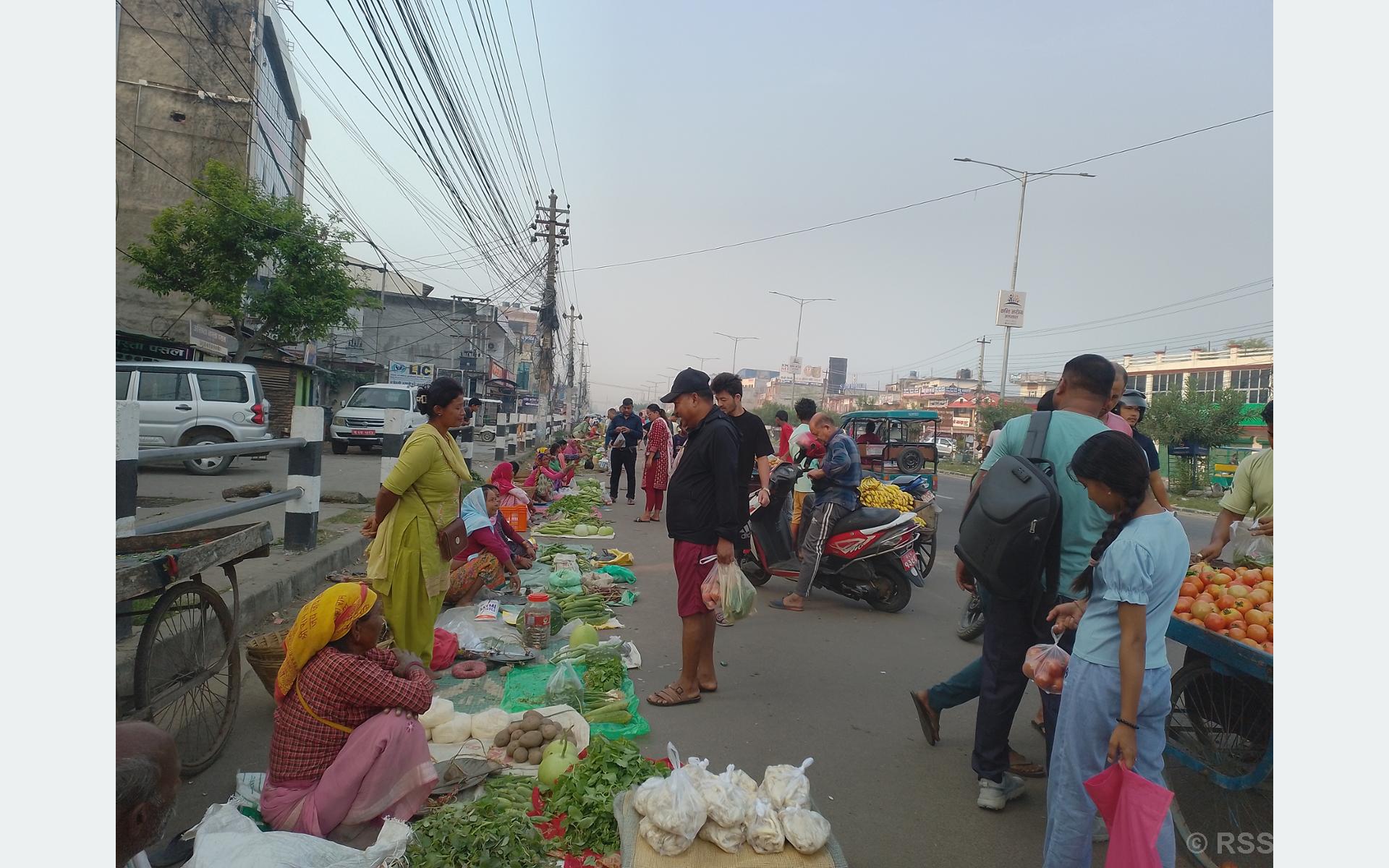
BANKE: Amid the busy streets of Nepalgunj and the dominance of imported vegetables, organically grown produce from Tharu women in the rural areas of Banke and Bardiya has carved out a unique identity and taste.
The fresh vegetables cultivated through the hard work of Tharu women have not only attracted consumers in Nepalgunj but have also become a strong example of women’s empowerment and self-reliance.
Each morning, a small market operated by Tharu women comes alive at Dhambojhi Chowk, drawing residents seeking pesticide-free, freshly harvested vegetables.
Sunil Singh Hamal of Nepalgunj Sub-Metropolitan City–2 says he has been buying organic vegetables from these women for three years. For him, the transaction goes beyond commerce—it is a way of supporting the livelihoods and independence of Tharu women.
Depending on the season, they sell beans, pumpkin, gourd, bitter gourd, mustard greens, cucumbers, and other vegetables. They also bring lentils, including arhar, from their farms.
For Tharu women in rural Banke and Bardiya, farming has become not just a source of income but a path to self-reliance. The family of Basanti Tharu from Naubasta in Baijnath Rural Municipality grows vegetables around their home and sustains their household through daily sales.
As demand has grown, more Tharu women have begun cultivating and marketing their own produce. Despite being a ward member of Badhaiyatal Rural Municipality–3, Bardiya, Dusani Tharu still brings organic vegetables to Nepalgunj every day and sells them.
She has been engaged in agriculture for the past decade. What once required transporting vegetables on bicycles to roadside markets has now become easier through the Dhambojhi market, where her produce sells quickly. She now earns between Rs 15,000 and Rs 20,000 per month.
For Shyamkali Tharu of Rajapur, Bardiya, selling vegetables has proven to be an accessible and reliable way to earn an income. She notes that many Tharu women are drawn to this work because the vegetables sell immediately and generate steady earnings.
However, the vendors have raised concerns about having to compete with sellers bringing vegetables from the Indian market of Rupediya.
Nepalgunj Sub-Metropolitan City spokesperson Pramod Rijal praised the women for their dedication and for supplying the city with organic produce. He said the sub-metropolitan office is taking steps to facilitate the systematic sale and distribution of their products.
Through their work, Tharu women of Banke and Bardiya have not only provided Nepalgunj with healthy, locally grown food but have also elevated the importance of local production, women’s leadership, and sustainable agriculture.
According to Rijal, their efforts are helping revive the traditional flavors and charm of village life within the city’s markets.






Comment