




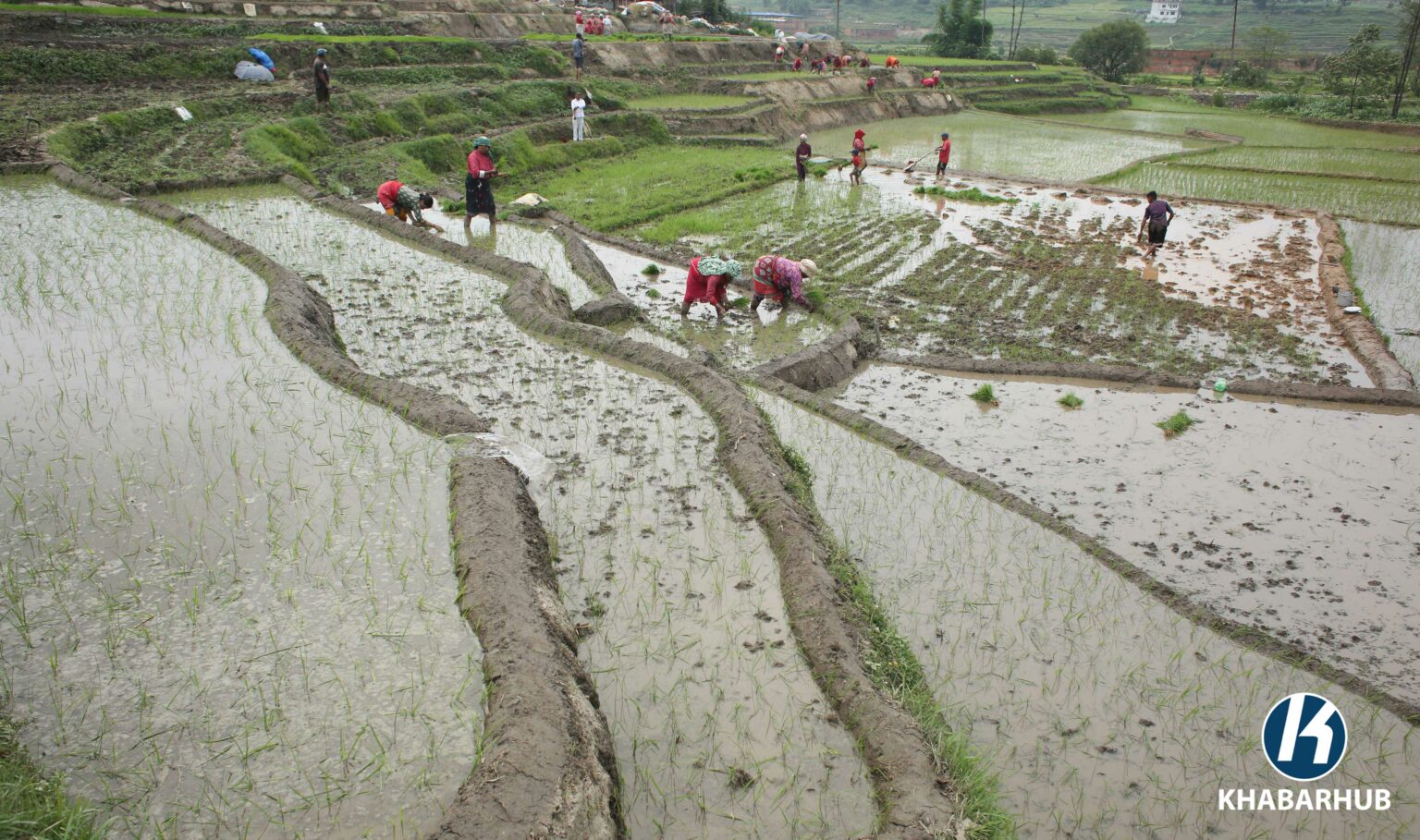
KATHMANDU: Paddy plantation has been completed on 816,405 hectares of land across Nepal, covering approximately 59 percent of the total cultivable area as of today, according to the Ministry of Agriculture and Livestock Development.
This represents an 8 percent decline compared to the same period last year, when plantation had reached 67 percent.
Sudurpaschim Province has recorded the highest rate of paddy plantation, with around 164,000 hectares planted—93 percent of its target area.
Karnali Province has achieved 83 percent plantation, covering 64,000 hectares, while Lumbini Province has completed plantation on 223,000 hectares, or 73 percent of its targeted area.
The ministry reported that paddy plantation is still ongoing in several regions, with expectations that 98 percent of the total target will be achieved by mid-August.
Mahananda Joshi, Information Officer at the ministry, noted that the Terai region is the country’s main rice-producing zone, contributing about 70 percent of national output due to favorable climatic conditions and expansive arable land. The hilly region accounts for the remaining 30 percent.
In the last fiscal year, Nepal produced 5.72 million metric tons of rice. However, this year’s paddy plantation has been delayed in several areas due to adverse weather, including erratic rainfall, drought, and natural disasters.
Despite this, the ministry remains hopeful, citing improved farming practices, advanced technologies, and better seed varieties that are expected to boost yields.




Comment