




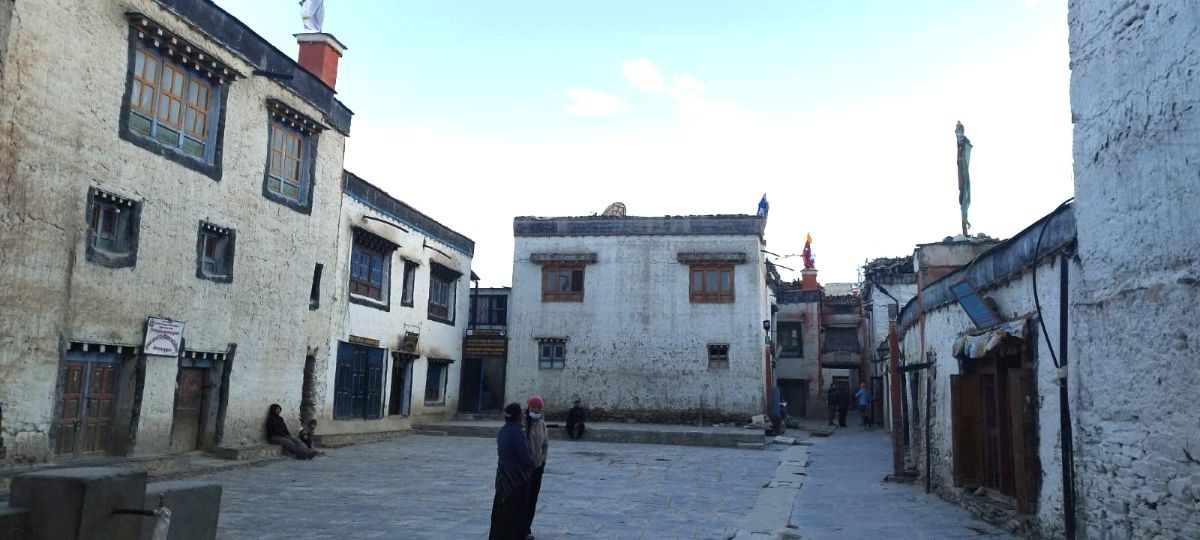
LOMANTHANG: Despite its rich cultural legacy, natural beauty, and historical significance, the ancient walled settlement of Lomanthang in Mustang remains underexplored by foreign tourists due to restrictive government policies and limited infrastructure.
Located 75 kilometers from Jomsom and approximately 180 kilometers north of Beni, Lomanthang was once a thriving trade hub between Nepal, India, and Tibet.
Today, however, it struggles to realize its tourism potential. While nearby destinations such as Marpha, Jomsom, and Muktinath attract thousands of international visitors annually, Lomanthang continues to receive only a trickle of tourists.
Chairman of Lomanthang Rural Municipality, Tasi Nharbu Gurung, attributed the low tourist numbers to a stringent permit policy requiring foreign nationals to pay USD 500 for a 10-day visit to Lomanthang and Lo-Dhekar Damodarkunda.
“If this restriction were lifted or revised, we could see a surge in tourist inflow, significantly improving the livelihoods of local residents,” Gurung said.
Lomanthang, situated at an altitude of 3,850 meters and bordering China’s Tibet Autonomous Region, had raised hopes for cross-border trade and increased economic activity with the opening of an Immigration Office and a Border Outpost at Korola point in October 2024. However, these facilities remain largely non-operational.
Gurung noted that the lack of essential infrastructure—such as a functioning food and livestock quarantine unit—has stalled the full operation of the immigration office.
“We have the geographic advantage, but without necessary state support, we’re unable to tap into cross-border opportunities,” he added.
Healthcare also remains a critical concern. Although a hospital has been constructed, it lacks both trained personnel and medical equipment. Moreover, delays in obtaining central government approval for emergency helicopter rescues have led to preventable tragedies, according to local officials.
Home to approximately 2,000 people, Lomanthang is a 600-year-old settlement encircled by earthen walls, with roots tracing back to the Lo Kingdom of the 13th century. The last king, Jigme Dorje Palbar Bista, held symbolic authority until Nepal became a republic.
The village boasts ancient monasteries, centuries-old palaces, and cultural traditions such as the “Mukhiya” system and Tibetan Buddhist heritage, drawing keen interest from historians and spiritual seekers alike. A remarkable nearby cave, believed to be over 2,000 years old with nearly 60 rooms, stands as a testament to the region’s ancient civilization.
Despite these assets, Lomanthang remains largely overlooked in national tourism and development strategies.
“This place is a living museum of Tibetan Buddhism and Himalayan history,” said Gurung. “But unless the government addresses the barriers holding us back—especially policy and infrastructure gaps—Lomanthang’s full potential will remain untapped.”





Comment