




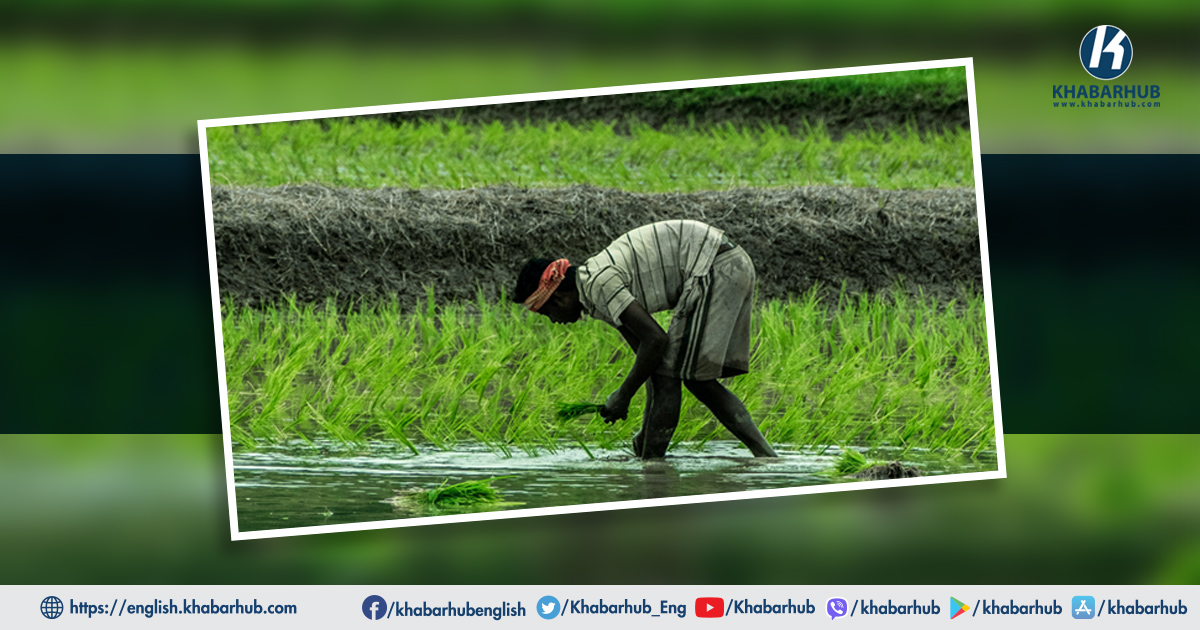
KATHMANDU: A recent study by Nepal Rastra Bank (NRB) reveals a decline in the area under agricultural crops in Koshi Province, attributed to increasing migration and the construction of residential structures on arable land.
The “Provincial Economic Activities Study Report for Fiscal Year 2023/24” shows a 1.55 percent reduction in land used for agricultural crops compared to the previous fiscal year. Despite this decline, overall agricultural production in the province has increased by 1.13percent, driven primarily by a 7.45 percent rise in paddy production and a 0.86 percent increase in millet.
Koshi Province contributed 15.84 percent to Nepal’s national GDP in FY 2023/24, a slight decrease from 15.88 percent in the previous fiscal year. The province’s GDP composition includes 32.80 percent from agriculture, 16.32 percent from industry, and 50.88% from services.
The report indicates that 87.92 percent of the total agricultural land in Koshi Province is dedicated to food and cash crops, 5.11 percent to vegetable crops, and 6.97 percent to other crops. Staple crops like rice, maize, wheat, and millet account for 71.64 percent of the total agricultural land.
While vegetable production rose by 1.98 percent, tea by 0.01 percent , coffee by 1.23 percent , and honey by 0.28 percent , the production of fruits declined by 0.94 percent , and spices saw a significant drop of 8.03 percent.




Comment