




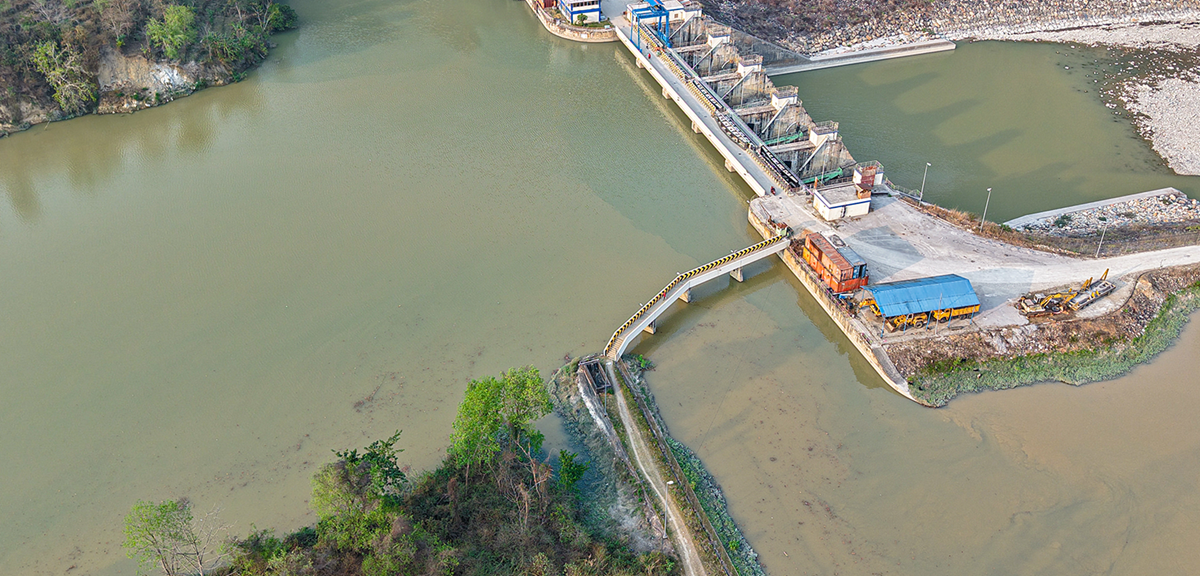
KATHMANDU: The Marsyangdi Hydropower Station, located in Aanbukhaireni Rural Municipality-4 of Tanahun, is currently operating at just 40 percent of its capacity, generating only 30 megawatts of electricity out of its total capacity of 69 megawatts.
According to Chief Engineer Pashupati Gautam, the sharp decline in electricity production is a result of a prolonged dry season and the lack of winter rainfall. He noted that the station, which has three turbines of 23 megawatts each, has seen a significant reduction in water flow due to the ongoing drought.
Gautam explained that the flow of water from streams, waterfalls, and tributaries that feed the Marsyangdi River has decreased significantly, with some drying up completely. This drop in water levels has directly impacted power generation. Built in 1989, the Marsyangdi Hydropower Station supplies electricity through the national transmission line via Bharatpur in Chitwan and Syuchatar in Kathmandu.
There is hope, however, that production will improve with the arrival of Baisakh, as rising temperatures are expected to melt more snow and increase rainfall, replenishing water sources.
Until then, the Nepal Electricity Authority (NEA) is relying on electricity imports from India to meet domestic demand, as hydropower production remains low during the dry season.
The Marsyangdi River, originating in the Himalayas, experiences reduced snowmelt and rainfall during colder months, which contributes to the seasonal decline in water flow and power generation.





Comment