




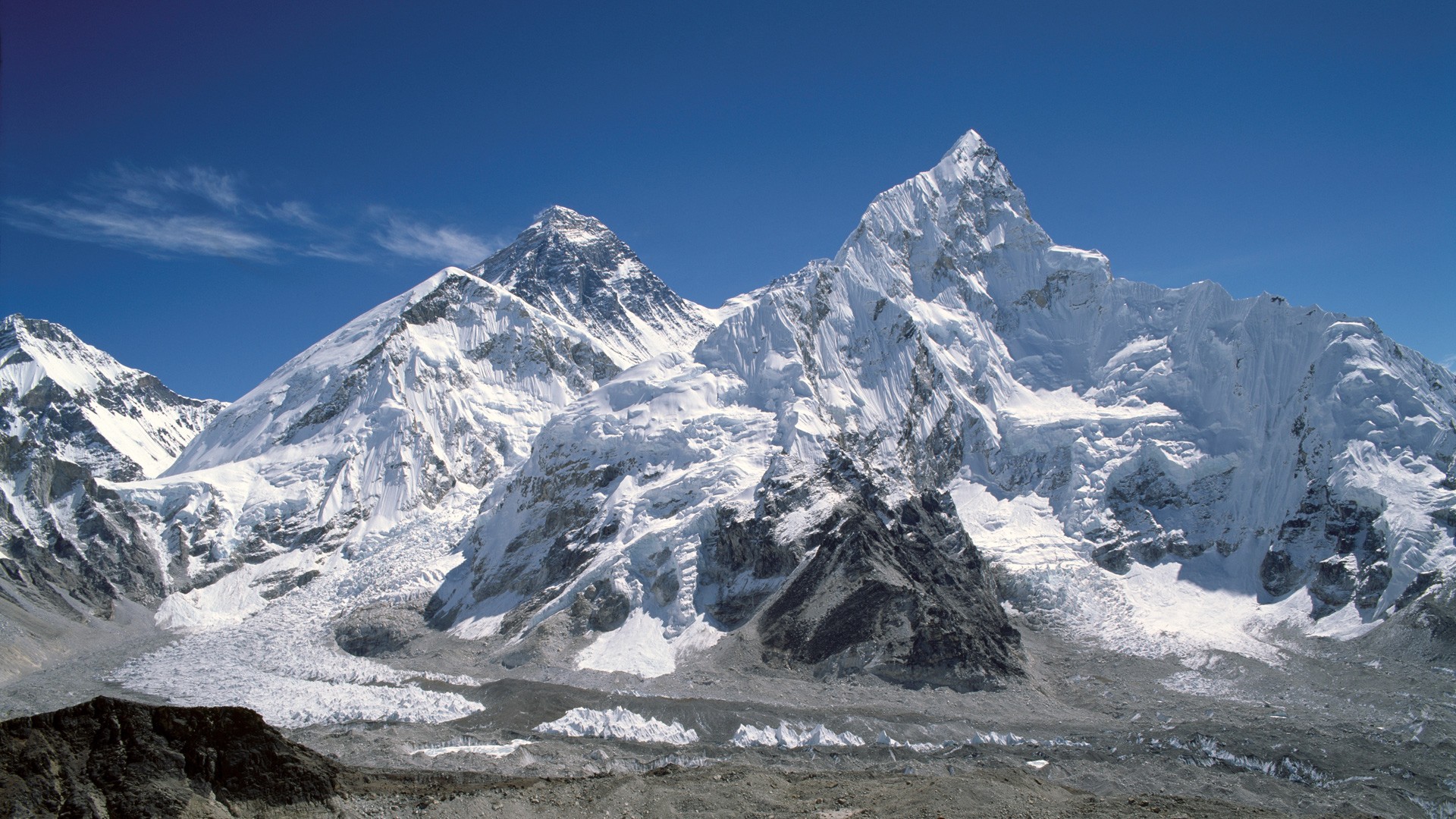
LUKLA: For decades, the Khumbu region was known for its gleaming Himalayan peaks, icy winds and snow-capped summits that appeared to touch the sky. Tourists marvelled at the scenery. But in recent years, snowfall has dropped sharply, leaving mountains increasingly bare.
“It feels like another era has begun,” said Pasang Sherpa, an elderly resident of Khumbu. “Since childhood, we only saw white mountains. Now half of them look like black rock. Look at these peaks, where is the snow now? Everything has changed before our eyes.”
Two decades ago, upper Khumbu, from Namche, Khumjung and Tengboche to Lobuche and Gorakshep, remained blanketed in snow throughout the year. Now, locals say the snowfall period has shortened dramatically, and even the compact snow stuck to mountain surfaces is melting at high speed.
Mountains once known for their bright white coats, Everest, Lhotse, Nuptse, Ama Dablam and Thamserku, now reveal large stretches of dark rock, a sight that shocks visiting trekkers but has become disturbingly normal for residents.
“Visitors ask us what’s happening, and only then we stop to think,” said Fudoma Sherpa of Khumjung. “Otherwise, this no longer surprises us. The process is moving so fast that we don’t even know whom to ask or how to stop it. We have no options but to watch silently.”
Bhumi Raj Upadhyaya, former chief conservation officer of Sagarmatha National Park, said rising temperatures are the main driver. “As the Earth warms, snow cover thins every year. The snow-covered area is shrinking steadily,” he said.
Locals believe weather patterns have reversed. “Winters used to be harsh but tolerable,” said Pema Sherpa of Jorsalle. “Now the cold is bone-aching, and summers are so hot that we sweat even in the lap of the Himalayas.”
Studies show the temperature in high Himalayan regions has risen by about 1.5 degrees Celsius since the 1970s. As temperatures cross critical thresholds, less snow accumulates and previously frozen layers melt rapidly, leaving mountain surfaces exposed, explained climate expert Rajan Thapa.
He noted several reasons behind the increasing dark patches: rock surfaces emerging after snow melt, dry snow turning into exposed belts, the accumulation of black carbon from the atmosphere, and rising human activity in protected areas.
The impacts have intensified in recent years. On August 18 last year, a sudden flood in the Thame Khola wreaked havoc across Khumbu, damaging more than 20 houses and sweeping away schools, health posts, government buildings, trekking routes, livestock sheds and even hydropower infrastructure. The main trail from Phakding to Namche was severely cut off.
Khumbu’s tourism industry, long regarded as the backbone of Nepal’s tourism revenue, is under growing pressure from the climate crisis. Glacial lakes in the region, including those in Pheriche, Imja and Khumbu basins, are expanding rapidly. The Imja Lake alone has grown by 65 percent in two decades, a stark indicator of accelerating climate change.
Areas such as Imja, Thamserku basin and Khumbu basin are now listed among high-risk zones. “Earlier we only heard stories about glacial lake outburst floods. Now we live with the fear every day,” said Pashi Lama of Khumbu. “As snow melts and lakes keep growing, villages, bridges and trails are all at risk.”
Local livelihoods are also shifting. Traditional practices, melting snow for water, keeping livestock indoors through long winters, and adjusting farming cycles based on snowfall, are changing. With less snow, streams have thinned. Rivers like the Dudh Koshi and Imja swell only during the monsoon, while dry-season water shortages are becoming more common.
Rising temperatures have also increased the risk of landslides, avalanches and rockfalls along trekking routes. “Plans must now be made very carefully,” said trekking guide Bal Darnal. “Weather is unpredictable, and tourist safety requires far more caution.”
Climbers like Speedkaji Sherpa fear that if the trends continue, even the region’s identity, shaped for centuries by ice and mountains, could be at risk.





Comment