




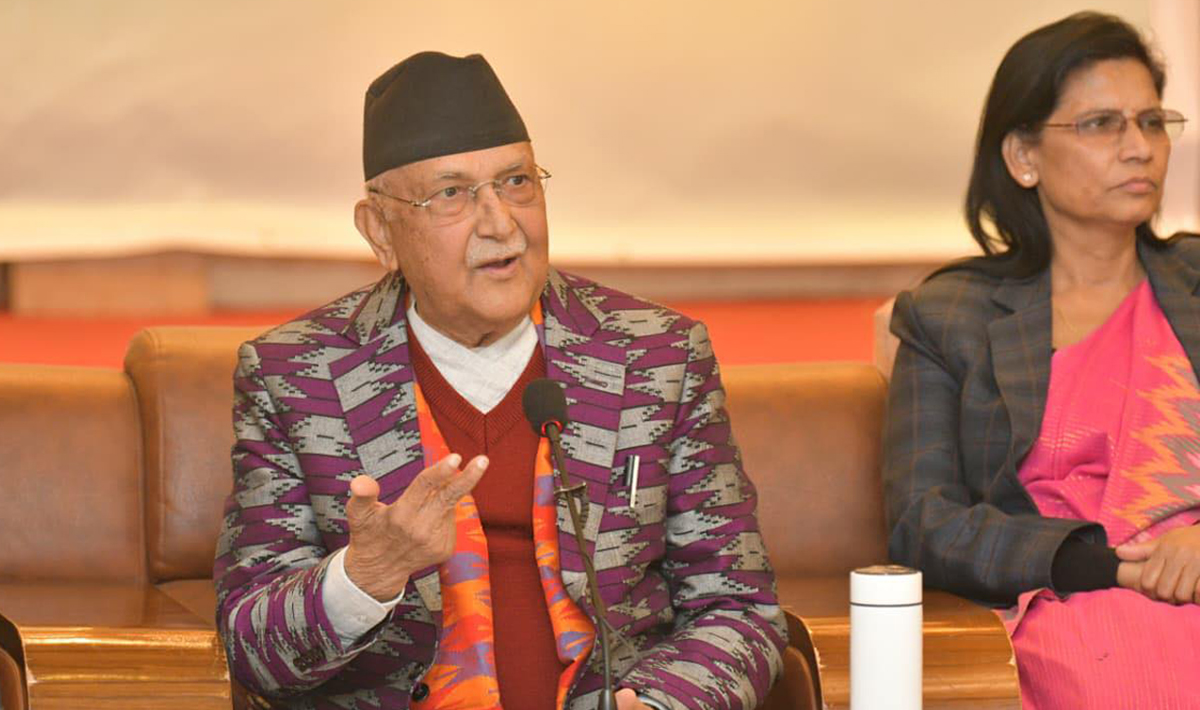
KATHMANDU: CPN-UML Chair KP Sharma Oli on Thursday criticized the 10-point agreement signed between the interim government and representatives of the Gen-Z People’s Movement on Wednesday, calling it a pointless drama.
The agreement was intended to address key demands raised during protests against corruption, misgovernance, impunity, and social inequality. It includes provisions to honor the families of protest martyrs, provide relief to the injured, form commissions to strengthen anti-corruption efforts, and propose improvements to Nepal’s constitution, including electoral reforms, youth participation, and proportional representation. A Gen-Z Council will also be established to advise the government and reinforce democratic processes.
However, Oli said the government lacked any legitimate mandate to negotiate with the Gen-Z groups. “The so-called agreement is nothing more than a meaningless document,” he said during an interaction with editors.
Oli added that the agreement, which was presented by the government without proper authorization, had already been rejected in practice. “That pointless drama was dismissed yesterday, and the agreement was effectively torn apart,” he said.
He said such documents should not be recognized or legitimized. “We will not accept this pointless drama in any form,” Oli said.
The government and Gen-Z movement have described the deal as a step toward good governance, youth participation, and long-term political stability. The agreement also includes provisions for declaring individuals who died during the September 8–9 Gen-Z protests as martyrs, providing their families with relief and support, free medical care, education, employment opportunities, and social security for the injured, and establishing a Martyrs’ Memorial Foundation.
Other commitments in the agreement focus on human rights investigations, reducing partisan influence in state institutions, introducing a “None of the Above” (NOTA) voting option, conducting primary elections, and setting the minimum age for candidacy at 21.
Despite these provisions, Oli rejected the agreement entirely, maintaining that it was a theatrical exercise without legal or political validity.






Comment