




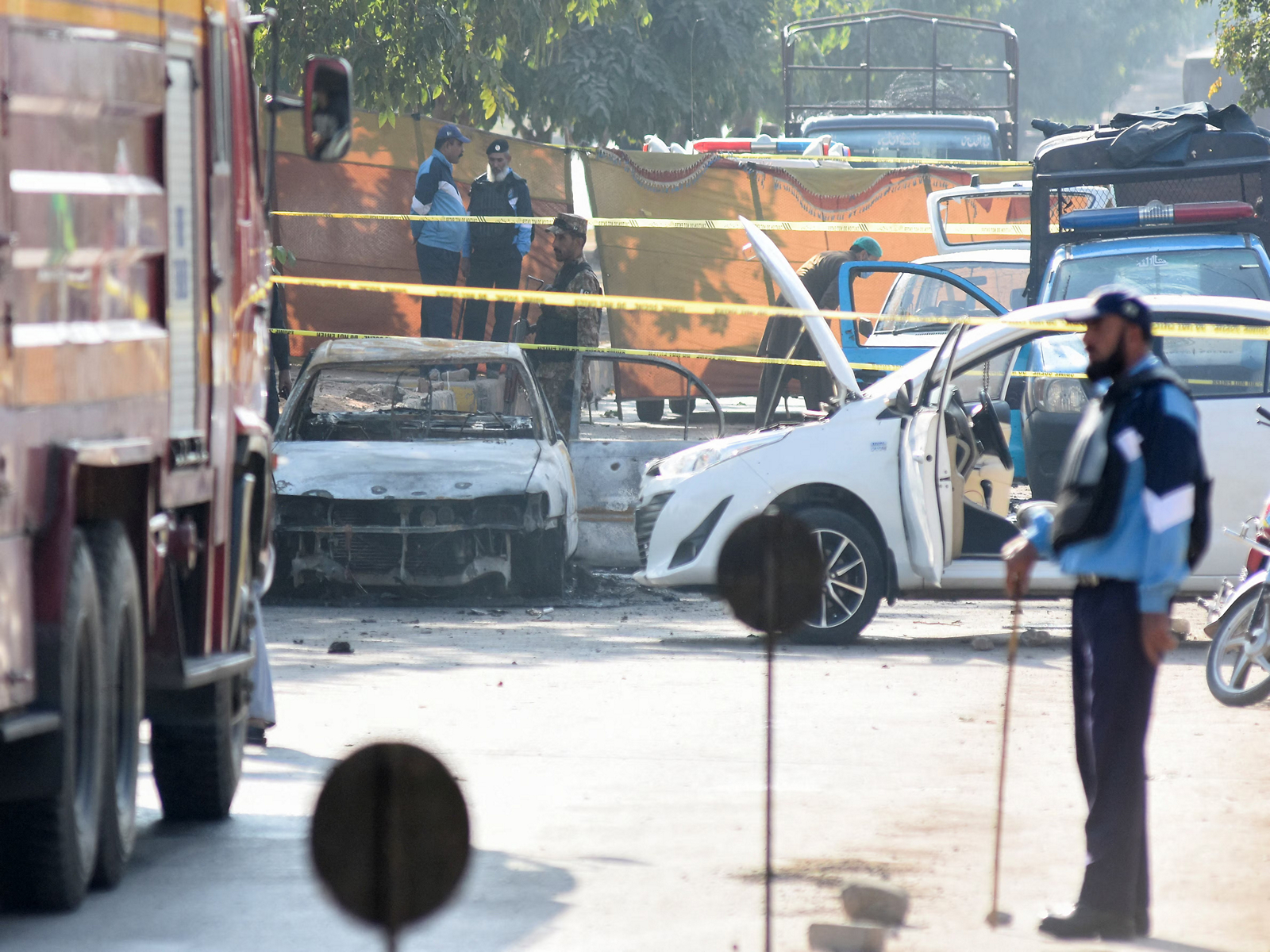
NEW DELHI: At least 13 people were killed and more than 20 others injured when a high-intensity car bomb exploded near Red Fort Metro Station in central Delhi on Monday evening, sparking panic in one of the city’s busiest areas.
According to police sources, the explosion occurred at 6:52 p.m. (IST) in a Hyundai i20 car stationed at a traffic signal near Gate No. 1 of the Metro station. The blast triggered a massive fire, damaging several vehicles and nearby structures. Forensic teams have confirmed that Ammonium Nitrate was the primary explosive used in the attack.
Suspect identified, car traced to Gurugram
Initial investigation revealed that the vehicle used in the explosion was registered in Gurugram (HR26) and had changed ownership seven times before being used in the attack. The car’s last known owner has been identified as Dr. Umar Nabi, a suspected operative linked to the Jaish-e-Mohammed (JeM) terrorist organization.
According to multiple media and intelligence reports, Dr. Mohammad Umar, a Kashmir-based medical professional, is suspected to have orchestrated and executed the bombing. Investigators are probing his connection to previous terror attacks, including potential links to the Pulwama network.
Faridabad seizure tied to the blast
In a parallel operation, police in Jammu and Kashmir, Haryana, and Uttar Pradesh jointly recovered a massive cache of explosives and weapons from Faridabad, Haryana, on the same day as the Delhi blast.
Officials said the seizure included approximately 2,900 kilograms of explosive materials — primarily Ammonium Nitrate — along with AK-47 rifles, Beretta pistols, and bomb-making components.
This operation stemmed from the arrest of Dr. Adil Ahmed Rather, a Kashmiri doctor working in Saharanpur, Uttar Pradesh. His interrogation reportedly exposed a wider terror conspiracy involving several medical professionals acting as part of a radicalized module.
Among those arrested were Dr. Muzammil from Faridabad and Dr. Shaheen Shahid from Lucknow, Uttar Pradesh. Authorities believe Dr. Shaheen recently assumed the role of India head of the women’s wing of Jaish-e-Mohammed.
NIA leads investigation under UAPA
The National Investigation Agency (NIA) and the Delhi Police Special Cell have jointly taken over the investigation, treating the Red Fort explosion as a terrorist attack under provisions of the Unlawful Activities (Prevention) Act (UAPA).
Senior officials said forensic findings and digital evidence point to a coordinated terror module with interstate and cross-border links. Multiple raids and detentions have been carried out across Delhi-NCR, Kashmir, and Uttar Pradesh as part of the ongoing probe.
Broader terror context
The Red Fort blast has reignited concerns about the persistence of terrorism networks in India, despite a decline in their visible footprint. Security experts noted that while the physical presence of terror cells has reduced, their ideological and financial ecosystems remain active and adaptive.
India continues to face periodic terror threats, from the 26/11 Mumbai attacks (2008) and the Pulwama suicide bombing (2019) to the Pahalgam attack in April 2025. The Red Fort explosion marks one of the deadliest incidents in the national capital in recent years.
Security has been heightened across Delhi, and forensic teams continue to collect samples from the blast site as authorities work to dismantle the wider network behind the attack.




Comment