




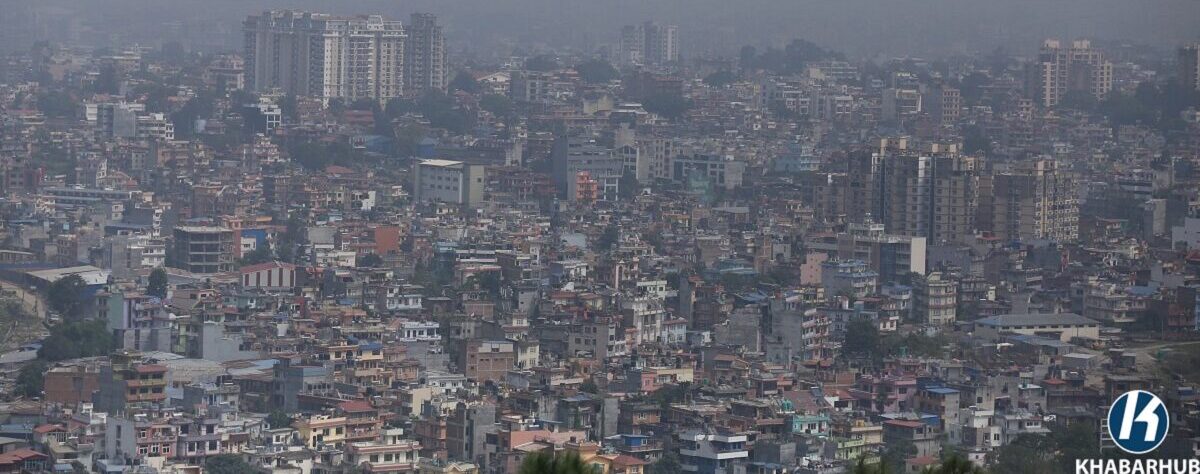
KATHMANDU: Kathmandu’s air pollution levels have decreased significantly, with the city dropping from the most polluted in the world to tenth place.
This improvement is attributed to sporadic rainfall and moderate winds across the Kathmandu Valley since Wednesday afternoon.
The Valley experienced rain on Wednesday night and again on Thursday morning, accompanied by moderate winds.
These weather changes have helped disperse the dust and pollutants that had accumulated due to a prolonged dry spell and forest fires in the surrounding areas.
Until just yesterday (Wednesday), Kathmandu ranked first globally in terms of air pollution.
As of 6:30 AM on Thursday, the city’s Air Quality Index (AQI) has dropped to 152, placing it tenth in the world, according to the global Air Quality Index.
Currently, Lahore (Pakistan) ranks first, followed by Shanghai and Beijing (China) in second and third place, respectively.
The high level of air pollution in Kathmandu had been caused by the accumulation of dust due to the lack of rain and smoke from forest fires.
The recent rain not only cleared the dust-laden air but also helped extinguish many of the surrounding forest fires, contributing to improved air quality.
Although pollution levels have eased in the last two to three days, Kathmandu still held the title of the most polluted city in the world until yesterday, when its AQI peaked at 352.
According to the World Health Organization (WHO), an AQI below 35 is considered safe for human health.
AQI levels up to 50 are generally acceptable. Readings between 51 and 100 are considered “moderate” or “cautionary.”
AQI levels of 101 to 150 can affect individuals with respiratory or cardiovascular conditions, while levels between 151 and 200 are classified as unhealthy.
An AQI of 201 to 300 is considered “very unhealthy,” while levels from 301 to 400 are deemed “hazardous.” An AQI above 400 is categorized as “extremely hazardous.”
The Air Quality Management Action Plan for Kathmandu Valley, 2076 BS defines AQI values exceeding 300 as a disaster-level situation.





Comment