




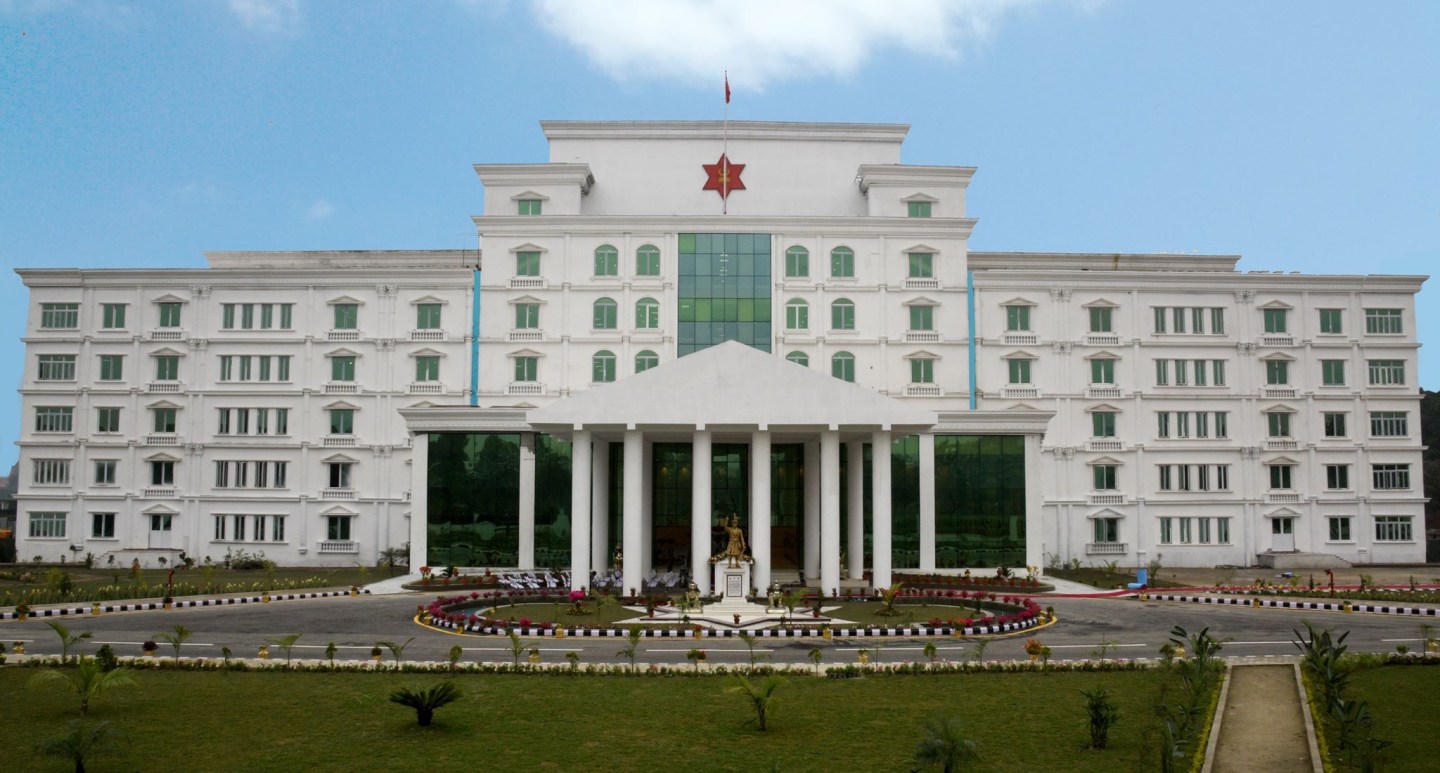
KATHMANDU: As protesters stormed Singha Durbar, the Parliament building, the President’s Office, the Supreme Court, ministerial residences, and other state institutions on Tuesday, a question dominated public debate: Why did the Nepali Army not step in to protect these key sites? Why did it refrain from defending the Oli government?
A high-ranking Army source told Khabarhub that the situation was more complex than it appeared. “The Army must have conducted its own analysis,” a security expert explained. “Even if the prime minister wanted to mobilize troops, the military headquarters had to weigh whether it would side with discredited leaders or with the people.”
That calculation proved decisive. Had the Army confronted protesters directly, clashes would likely have escalated, risking civilian casualties and tarnishing the institution’s reputation. Instead, the Army chose restraint. “Buildings can be rebuilt. Human life is irreplaceable,” one military analyst said. “The Army did the right thing by not firing on the people.”
Still, once the violence escalated to direct attacks on the prime minister and cabinet ministers, the Army intervened, but on humanitarian grounds, airlifting leaders to safety.
Not everyone agrees with this approach. Leaders from both the Nepali Congress and CPN-UML argue that the failure to defend government property signals weakness and could set a dangerous precedent. They contend that security agencies have a duty to protect state institutions regardless of political context.
While police had already been criticized for using excessive force on Monday, even storming Civil Hospital during clashes, the Army’s decision to withhold support for the government underscores a broader reality: neither the military nor police were willing to fully align themselves with Oli’s administration once popular anger reached its peak.
With Prime Minister KP Sharma Oli now resigned, security experts say the next step must be constitutional: the President should initiate the process of government formation, and political leaders must seek a negotiated solution to restore stability.


Comment