




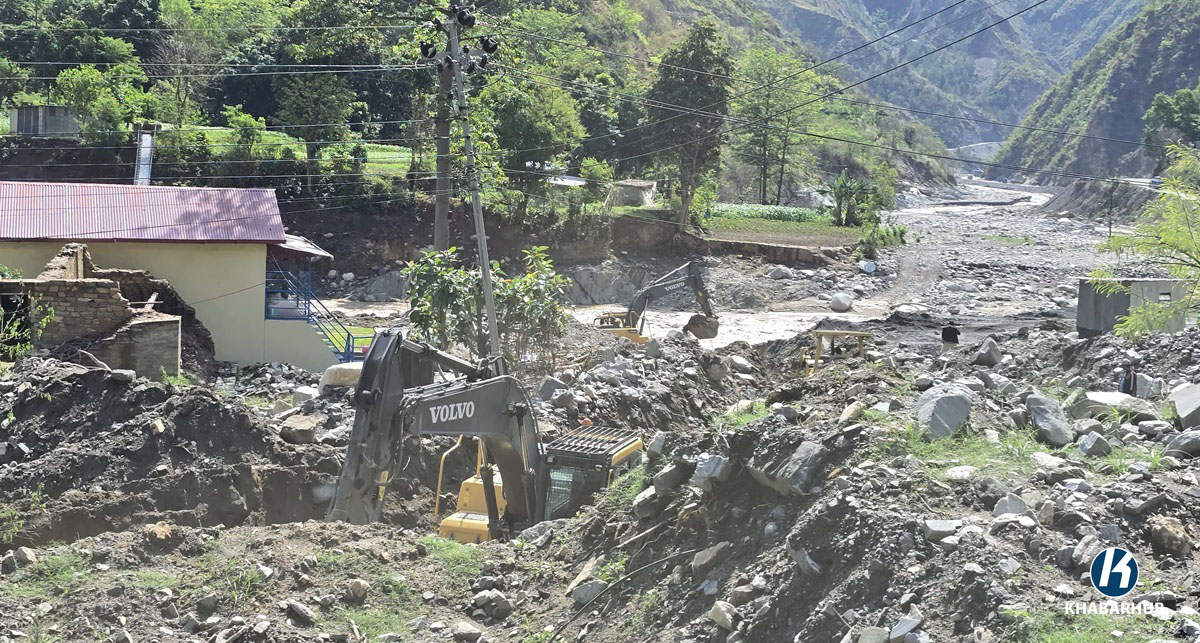
KATHMANDU: Nepal’s BP Highway, the shortest and one of the most vital links between the capital Kathmandu and eastern Nepal, is in a state of severe disrepair, primarily due to repeated monsoon floods, landslides, and rampant overuse by overloaded vehicles.
The 160-kilometer highway, which stretches from Dhulikhel in Kavrepalanchok to Bardibas in Mahottari, was built with Japanese financial and technical support. However, years of neglect and misuse—particularly on the Kavrepalanchok–Sindhuli section—have rendered large stretches of the road nearly impassable.
Monsoon rains in September 2024 and subsequent seasonal floods have inflicted substantial damage across nearly 30 kilometers of the route.
Heavily impacted areas include Nepalthok–Aampataar, Kaladhunga, Dalabesi, and Chiuribas. Despite efforts to maintain traffic through temporary diversions, repeated flooding has washed away these makeshift paths.
The situation is exacerbated by the illegal movement of overloaded vehicles. Although the Japan International Cooperation Agency (JICA), which supported the road’s construction, set a strict limit of 16 tons for vehicles, tippers weighing up to 25 tons continue to ply the highway daily.
An estimated 600 such tippers use the route every day, in addition to over 3,000 other vehicles, placing immense pressure on the already weakened road structure.
Traffic police enforcement remains limited, and safety norms are widely ignored, further accelerating the highway’s degradation.
To manage the crisis temporarily, the Division Road Office in Bhaktapur has begun elevating the damaged diversions by 3 to 7 meters using riverbed materials. However, officials say these are stopgap measures, and permanent reconstruction remains stalled due to ongoing monsoon conditions.
The government has allocated Rs 8.5 billion (approximately USD 64 million) for the reconstruction of the highway. The Ministry of Finance has assured funding, and the Department of Roads has already initiated preliminary preparations. A comprehensive study on long-term repair and resilience strategies is currently underway.
Until full-scale reconstruction begins, travelers and transport operators continue to face delays, safety risks, and economic losses, underscoring the urgent need for enforcement of load regulations and climate-resilient infrastructure planning.






Comment