




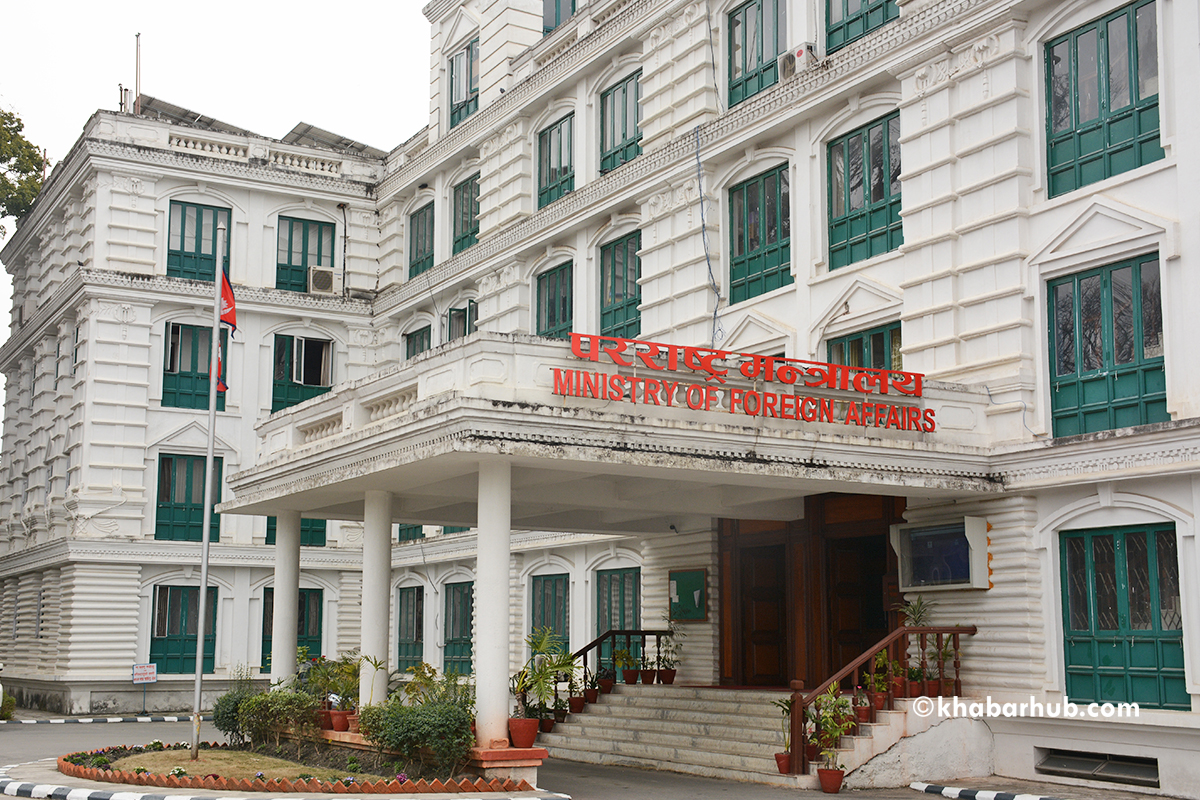
KATHMANDU: Nepal’s lack of professionalism and maturity in the field of diplomacy has been reflected in the background of those leading the Ministry of Foreign Affairs over the past 35 years, according to Dr. Hari Prakash Chand.
Presenting a paper at a discussion on “Nepal’s Political System and Foreign Policy After the GenZ Movement” organized by the International Relations Concern Community Nepal at Tribhuvan University, Kirtipur, Dr. Chand revealed that the majority of Nepal’s foreign ministers lacked academic or professional expertise in international affairs.
His findings show that since 1990, Nepal has had 30 foreign ministers, but only one of them had a background in international relations. Three others came from political science, while the remaining 26 had unrelated academic or professional experiences. Dr. Chand said this clearly shows the state’s failure to promote qualified professionals in diplomacy.
He also highlighted a similar trend in ambassadorial appointments. Of the 25 Nepali diplomats sent to the United States since 1948, only four had educational backgrounds related to diplomacy or international relations, while 21 were appointed from unrelated fields. “The government and political parties have never seriously considered how experts from relevant sectors could lead diplomacy more effectively,” he remarked.
Dr. Chand pointed out that despite 64 years of political science education in Nepal and a decade of international relations programs, the state has failed to utilize available expertise. He warned that if such practices continue, Nepal’s foreign policy will grow even weaker and less effective.
He suggested that the government should prioritize individuals with strong academic and professional credentials in international relations, diplomacy, political science, international law, or economics when making diplomatic or foreign leadership appointments. He also emphasized the need to recognize experienced officials, researchers, and scholars who have made significant contributions in these fields.
Dr. Chand stressed that Nepal must now reconsider its approach to diplomatic appointments seriously. “If we fail to prioritize expertise, Nepal’s foreign policy will only grow weaker,” he warned, calling for institutional unity and a collective voice among capable and professional diplomats to safeguard the country’s international standing.




Comment