




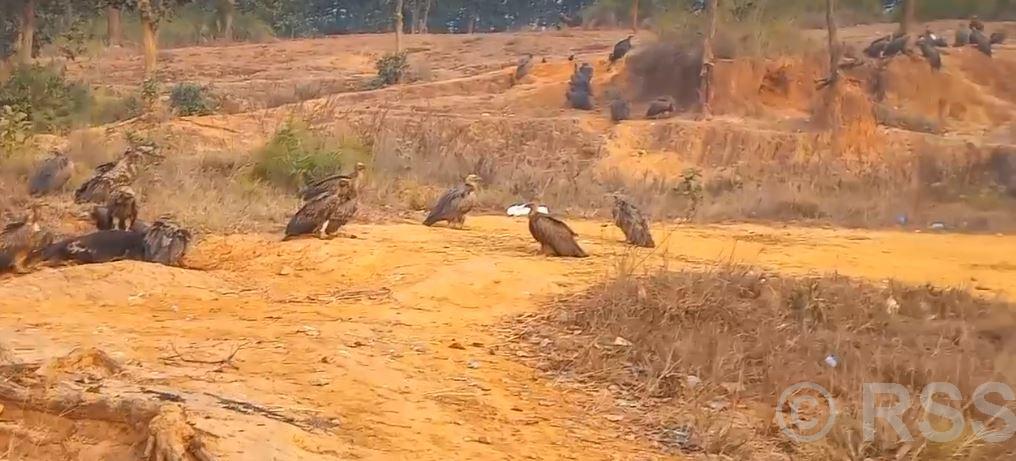
MAHOTTARI: Bardibas Municipality, spanning the Chure region of Mahottari from east to west, is attracting increasing attention for its natural, historical, and cultural heritage.
Visitors and conservationists have highlighted the area’s potential for eco-tourism, vulture conservation, and heritage tourism.
Ishwori Chaudhary of Bird Conservation Nepal, after observing the vulture habitat in Raimandaldanda (Bardibas-3), described Bardibas as a “treasure trove of natural heritage” and suggested collaboration between the municipality and the Culture and Tourism Promotion Committee to protect vulture habitats, particularly through sustainable food management.
Chaudhary noted that the area’s Chure region, enhanced by initiatives like the Jatayu Restaurant for vulture conservation, has substantial tourism potential.
The region features diverse attractions, including the Raimandaldanda vulture habitat, Mesolithic weapons factory, herb storehouse in Solighoptedanda, fruit and juniper groves in Chanautedanda, and ancient religious sites such as Tuteshwor, Panchadhura Maisthan, and Raimandaldham.
Environmentalist Devnarayan Mandal added that the dense forests support wildlife, including endangered vultures, tigers, deer, antelopes, ghorals, nilgai, and wild boars, while the archaeological sites from the Mahabharata period enhance the area’s uniqueness.
In response, Bardibas Municipality has established a Culture and Tourism Promotion Committee to identify tourism potential and develop strategic plans.
Mayor Prahlad Kumar Chhetri stated that the committee has formed subcommittees to oversee different areas, prioritizing the identification and development of tourist sites.
Committee Chairman Hiralal Gautam confirmed that experts have completed the first phase of exploration at the Mesolithic weapons factory, revealing a site where stone weapons were made 10,000 years ago.
Meanwhile, the subcommittee on vulture conservation, led by Bishal Basnet, has begun detailed work on managing vulture food sustainably in Raimandaldanda, engaging local communities to ensure long-term ecological balance.
Interest in Bardibas Municipality’s tourism potential has grown since a group of vultures was spotted on Raimandaldanda during a Chure trekking trip led by 10 social organizations under the Bardibas Chamber of Commerce and Industry in 2080.
The participating organizations submitted a report to the Municipal Executive Office, highlighting 38 sites and suggesting their development as tourist destinations.
While the municipality has since formed a Culture and Tourism Promotion Committee to act on these recommendations, Chamber President Bishnu Khadka notes a lack of coordination with the trekking groups.
Local residents are enthusiastic about the attention Bardibas has received from observers across the country, who have recognized the area’s rich tourism potential.
“The entire Chure region of the district falls within our town. Visitors from outside have pointed out the potential for tourism development here,” said Nilhari Gautam of Bardibas-11. He emphasized the need for local authorities to coordinate with provincial and federal governments to ensure that planned projects are implemented in a way that benefits the community.






Comment