




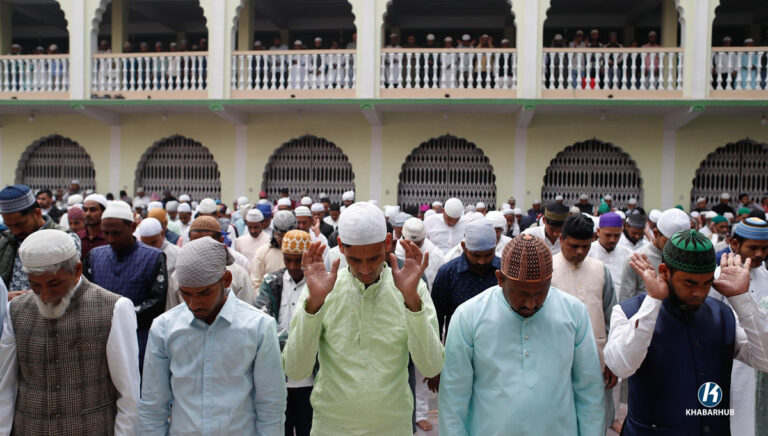
BIRATNAGAR: The Islamic festival of Bakar (Eid ul-Adha) is being celebrated today (Saturday). It is considered the second most significant festival for Muslims, after Eid ul-Fitr, which marks the end of Ramadan.
Celebrated on the 70th day following Ramadan, it holds deep religious significance. On this occasion, Muslims who are financially capable travel to Mecca and Medina in Saudi Arabia to perform the Hajj pilgrimage.
One of the central rituals of the festival is the sacrifice of animals—such as goats, sheep, or cows—that are considered religiously permissible (halal), as an act of devotion to Allah.
The origin of this tradition lies in the story of Prophet Ibrahim (Abraham) and his son Ismail. According to Islamic belief, Ibrahim, who had long been childless, prayed to Allah for a child and vowed to sacrifice what he loved most if his wish was granted.
When his son Ismail was born to his wife Hajra, Ibrahim’s devotion was tested. In a dream, Allah commanded him to sacrifice his son. As Ibrahim prepared to carry out the command, Allah intervened and replaced Ismail with a ram from heaven, pleased with Ibrahim’s unwavering faith.
To commemorate this event, Muslims around the world continue the practice of animal sacrifice during Bakrid.
The meat from the sacrificed animal is divided into three parts—one part is given to the poor and needy, another to relatives and friends, and the third is kept for the family.
Preparations for the festival are in full swing, with Muslim communities across the country making arrangements for prayers, gatherings, and charitable distributions.
Since Islamic festivals follow the Hijri (lunar) calendar, the dates shift approximately 10 days earlier each year on the Gregorian calendar. As a result, the timing of Bakrid changes annually and completes a full cycle every 36 years.





Comment