




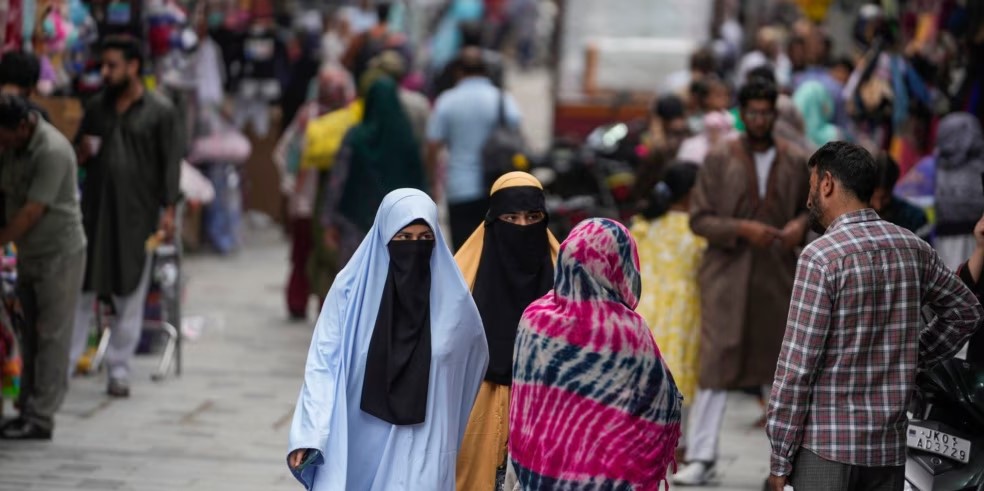
On July 18, 2025, the U.S. State Department officially designated The Resistance Front (TRF) as a Foreign Terrorist Organization (FTO) and a Specially Designated Global Terrorist (SDGT) under U.S. law. TRF, a front group for the Pakistan-based Lashkar-e-Taiba (LeT), was responsible for the April 2025 Pahalgam terror attack, which left 26 tourists dead—targeted based on their religion.
One of the victims was a Kashmiri Muslim who tried to protect the others. U.S. Secretary of State Marco Rubio described the move as a firm step by the Trump administration in delivering justice and reinforcing its commitment to combating terrorism. The attack is widely considered the deadliest against Indian civilians since the 2008 Mumbai attacks.
India welcomed the U.S. decision, calling it a vital step in the global fight against terrorism and a clear signal of deepening India-U.S. counter-terrorism cooperation. Such designations are known to restrict financial access, discourage support, and highlight the global threat posed by such groups. It also acts as a warning to international entities and governments about associating with the group.
This diplomatic win strengthens India’s broader campaign against terrorism in Jammu & Kashmir (J&K). With TRF now cut off from international financial systems, sourcing weapons and funding will become increasingly difficult. The designation is expected to encourage other countries to reassess their dealings with such groups to avoid U.S. sanctions. It also opens the door for greater intelligence sharing between India and the U.S.
However, the threat persists. Despite sanctions, TRF—like other proxy groups such as PAFF (People’s Anti-Fascist Front) and Kashmir Tigers—continues to operate under the direct guidance of Pakistan’s Inter-Services Intelligence (ISI), receiving training, funding, and logistical support for attacks in J&K.
Formed after the 2019 abrogation of Articles 370 and 35A, TRF was intended to give terrorism a more secular and homegrown appearance in Kashmir. Its first attack—a grenade blast in central Srinagar—injured several civilians, and the group publicly claimed responsibility, calling it the start of an “indigenous resistance” against India.
TRF’s key handlers—Saifullah Kasuri, Sajjad Gul, and Salim Rehmani—shifted strategy from suicide bombings to targeted killings and ambushes. Similar outfits affiliated with Jaish-e-Mohammed (JeM) emerged during the mid-2020s, pushing anti-India narratives online to radicalize vulnerable sections of the population. TRF operates mainly in the Kashmir Valley, while PAFF focuses on the Rajouri-Poonch and Jammu regions.
Between 2018 and 2022, international pressure, particularly from the Financial Action Task Force (FATF), forced Pakistan to rebrand terror groups like LeT and JeM into new avatars such as TRF and PAFF. Pakistan was under FATF’s grey list twice for failing to curb terror financing and money laundering. Though it met most of FATF’s action points by 2021, it only exited the grey list after finally implementing comprehensive reforms.
Facing economic hardship, high inflation, and dwindling foreign reserves, Pakistan turned to alternative sources like narcotics to fund terrorism in J&K. With local recruitment in decline—only seven locals joined terror groups in 2024 and just one in 2025—the majority of active militants are now Pakistani nationals. Intelligence estimates place the number of active terrorists in J&K between 125 and 130, with over 90% being foreigners.
These foreign terrorists are equipped with advanced weaponry, including M4 rifles, thermal imaging devices, night vision, satellite phones, and encrypted communications gear—often sourced from China and used by the Pakistani military.
Pakistan’s backing of such groups is also political. In May 2025, senior Pakistani officials, including a federal minister and a provincial speaker, were seen publicly associating with LeT figures and praising their activities. They even promised government jobs to TRF terrorists killed during Operation Sindoor—India’s cross-border response to the Pahalgam massacre. TRF commander Saifullah Kasuri openly bragged about the group’s growing international notoriety.
The global community increasingly recognizes Pakistan’s role in enabling terrorism against India. The U.S. designation of TRF is a step forward, but the broader challenge remains: Will Pakistan’s state and military actors face direct consequences, such as secondary sanctions, for institutional support to terrorism?
While this move marks progress in the international fight against terrorism in Kashmir, the region continues to grapple with persistent threats—highlighting the ongoing need for vigilance, cooperation, and accountability on all fronts.



Comment