




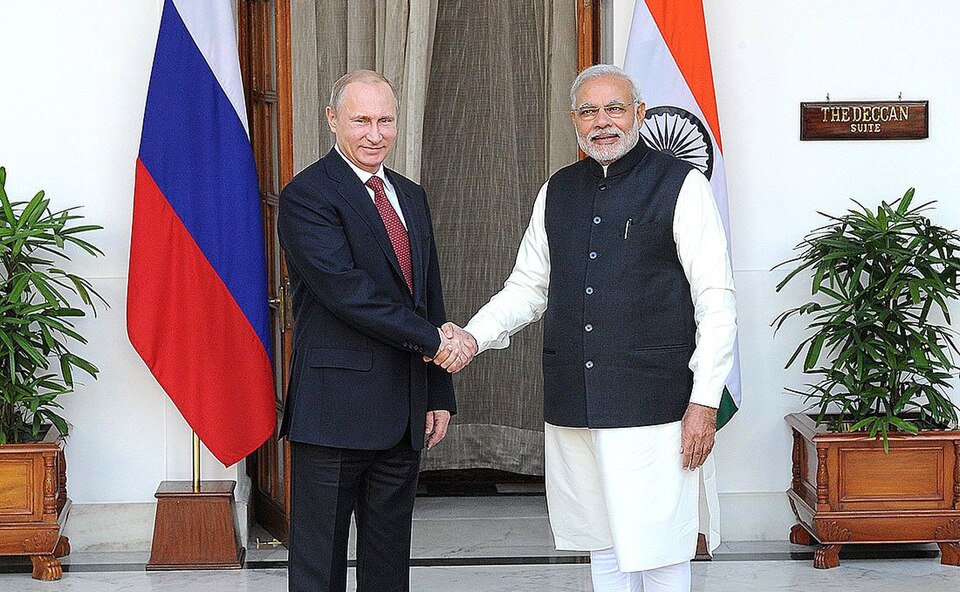
NEW DELHI: India and Russia, often described as time-tested friends with a partnership rooted in the Soviet era, are confronting one of their most challenging moments in recent years as geopolitical pressure mounts, particularly from the United States.
As Russian President Vladimir Putin arrives in New Delhi on Thursday, his first visit since December 2021, the relationship faces intense scrutiny. The meeting comes months after Putin and Indian Prime Minister Narendra Modi last held bilateral talks in China.
The visit takes place against the backdrop of Washington’s push for India to distance itself from Moscow, especially on oil imports, and amid widening complexities in defence and trade ties.
Following the Ukraine war, India emerged as a major buyer of discounted Russian crude, becoming a crucial alternative market for Moscow after Western nations sharply reduced purchases.
In 2024, Russia accounted for 36 percent of India’s total crude imports, around 1.8 million barrels per day.
The cheap oil saved India billions but also strengthened Moscow’s wartime revenues, creating friction with Western partners. US President Donald Trump has pressured New Delhi to cut Russian oil imports and recently imposed 50 percent tariffs on Indian goods.
Trump has claimed India agreed to reduce purchases as part of a potential US trade deal, something India has not confirmed. However, trade data indicates that imports have begun to decline.
Russia remains one of India’s major defence suppliers, though New Delhi has diversified purchases toward the US, France and Israel while boosting domestic production.
According to SIPRI data, Russia’s share in India’s arms imports plunged from 76 percent (2009–13) to 36 percent (2019–23).
Discussions during the visit are expected to include the stalled delivery of S-400 air defence units and possible co-production of Russia’s next-generation Su-57 fighter jets.
India has received three of the five contracted S-400 systems; delivery of the remaining two has been complicated by Western sanctions.
Bilateral trade reached a record USD 68.7 billion in 2024–25, making Russia India’s fourth-largest trading partner. However, the relationship remains heavily skewed: imports from Russia were worth USD 63.8 billion, primarily crude oil and fuels.
India’s exports—ranging from machinery to pharmaceuticals, make up only a small fraction.
Analysts say unofficial trade, estimated to be 15–25 percent higher than reported figures, continues via shadow shipping networks, potentially including dual-use goods restricted under Western sanctions.
India has maintained strategic neutrality on the Ukraine conflict, calling for peace but avoiding direct criticism of Moscow.
Modi told Putin in 2022 that the war must end “as soon as possible”. More recently, claims that Indian nationals were misled into joining the Russian military have added strain to ties.
India continues to uphold its policy of non-alignment, balancing long-standing ties with Russia while strengthening partnerships with the US and Europe.
Washington views India as a crucial counterweight to China, but New Delhi has consistently emphasized a “multipolar world order” and its own strategic autonomy.
“India seeks to maintain its longstanding relationship with Russia, which is vital not only for managing its challenging relations with China but also for its strategic autonomy, the core principle of its foreign policy,” said Praveen Donthi of the International Crisis Group.
Putin’s visit is expected to test whether the two nations can navigate the pressures of shifting global alliances while preserving one of Asia’s most enduring strategic partnerships.





Comment