




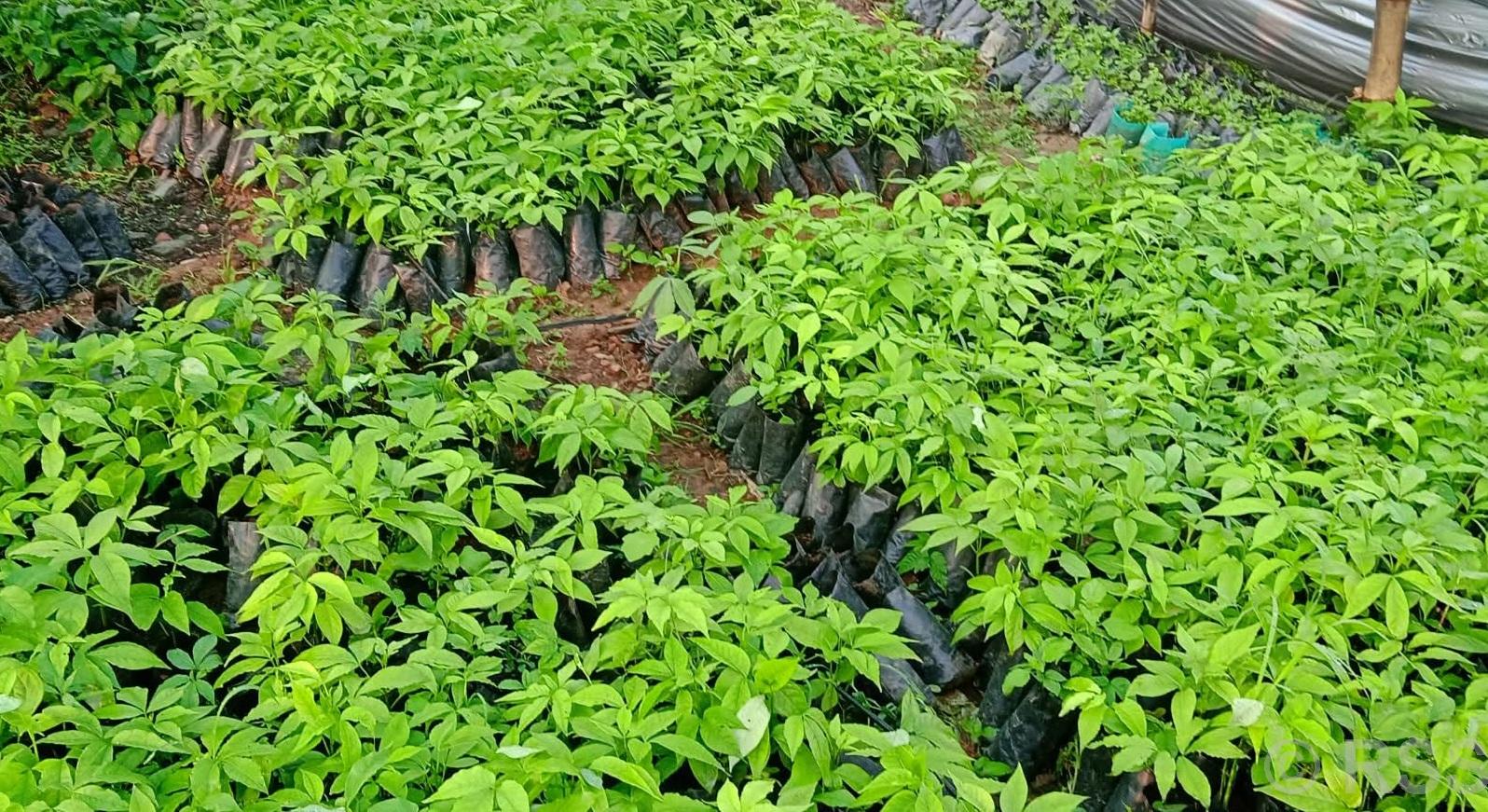
GANDAKI: Kabiraj Khanal, the operator of Om Krishi Farm in Ekle Khet, Shuklagandaki Municipality-2, Tanahun, has sold 450,000 Siplikan plants this year alone.
Siplikan, a plant known for its diverse medicinal properties and typically found in hilly regions, is vanishing from many parts of Nepal.
However, Khanal has been cultivating it commercially for the past five years and generating income while also contributing to its conservation.
According to ancient texts, sages like Chyawan and Garga used this plant for body purification, meditation stability, and longevity.
Khanal said he began its commercial cultivation with the dual aim of preserving the endangered species and ensuring its benefits could be passed down to future generations.
He noted that areas such as Rupa, Madi, Machhapuchhre, and Annapurna rural municipalities in Kaski, as well as Shuklagandaki, Bhimad, Bandipur, and Devghat in Tanahun, are highly suitable for Siplikan cultivation. Khanal expressed his commitment to protecting the plant and increasing its use among the public.
Khanal, who began farming after the COVID-19 pandemic, shared, “It’s been over five years since we started cultivating it commercially. This year alone, we’ve sold plants worth Rs. 450,000.”
He added that the demand far exceeds the supply, with plants distributed across various parts of the country, including Rupa Rural Municipality in Kaski.
Despite producing 10,000 plants in the nursery this year, demand remains unmet. Khanal also distributes free plants to neighbors and friends in some areas. Siplikan plants are currently sold at Rs. 100 to 150 each, and demand has been growing steadily in recent years.
“Along with maintaining ecological balance, this plant is highly beneficial for health. Its significance needs to be promoted, preserved, and expanded. For that, the government should also offer support and cooperation,” he emphasized.
Siplikan is used to treat conditions like high blood pressure, diabetes, jaundice, and kidney stones. It can also be consumed as a vegetable or pickle for short-term use and as a medicinal herb over the long term.
Khanal also cultivates kurilo (asparagus) on his farm. The produce is sold in Shuklagandaki Municipality Wards 1 and 2, as well as Pokhara-32. His farm sells 20,000 to 25,000 kurilo (asparagus) plants annually.
Kurilo sprouts, valued for their health benefits, are mainly consumed as a vegetable. Khanal noted that kurilo is rich in protein, vitamins, fiber, calcium, and other nutrients, making it beneficial for people of all ages.
Khanal also shares his knowledge with visitors to his farm, offering guidance on farming techniques, benefits, and marketing strategies related to Siplikan and kurilo. His farm has become a living classroom for interested learners.
Alongside his agricultural work, Khanal is also active in journalism and teaching. He currently serves as a correspondent for Radio Nepal and Adarsha Samaj National Daily.





Comment