




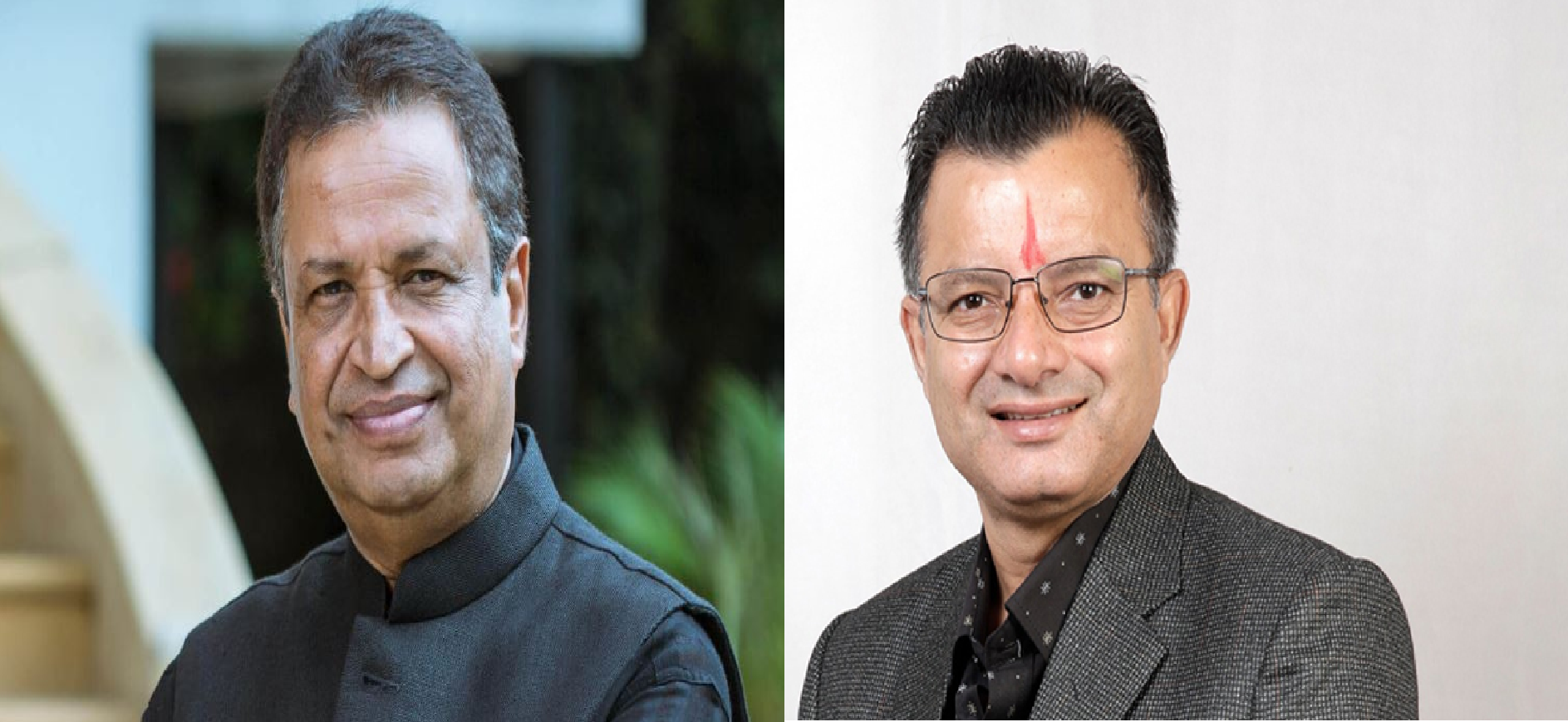
KATHMANDU: Nepali Congress central committee member Dinesh Koirala has taken aim at fellow leader and billionaire businessman Binod Chaudhary, saying party donations should not be used as a justification to claim leadership or act with impunity.
Speaking at Thursday’s Central Working Committee meeting of the Nepali Congress, Koirala criticized what he described as the arrogant attitude of those who believe financial contributions alone entitle them to leadership roles in the party.
“Some people boast about donating to the party. While donating transparently is welcome, no one should have the audacity to say, ‘I gave money, so I must be considered a leader,’ or ‘I can do anything because I contributed,’” Koirala said, without naming Chaudhary directly.
He invoked party founder B.P. Koirala’s legacy, cautioning against a scenario where the wealthy dominate the party while honest grassroots workers are sidelined. “Let’s be alert so that the day never comes when elites capture the party, and those who work with integrity are left struggling,” he said.
Koirala also objected to Chaudhary’s remarks about Dr. Shekhar Koirala, whom Chaudhary had criticized as narrow-minded in a previous meeting. “Shekhar Koirala asked one question, and Binod Chaudhary responded with eight, calling him narrow-minded,” he said. “If our leaders like Shekhar Koirala and Sher Bahadur Deuba were truly narrow-minded, how would Chaudhary, who descended from the corporate world, have become a central member of the party?”
He stressed that although party leaders have their flaws, they are not petty or narrow in their outlook. “Yes, our leaders are human and have weaknesses, but I can confidently say they are not mean-spirited or small-minded.”
Koirala emphasized that the party’s first responsibility is to restore public trust, and he called for immediate focus on strengthening the federal government’s performance. He identified corruption as the country’s biggest issue and said that property investigations should be the starting point of anti-corruption efforts.
Reflecting on past elections, he criticized party leadership for punishing grassroots members while making strategic errors at the top. “We allied with the Maoists, and they betrayed us. Then we teamed up with the UML, and they too deceived us. Are we just meant to keep getting betrayed?” he questioned. “Leaders make mistakes, and then they punish workers? That’s unacceptable.”





Comment