




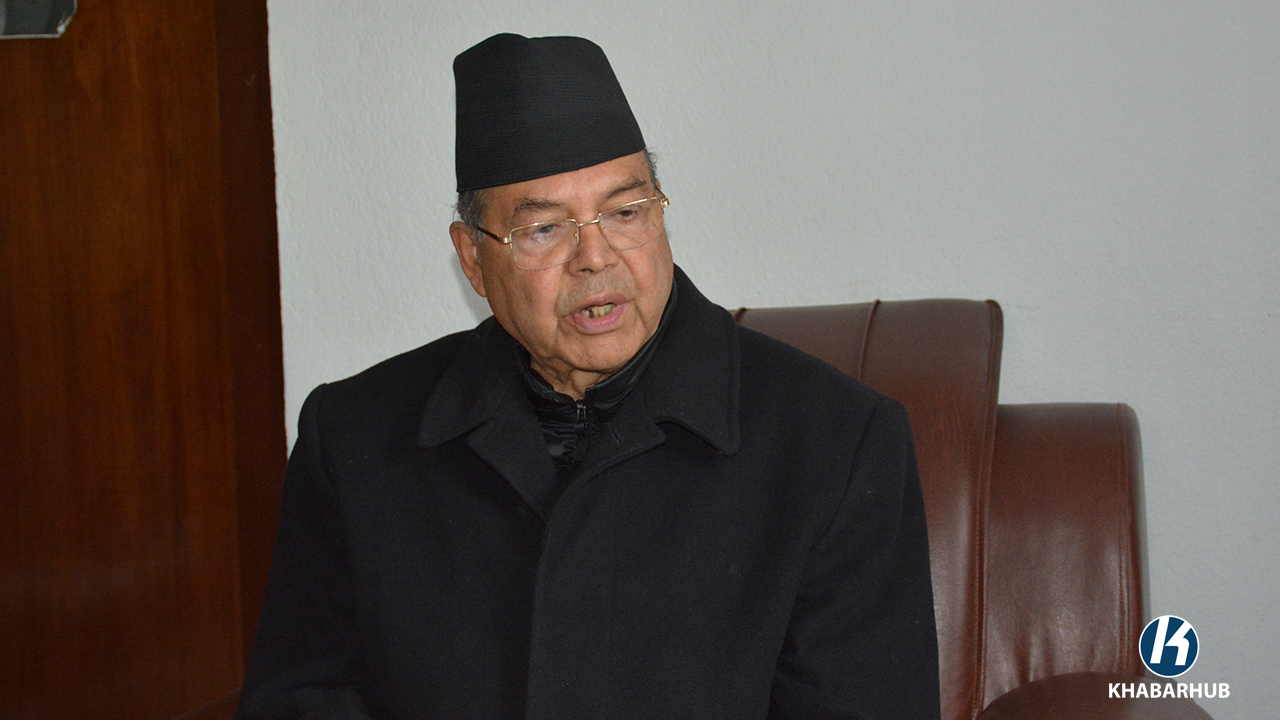
KATHMANDU: Senior leader of CPN (Unified Socialist), Jhala Nath Khanal, has strongly objected to party chair Madhav Kumar Nepal’s recent remarks telling him to leave the party, asserting that a leader cannot expect members to quit just because they are ordered to.
Khanal made the statement on Saturday during a press meet, responding to Nepal’s comment made after Khanal’s TV interview sparked internal debate.
“I was shocked and saddened,” Khanal said. “We’ve been together since 2032 BS, and I believed he understood the rules, values, and democratic centralism of a communist party.”
According to Khanal, Nepal made the remark during a press conference in Biratnagar. “Maybe someone told him about the interview or he saw it himself, I don’t know. But based solely on that, he ordered me to leave the party. Is that how party leadership works?”
He expressed disappointment in Nepal’s behavior, calling it a reflection of “petty bourgeois thinking” and something he never expected from a leader of Nepal’s stature.
“If anything I’ve said or written has created problems, the party still exists. Call a meeting, have a discussion, resolve the issues, that’s how it should be handled,” Khanal added. “Communist leaders shouldn’t react impulsively and make sweeping statements. That’s more damaging than any internal disagreement.”
Khanal, also a former UML chair, criticized the continued adherence to the ideology of Janata ko Bahudaliya Janabad (People’s Multiparty Democracy – PMPD), stating that its relevance has expired.
“When we were in UML, PMPD was still relevant. I was one of its main proponents and authors up until the 9th General Convention. But after the people’s movement of 2062/63 BS, we declared that Nepal had completed a democratic revolution and was now in the era of socialist transformation,” Khanal said.
He argued that continuing to cling to PMPD, an ideology developed during the democratic struggle, will no longer advance the country. “We are now in the era of socialist revolution, and thus our programs must reflect socialism, not outdated models.”
When asked about whether he still felt an emotional connection to UML, Khanal said the party was indeed their creation and once did significant work.
“Yes, we built UML, and at one point it did remarkable work. But that contribution has not been properly evaluated, neither the leaders’ roles nor the party’s history,” he said.
Khanal added that the current problem with UML lies in the leadership’s rightward shift, which ultimately led to the split. “It was because of that deviation that we were compelled to rebel,” he concluded.





Comment