




KATHMANDU: Last week, Prime Minister Sushila Karki’s forceful call for a “zero-violence election environment” set the tone for Nepal’s shifting political and security landscape, as she inspected Nepali Army headquarters and reviewed preparations for the March 5, 2026 elections in a bid to restore public trust shaken by the Gen-Z protests.
Her insistence that not a single drop of blood be shed underscored rising public anger and the government’s urgency to reinforce institutional credibility, while the deployment of the Army as an active election-security actor signaled a notable departure from traditional peace-time boundaries.
By prioritizing the recovery of weapons stolen during the Gen-Z movement, directing police to pursue absconding suspects, and ordering tighter inter-agency coordination, especially in sensitive zones, the Prime Minister highlighted deeper concerns about politically driven unrest beyond polling day, making it clear that peaceful elections are not just an administrative requirement but a political imperative for demonstrating stability and legitimacy.
Prime Minister Sushila Karki’s strong push for a “zero-violence election environment” set the tone for Nepal’s evolving political and security dynamics. Her inspection of the Nepali Army headquarters, where she reviewed plans for the March 5, 2026 elections, reflects the government’s determination to re-establish security credibility after the shock of the Gen-Z protests.
The order that not a single drop of blood should be shed during the election underscores the government’s heightened sensitivity to public anger and its urgent need to rebuild trust in state institutions. The inclusion of the Army, not merely as a reserve force but as an integral part of election security, marks a significant shift in Nepal’s peace-time deployment strategies.
Her directive also placed emphasis on recovering weapons stolen during the Gen-Z movement and on assisting police in detaining absconding suspects. This indicates that the government’s security concerns extend beyond election-day violence to deeper fears of politically exploited turbulence. The insistence on enhancing coordination across agencies, especially in “sensitive areas,” signals awareness that localized unrest can escalate quickly in the current environment. Karki’s message was clear: the interim government views peaceful elections not only as an administrative requirement but as a political necessity to demonstrate stability and legitimacy.
Political outreach
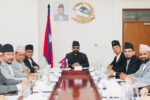
Parallel to her engagement with the security apparatus, PM Karki made a notable political move by holding a high-level dialogue with the CPN-UML leadership. The UML, having challenged the dissolution of the House of Representatives in the Supreme Court, has been maintaining a careful balance between resistance and readiness.
During the meeting, UML leaders assured the Prime Minister that they would not shy away from participating in the March 5 elections, provided the government ensures a fair and impartial atmosphere. This conditional acceptance is politically significant. It demonstrates the UML’s strategy of keeping pressure on the government while signaling responsibility to the electorate.
The discussions touched upon security concerns and the broader political atmosphere. The UML reiterated that its focus remains on democratic norms, and that it will contest elections as long as the environment is conducive. In contrast, the Prime Minister’s appeal for UML’s participation reflects the government’s need to neutralize speculation about boycotts or political instability. Minister Jagadish Kharel’s remarks that the meeting helped clear doubts suggest that the interaction served to cool tensions. Still, the UML’s insistence that constitutional matters, especially the question of reinstatement of the dissolved House, must be addressed, proves that the political environment remains unsettled.
Mahara’s bail
The arrest and subsequent release on bail of former Speaker and Maoist Centre vice-chair Krishna Bahadur Mahara again placed corruption and political impunity at the forefront of public discourse. Mahara’s alleged involvement in a gold smuggling racket, including smuggling gold through vape imports with the help of Chinese groups, has resurfaced after multiple earlier investigations had failed to prosecute him.
The CIAA’s renewed intervention, accompanied by his arrest, hints at shifting internal pressures within the state apparatus. It also shows increasing willingness to revisit politically sensitive cases that previously stalled. The fact that Mahara was detained again after earlier investigations by Nepal Police and the Attorney’s Office had freed him suggests growing institutional assertiveness. However, his release on Rs 2 million bail also highlights the murky intersection of law, politics, and influence.
Over the past few years, Mahara has been perceived as a politically protected figure, avoiding prosecution due to his standing in the Maoist hierarchy. The current inquiry, therefore, carries symbolic weight. It tests not only the credibility of the CIAA but also the government’s commitment to addressing entrenched corruption networks. As the investigation continues, the public will be watching whether this case marks a turning point or becomes yet another stalled chapter in Nepal’s history of corruption scandals.
Energy diplomacy gains momentum
Amid domestic political turbulence, Nepal’s diplomacy yielded a significant breakthrough as Bangladesh agreed to import an additional 20 megawatts of electricity. This expansion, atop the existing 40 MW already being supplied through India’s transmission infrastructure, represents more than a simple energy deal. It signals growing regional trust in Nepal’s hydropower capacity and a deepening partnership between Kathmandu and Dhaka. The decision reflects Bangladesh’s confidence that technical and procedural obstacles are easing, and that Nepal can increasingly play a role in addressing regional energy shortages.
The Joint Steering Committee’s meeting also opened new avenues for cooperation, including renewable energy partnerships, energy testing technology, EV charging infrastructure, and rooftop solar expansion. For Nepal, such collaborations support its long-term vision of becoming a regional energy hub. For Bangladesh, it widens its energy diversification at a time when domestic demand continues to rise. Although dependent on India as the transit country, the arrangement strengthens trilateral cooperation. This week’s developments demonstrate that energy diplomacy is becoming one of Nepal’s most promising strategic tools.
Political realignments
Nepal’s political sphere continued to fragment and recombine as multiple parties announced new alliances and formations. The most prominent development was the formation of the Pragatisheel Loktantrik Party, created through the merger of Baburam Bhattarai’s Naya Shakti, Janardan Sharma’s Pragatisheel Rastriya Abhiyan, and Santosh Pariyar’s faction. The party’s emphasis on progressive socialism and its adoption of the “eye” symbol attempt to position it as a reformist, inclusive force. Whether it can translate ideological clarity into electoral strength remains to be seen, particularly given Nepal’s crowded leftist landscape.
Simultaneously, the JSP, NUPA, and Rastriya Mukti Party signed an agreement to contest the 2026 elections under one symbol—the Jato—reflecting the survival instincts of smaller parties in an increasingly bipolar political environment. Yet, the same day also witnessed significant internal fragmentation within the JSP, with Federal Council Chair Rajendra Shrestha and five others defecting to Prachanda’s Nepali Communist Party. These parallel movements highlight ongoing fluidity in Nepalese politics, where ideological lines blur and alliances shift rapidly in response to electoral pressures.
Suman Raj Aryal becomes Chief Secretary
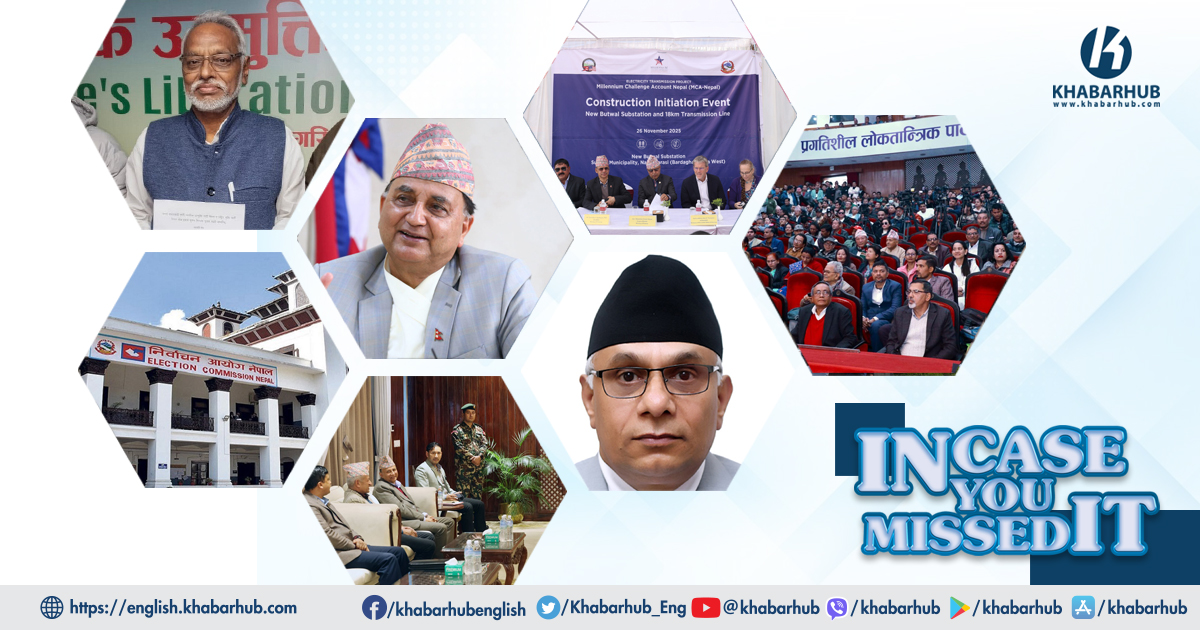
The appointment of Suman Raj Aryal as Chief Secretary represents an administrative effort to stabilize governance. Coming after the Gen-Z protests, during which bureaucrats demanded politically neutral appointments, Aryal’s selection reflects attempts to reinforce technocratic leadership. His reputation for institutional understanding and coordination aligns with the government’s push to project administrative integrity ahead of the national elections. This appointment may become crucial as ministries prepare for heightened election responsibilities, public service delivery challenges, and security operations.
Election climate strengthens
With the Nepali Congress and the CPN-UML both completing their registration for the upcoming elections, the electoral calendar is gaining momentum. The Election Commission’s confirmation that 67 parties have already registered reflects Nepal’s continuing proliferation of political actors. Despite the UML’s ongoing Supreme Court petition seeking reinstatement of the dissolved House, its decision to proceed with registration signals a pragmatic recognition that elections are highly likely to proceed as scheduled. Political positioning is already underway, and this week’s registrations demonstrate that the roadmap to March 2026 is becoming more concrete.
MCA-Nepal’s Butwal Transmission Project
The formal initiation of construction on the 18-km transmission line and New Butwal Substation under the MCC compact reflects steady progress on Nepal’s energy infrastructure. Although the MCC had been a contentious subject in past years, the current government’s determination to advance with implementation highlights a new phase of consensus and practicality. The project is poised to significantly strengthen Nepal’s energy transmission capacity and cross-border trade potential. It also symbolizes international confidence in Nepal’s long-term energy strategy, with high-level participation from the U.S. Ambassador and the Finance Minister underscoring the project’s diplomatic significance.
Prime Minister’s Secretariat restructuring
Finally, PM Karki’s decision to dismiss 14 Secretariat appointees marks an important political gesture. Amid public criticism over alleged nepotism, especially the appointment of the Chief Personal Secretary’s spouse, the Prime Minister’s move to reduce the Secretariat to just six members represents a conscious effort to signal restraint, transparency, and moral accountability. This step reinforces the perception that the government is acutely aware of public sentiment following the Gen-Z movement and is willing to take corrective action swiftly.
Conclusion
This week reflected a Nepal in transition—politically, administratively, and regionally. With election preparations intensifying, political parties recalibrating, and security agencies restructuring their roles, the nation is navigating an environment defined by both anxiety and opportunity. From anti-corruption pressure to energy diplomacy, and from new political fronts to administrative reforms, Nepal’s current trajectory suggests that the coming months will be decisive in shaping not only the 2026 elections but also the broader direction of national governance.


Comment