




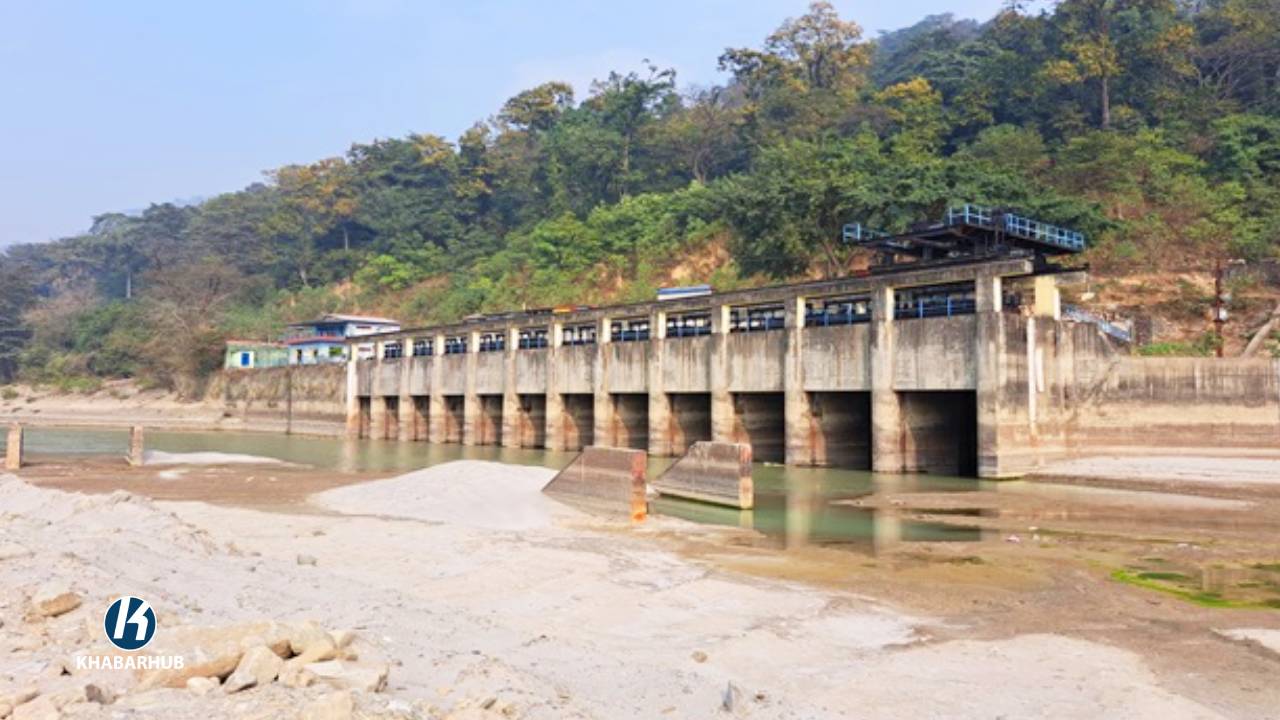
BIRATNAGAR: Once a flagship project of Nepal’s irrigation development, the Chatara Canal in Sunsari and Morang districts is now showing its age, raising alarms about the future of irrigation for 68,000 hectares of farmland in the eastern Terai.
The canal, built under the 1954 Koshi Agreement to provide reliable irrigation to fertile farmlands in Sunsari and Morang, has been in operation for over 53 years, surpassing the standard 50-year lifespan of concrete irrigation structures. Officials now warn that major reconstruction is urgently needed to prevent water shortages and protect the country’s food security.
Construction of the Chatara Canal began in 1964 and was completed in 1970, with India handing the project over to Nepal in 1972 after two years of trial operation. The project included a 53-kilometer-long main canal, 12 branch canals, and 36 minor canals. Initially, the canal had a head reach capacity of 45.3 cubic meters per second (cumecs), which was later upgraded to 60 cumecs.
However, the canal has faced persistent challenges since its early years, including heavy siltation, water leakage, submerged and damaged bridges, and insufficient dry-season flows.
“We are in a continuous repair mode,” said Tej Rijal, chief divisional engineer of the Sunsari-Morang Irrigation Project, which now oversees the system. “Many bridges have sunk, and we are patching the canal to keep it operational. The canal was built for four-ton vehicles, but 10-ton trucks are using the bridges. We don’t have the capacity to enforce restrictions.”
Since the original construction, Nepal has invested over USD 156 million (approx. Rs 21 billion) in the development of the Sunsari-Morang Irrigation Project, including three phases of expansion and the construction of a new headworks in the 1990s to reduce silt entry from the Koshi River.
Despite this investment, water shortages remain critical, especially during the dry season. “In winter, water levels often fall to around five cumecs, far below the canal’s full capacity,” Rijal noted.
Former project chief D.I. Yadav Baral said the canal now requires full remodeling to meet current irrigation demands. “After 55 years, the intake can no longer supply sufficient water, and the canal needs comprehensive reconstruction,” he said.
With the canal nearing the end of its life cycle, the World Bank has proposed a rehabilitation project, including the construction of a new headworks at Chatara and the strengthening of the main canal and its branches.
According to Rijal, a USD 100 million proposal for the new intake is in the pipeline, as part of a larger USD 350 million rehabilitation plan. Once approved by Nepal’s Ministry of Finance, work is expected to focus on restoring the canal’s capacity, modernizing structures, and ensuring reliable year-round water supply.
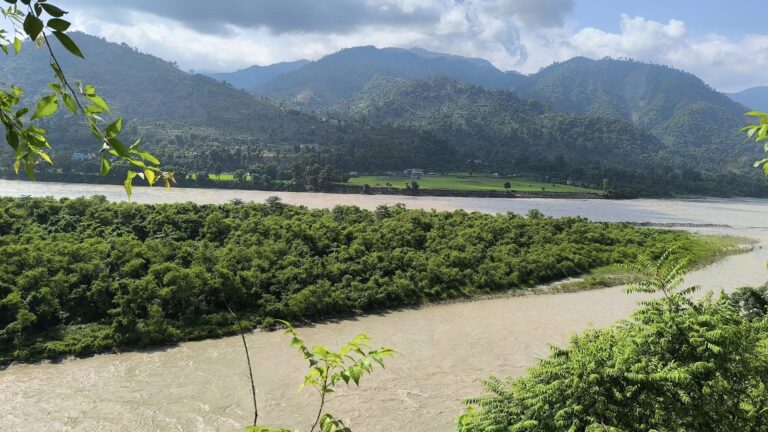
The project has also recommended constructing a permanent diversion structure on the Koshi River to guarantee sustainable water flow. Currently, temporary riverbed structures are built annually to divert water, providing only about 20 percent of the required flow during winter months.
The irrigation office warns that ongoing riverbed deepening, high silt loads, and upstream hydropower and irrigation projects will further reduce water availability unless a long-term solution is implemented.
If the canal is rehabilitated with a permanent diversion system, officials say, Sunsari and Morang could once again become major grain-producing hubs, boosting the output of wheat, maize, pulses, and spring rice, and contributing significantly to Nepal’s food security.
Experts have occasionally raised the potential of developing inland water transport on the Chatara Canal, linking Nepal to Bangladesh through the Koshi and Indian waterways. However, former project head Hare Ram Shrestha said current canal structures are unsuitable for navigation.
“The gates and water levels are designed for irrigation, not transport. Only after reconstruction and proper design adjustments could this become feasible,” he said.
For now, engineers stress that the priority is irrigation. “Even for farming, water is insufficient. Navigation is a matter for future studies,” Rijal said.






Comment