




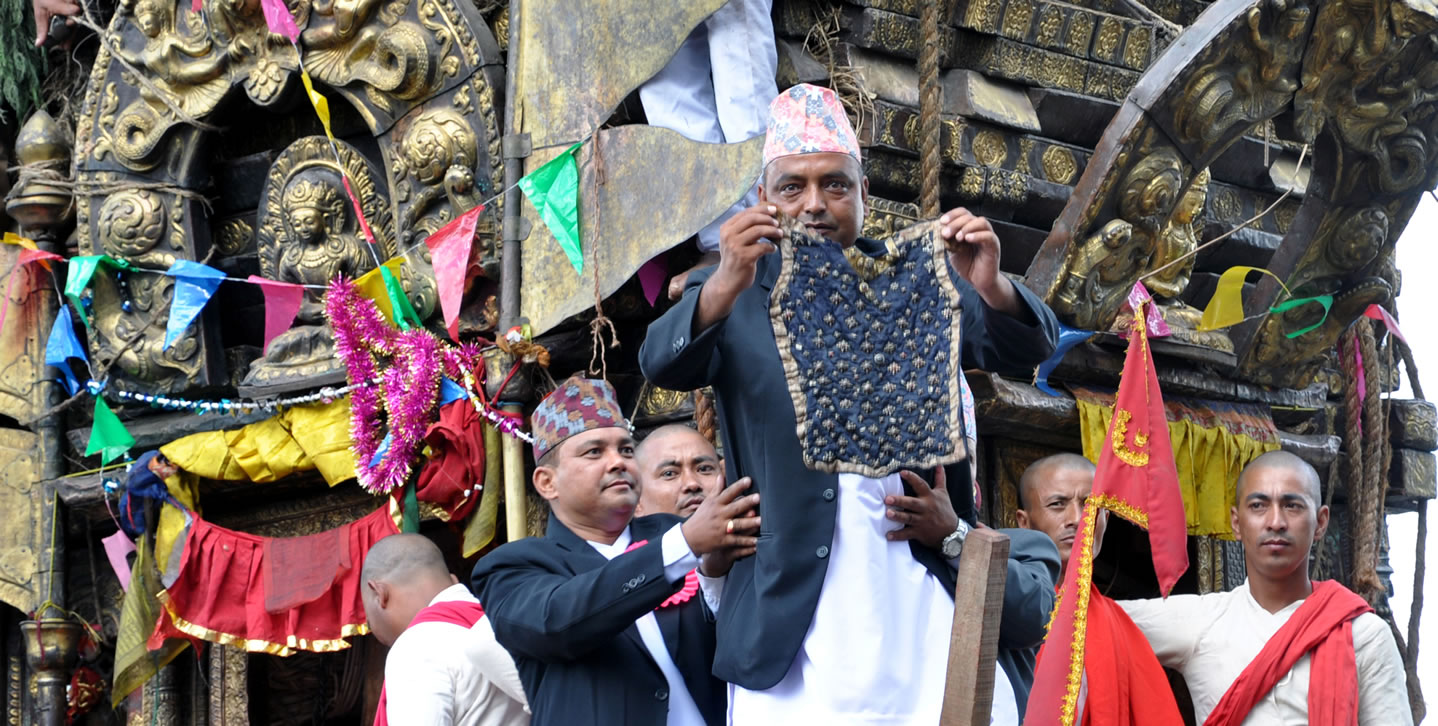
KATHMANDU: The sacred Bhoto (vest) of Rato Machchendranath, the god of rain and seasons, will be displayed today in a centuries-old ritual known as Bhoto Jatra.
This ancient festival, also called Jawalakhel Jatra, dates back approximately 800 years and derives its name from the words Ja (rice) and Wala (to scatter), according to Kirti Madan Joshi, a former member of the Nepal Panchanga Nirnaya Bikas Samiti and long-time observer of the Jatra.
The Bhoto Jatra is believed to have originated as a ritual to appease spirits and demons through offerings.
While the exact origin date of the festival remains uncertain, the journey of Machchendranath itself is said to have begun nearly 1,300 years ago.
According to folklore, the Nagaraj (serpent king) Karkotak’s queen suffered from an eye ailment shortly after the tradition began. In search of a cure, Karkotak mistakenly assumed a farmer in the fields was a doctor and brought him to Naglok (the realm of serpents), believed to be Taudaha.
Terrified but prayerful, the farmer invoked Machchendranath, rubbed his hands, and treated the queen—who was cured.
As a reward, the farmer was gifted a Bhoto adorned with a ruby. Upon returning to the human world, he left the Bhoto on the edge of his field while working. A ghost in human form allegedly stole the garment.
Later, the farmer recognized the Bhoto being worn by someone during Machchendranath’s procession and accused him of theft. A dispute followed.
Even Karkotak was summoned for arbitration. Since neither party could conclusively prove ownership, the Bhoto was entrusted to Machchendranath himself.
Ever since, the tradition of displaying the Bhoto has continued at the end of the annual Rato Machchendranath Rath Yatra in Jawalakhel.
It is shown to the public from all four sides of the chariot in the hope that someone with legitimate proof may one day claim it. However, legend says no one has ever succeeded in doing so.
In modern times, representatives from the Guthi Sansthan Lalitpur organize the Bhoto Jatra ceremony in the presence of the President of Nepal.
In honor of this unique cultural event, the government has declared a public holiday in the Kathmandu Valley today.





Comment