




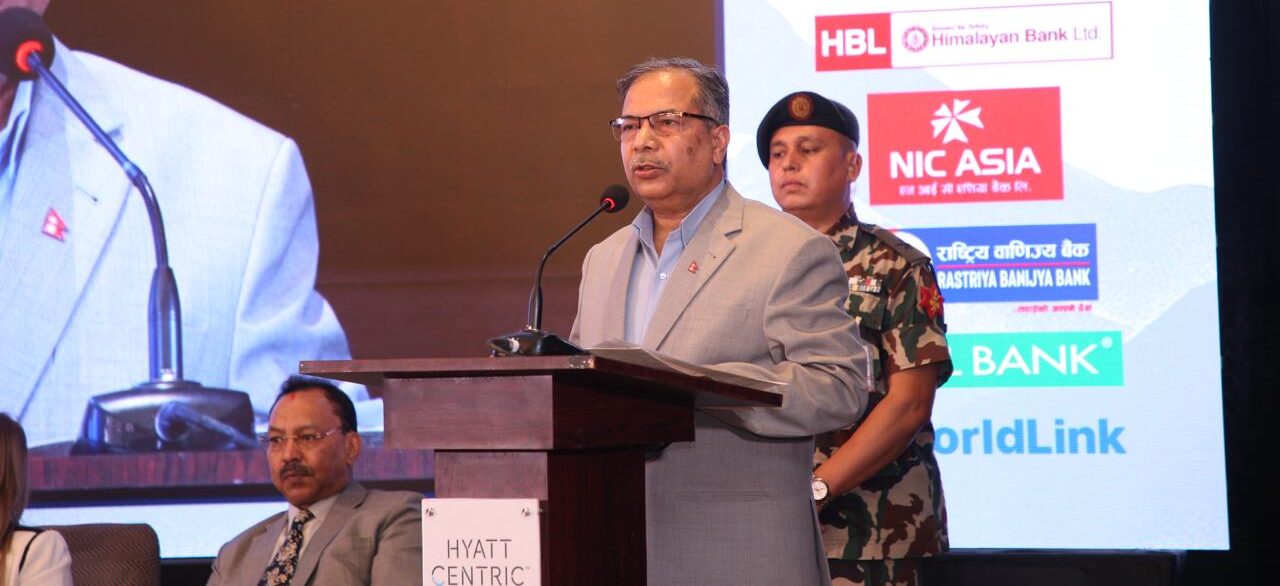
KATHMANDU: Vice President Ram Sahay Prasad Yadav has called for increased international support to help Nepal address the growing impacts of climate change and implement effective mitigation strategies.
Highlighting Nepal’s heightened vulnerability compared to other nations, he underscored the urgent need for strategic and collective action to tackle the climate crisis.
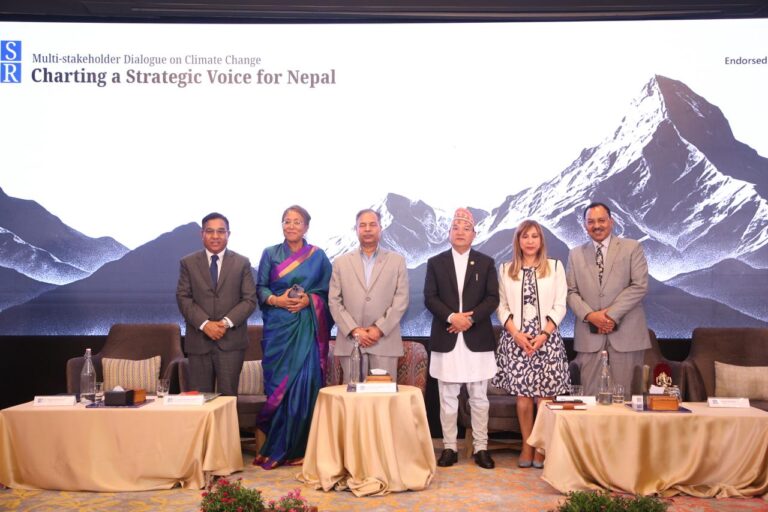
Speaking at a program titled “Multi-stakeholder Dialogue on Climate Change: Charting the Strategic Voice for Nepal”, organized by the Institute for Strategic and Socio-Economic Research (ISSR) in Kathmandu on Thursday, Vice President Yadav said Nepal is now facing the consequences of both global and domestic failures in climate response.
The two-day program was organized in preparation for the upcoming Sagarmatha Sambad, Nepal’s flagship international climate forum scheduled for May 16–18, 2025.
Water sources in the Terai are drying up, he warned, and projections indicate that nearly two billion people in downstream river regions—including Nepal—are at risk of being directly affected by climate change.
Reaffirming Nepal’s commitment to achieving net-zero carbon emissions by 2045, Yadav stressed that international financial and technical support is essential to achieve this target. He congratulated ISSR and the participants for initiating a timely and important dialogue and acknowledged that climate change poses a severe and shared global challenge.
He emphasized that despite Nepal’s minimal contribution to global emissions, the country is disproportionately affected due to its fragile geography and ecological diversity.
He cited concerning trends across Nepal’s diverse landscapes—from drying aquifers and water taps in the Tarai to melting glaciers in the Himalayas, which are increasing the risks of glacial lake outburst floods (GLOFs), erratic rainfall, floods, and storms.
“These phenomena are threatening Nepal’s ecosystems, agriculture, and most critically, marginalized communities,” he said.
Yadav attributed these issues to rising fossil fuel use, unplanned industrialization, and environmental degradation, asserting that mitigation and adaptation require coordinated action at the local, national, and global levels.
Judiciary’s Role in Climate Justice
Acting Chief Justice Sapana Malla Pradhan stated that climate change has now become a judicial issue. “The judiciary has shown its sensitivity through multiple decisions, including those on managing dead bodies in the Mt. Everest region. The challenge now is ensuring justice for marginalized communities facing climate risks,” she said.
Referring to deteriorating environmental conditions in the Sagarmatha region, she said, “We’re witnessing waste mismanagement and distressing scenes—such as bodies turning into black rocks. We can no longer afford to be bystanders.”
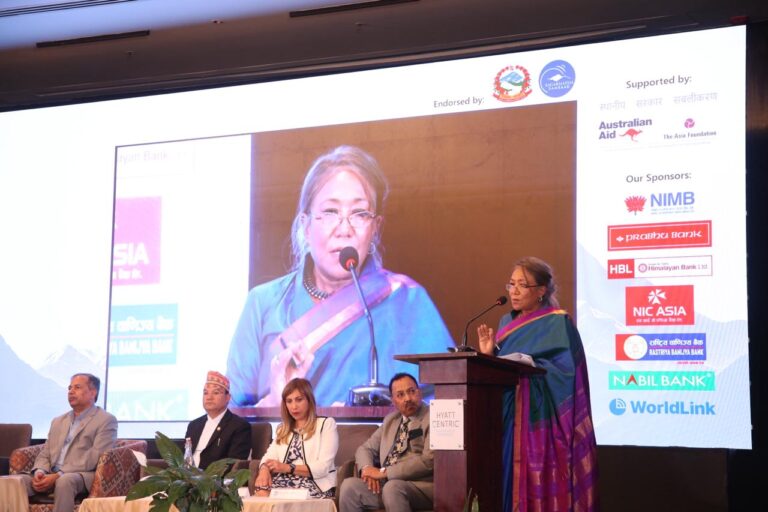
She emphasized that climate responses must center on vulnerable communities and called for inclusive decision-making that amplifies their voices. “We must protect those at risk and forge a future rooted in climate justice, equity, and inclusion,” she added.
Justice Malla also highlighted Nepal’s growing presence on the international stage, referencing its involvement in the International Court of Justice (ICJ) in 2024 and its delegation’s advocacy during COP28 and COP29.
“Mountains and glacial melt were not initially on the global agenda. Thanks to Nepal’s diplomacy, they are now being recognized,” she said, citing the upcoming UN International Geophysical Year 2025 as a significant opportunity.
She reiterated Nepal’s disproportionate burden: “We contribute just 0.2% of global carbon emissions, yet we are the fourth most vulnerable country. This imbalance demands a stronger response.”
Citing Nepal’s legal foundation, she mentioned landmark judgments, constitutional provisions, and a dedicated chapter on climate justice. Referencing Justice Padam Bahadur Shrestha’s pioneering verdict and the contributions of Justice Anand Mohan Bhattarai, she called for stronger implementation of existing laws and frameworks—possibly through public-private partnerships.
She stressed the judiciary’s key role in safeguarding constitutional rights, including the right to life, a clean environment, and even the rights of nature. Yet, she expressed concern over global trends of non-implementation of judicial climate rulings. “The Ministry must formally recognize the judiciary as a stakeholder in climate governance,” she urged.
Call for Integrated Climate Governance
Minister for Forests and Environment Ain Bahadur Shahi noted that climate change is severely impacting Nepal’s development goals. He announced that the government is preparing to introduce the Carbon Regulation 2082 and emphasized the importance of making the Sagarmatha Dialogue a success to garner international attention on Nepal’s climate challenges.
Minister Nain Singh Thakuri, speaking as a special guest at the event, reiterated the urgent need for collective climate action. He said the dialogue complements the upcoming Sagarmatha Sambad and will contribute valuable recommendations to guide Nepal’s climate policies.
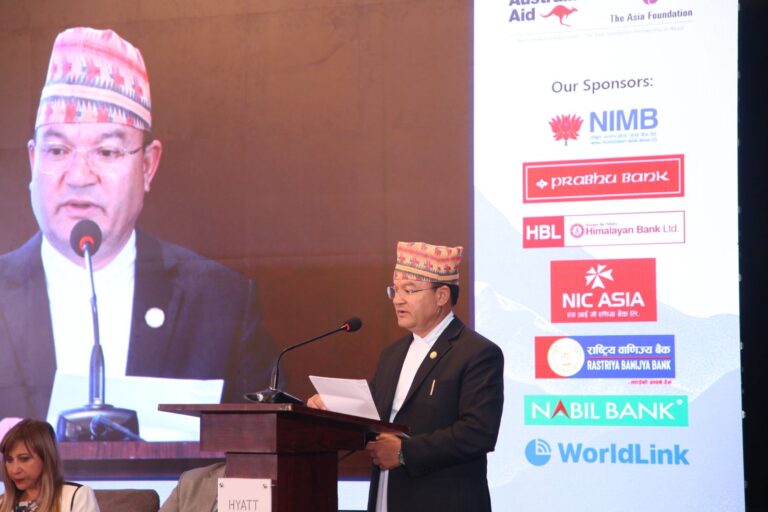
“Nepal is one of the world’s lowest carbon emitters but faces some of the highest climate risks,” he said, citing recent disasters in Thame and Kathmandu. He described climate change as a global crisis with direct impacts on fundamental rights—such as the right to clean air, health, education, and a safe environment.
Thakuri outlined several initiatives under way to address climate change, including new climate-related legislation set to be finalized in FY 2081 B.S. He highlighted Nepal’s third Nationally Determined Contribution (NDC3), describing it as an ambitious and widely consulted policy document, now in its finalization phase.
Global Solidarity and Structural Change
UN Resident Coordinator in Nepal, Hana Singer Hamdi, stressed that Nepal—situated in the lap of the Himalayas—must be prioritized in the global climate justice agenda, given the severity of its challenges. She said Nepal is entitled to climate justice.
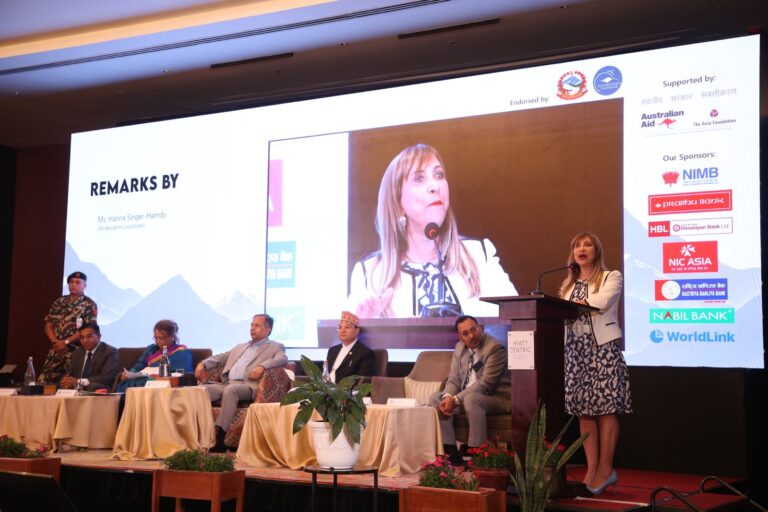
Meanwhile, ISSR Chairman Shankar Das Bairagi underscored the political and economic dimensions of climate change, stating, “This crisis is not just about science—it demands systemic change and stronger leadership.”
He called for the development of sector-specific policies and evidence-based advocacy to enhance resilience and accountability. Emphasizing Nepal’s role as a Himalayan country providing vital ecosystem services like carbon sequestration and freshwater storage, Bairagi stated, “Charity begins at home. Nepal must lead by example.”
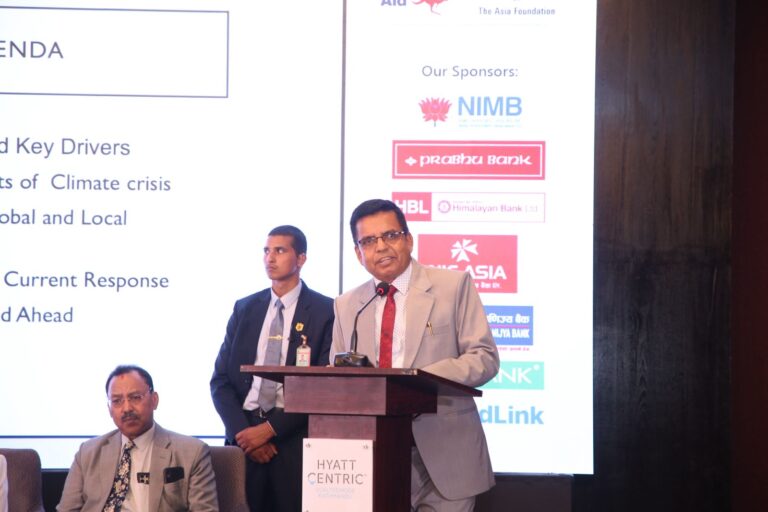
On climate finance, Bairagi expressed concern that the issue remains sidelined by developed nations. He called for a proportional allocation of climate funds for vulnerable countries like Nepal, noting, “Despite contributing little to global emissions, Nepal bears enormous climate risks. This imbalance must be addressed.”





Comment